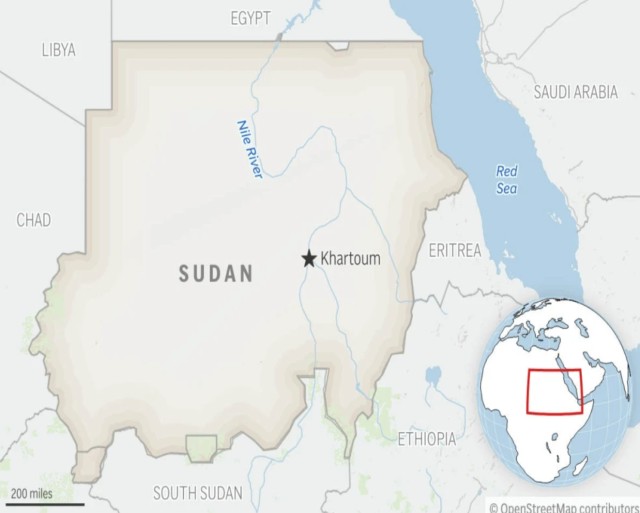
This is a locator map for Sudan with its capital, Khartoum.
Sudan is reeling after one of its worst natural disasters in decades. A massive landslide struck the village of Tarasin in Central Darfur’s Marrah Mountains, killing more than 1,000 people. Only one survivor has been reported. The government and rebel groups have urgently appealed for international aid.
Entire Village Wiped Out
The Sudan Liberation Movement-Army (SLM-A) said Tarasin was “completely leveled to the ground.” Days of relentless rainfall triggered the deadly landslide on Sunday. According to initial reports, every resident of the village perished.
Leader Abdel-Wahid Nour described the event as a tragedy beyond words. He urged the United Nations and global relief organizations to intervene immediately.
Government’s Response
The Sovereign Council in Khartoum mourned the “death of hundreds of innocent residents.” It promised to mobilize all resources to support survivors and assist in recovery operations.
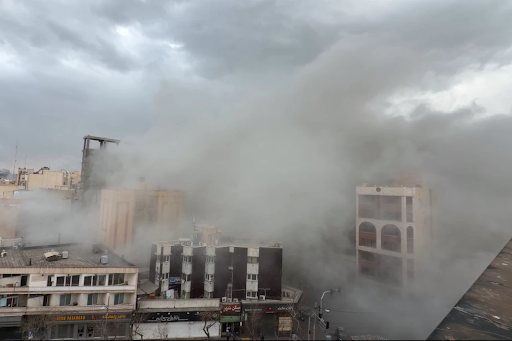
Local media showed haunting images of a flattened settlement surrounded by mountain ranges, with people digging through rubble in search of bodies.
Conflicting Death Toll Reports
While the SLM-A put the death toll at more than 1,000, United Nations officials have been cautious. Luca Renda, U.N. humanitarian coordinator in Sudan, said reports suggested between 300 and 1,000 victims. He confirmed that international partners were preparing emergency relief efforts.
Rescue operations, however, have been slow. A local emergency network said its teams recovered only nine bodies on Tuesday. Harsh weather, limited equipment, and restricted access made the mission extremely difficult.
‘Unprecedented Tragedy’ in Marrah Mountains
Residents described the disaster as unparalleled. Farmer Al-Amin Abdallah Abbas said heavy rainfall had battered the region for weeks. Tarasin was hit hardest, disappearing entirely under mud and rocks.
“The village and its people vanished,” he said. “It’s an unprecedented tragedy.”
The Marrah Mountains, a volcanic chain reaching nearly 3,000 meters, are known for their cooler climate and heavier rainfall compared to surrounding areas. But their remote location, more than 900 kilometers from Khartoum, makes access almost impossible except by foot or donkey.
History of Deadly Floods in Sudan
Sudan frequently suffers from seasonal rains between July and October. Last year, flooding caused the collapse of a dam in Red Sea Province, killing at least 30 people. The Tarasin landslide now stands among the deadliest disasters in Sudan’s modern history.
Disaster Amid Ongoing War
The tragedy comes as Sudan battles a devastating civil war between the army and the paramilitary Rapid Support Forces (RSF). Fighting erupted in April 2023 and has since killed more than 40,000 people. Millions have been displaced, creating the world’s largest humanitarian crisis.
Darfur has been particularly hard hit, with many areas cut off from aid. Doctors Without Borders warned earlier this year that Marrah Mountain communities have been “neglected and deprived of adequate assistance for over two years.”
Calls for Global Assistance
The International Organization for Migration urged the world to act, saying Sudan’s people “cannot bear this never-ending suffering alone.” Aid groups are pushing for safe access to disaster-hit regions, but ongoing conflict complicates relief missions.
Humanitarian Emergency Deepens
The U.N. estimates that 30 million Sudanese, out of a population of 50 million, need urgent humanitarian aid. Over 630,000 people in Darfur and Kordofan are already facing famine.
With the country torn apart by war and natural disasters, the Marrah Mountains landslide adds a new layer to Sudan’s worsening crisis. Survivors and aid groups say only swift global support can prevent further tragedy.