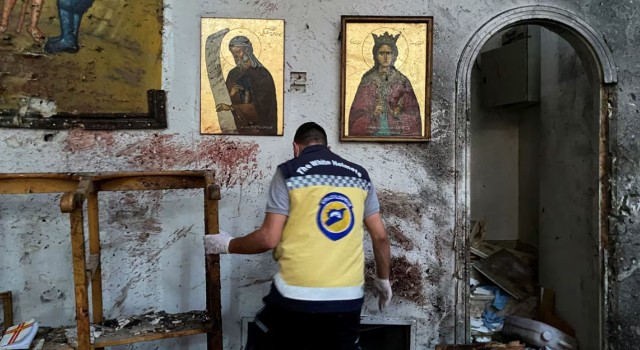
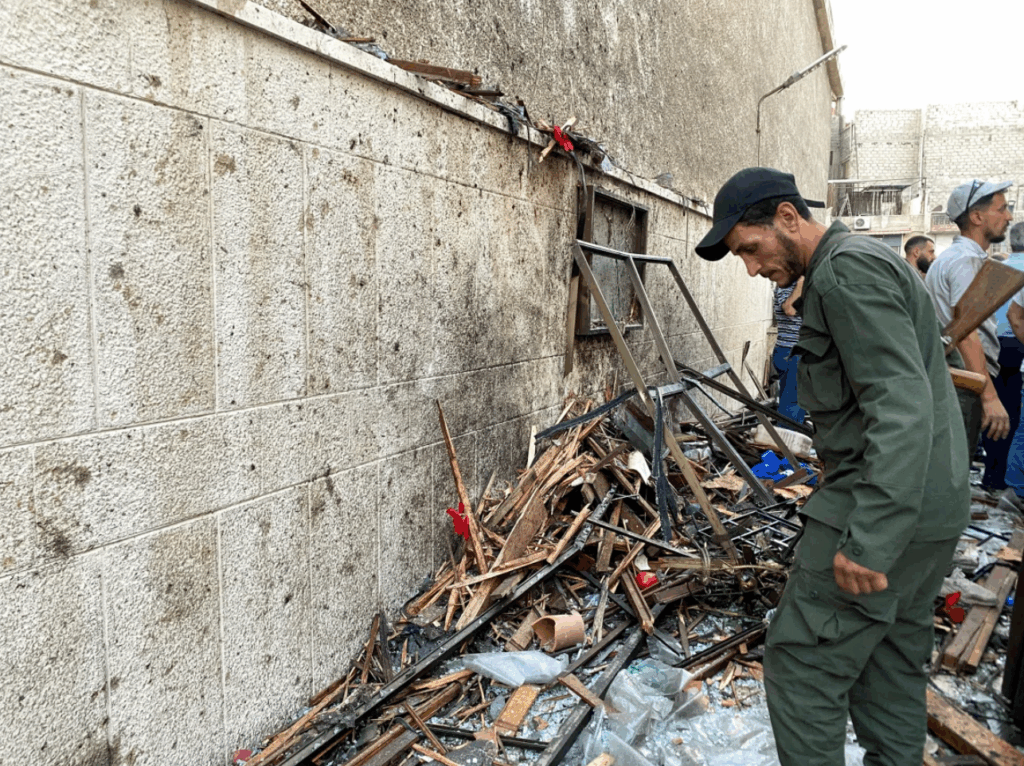
A Syria Civil Defense member inspects the damage after a reported attack at the Mar Elias Church in the Dweila neighborhood of Damascus, Syria, on June 22.
A deadly suicide bombing has shaken Syria’s capital, Damascus, claiming the lives of at least 20 people. The attack occurred on Sunday at the Mar Elias Greek Orthodox Church, where worshippers had gathered for mass.
According to Syria’s Health Ministry, 52 others were injured in what officials have called a “terrorist attack.” The nation’s Interior Ministry later confirmed the bomber was linked to the terrorist group ISIS.
ISIS Suicide Bomber Targets Worshippers
The attacker, reportedly affiliated with ISIS, entered the church armed and dangerous. He began firing on the congregation before detonating an explosive vest inside the building. The blast hit during a religious service, leaving bloodshed and destruction in its wake.
Syria’s state news agency SANA reported that chaos broke out inside the church as the bomb went off. The sacred space, meant for prayer and peace, was left with shattered glass, mangled chairs, and bloodstained floors.
Shocking Aftermath Caught on Video
Footage circulating across Syrian social media captured the horrifying aftermath. The video shows lifeless bodies on the church floor, the area littered with debris and signs of panic. Survivors are seen crying and searching for loved ones amidst the ruins of the once-peaceful church.
Emergency responders, including Syria’s civil defense unit known as the White Helmets, were quick to arrive. They worked to transport the injured to nearby hospitals and secure the blast site from further harm.
Church Leaders Mourn and Speak Out
The Greek Orthodox Patriarchate of Antioch issued a heartfelt statement condemning the attack. “The treacherous hand of evil struck,” it said, adding that many faithful inside and near the church were either killed or injured.
The church urged the community not to give in to fear. “We reaffirm our unwavering commitment to our faith and our rejection of all fear and intimidation,” the statement read.
Global Condemnation and Calls for Unity
The attack sparked an international outcry. UN Special Envoy for Syria, Geir O. Pedersen, described it as a “heinous crime.” His office released a statement urging all parties to reject terrorism and stand united against violence.
The United States’ Special Envoy for Syria, Thomas Barrack, also weighed in. He called the bombing an act of “cowardice” and stressed that such violence has no place in the future Syria is striving to build—a Syria rooted in tolerance and inclusion.
Foreign ministries from more than 15 countries—including Turkey, Greece, Israel, Cyprus, Jordan, the UAE, and European nations—have strongly condemned the attack. Their statements reflect a collective stand against religious extremism and a shared call for peace in the war-torn region.
A Devastating Reminder of Syria’s Fragility
This deadly suicide bombing in Damascus is a tragic reminder of the persistent threats that plague Syria. Despite years of conflict and a push for peace, attacks like this show that terrorism remains a looming danger.
As the nation grieves, church leaders and global diplomats continue to stress resilience, unity, and the importance of defending freedom of worship. For the families affected by the bombing, the pain is immeasurable—but their faith, according to church officials, remains unshaken.