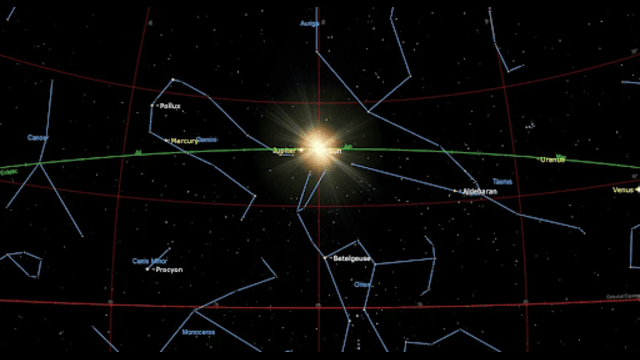
The sun will reach its highest northern spot on June 20, marking the beginning of summer in the Northern Hemisphere. Image credit: Starry Night
Summer officially begins on Friday, June 20, 2025. At exactly 10:42 p.m. EDT, the sun reaches its farthest point north of Earth’s equator. This moment is called the summer solstice. At that time, the sun shines directly above the Tropic of Cancer, which lies just south of Japan in the Pacific Ocean.
Longest Day of the Year
On this day, people in places like Philadelphia will see the sun climb higher than at any other time in 2025. At 1:02 p.m., it reaches 73 degrees above the horizon. To picture that, raise your fist toward the sky. One fist equals about 10 degrees, so imagine the sun rising “seven fists” high. This also means more daylight. In Philadelphia, the day will last exactly 15 hours.
Not Much Time for Stargazing
Even with 15 hours of sunlight, full darkness doesn’t last long. That’s because twilight—when the sky is still lit even after sunset—takes up a lot of the night. At 40 degrees north (like Philadelphia), both morning and evening twilight last just over 2 hours each. That leaves only 5 hours of real darkness. Go farther north, and twilight lasts even longer. In some places, the sky never goes completely dark. But in the south, darkness falls much faster. For example, in San Juan, twilight only lasts about 80 minutes.
Sunrise and Sunset Don’t Align
Even though the solstice gives us the longest day, the earliest sunrise and latest sunset don’t happen on the same date. The earliest sunrise happened on June 14, and the latest sunset won’t come until June 27.
Earth Is Actually Far From the Sun
Many people think summer happens because Earth is closest to the sun. But that’s not true. Earth will be farthest from the sun—called aphelion—on July 3. At that point, we’ll be more than 94 million miles away. Earth was closest to the sun back on January 4. The distance change makes a small difference in temperature, but Earth’s tilt is what really causes the seasons.
A Subtle Shift Begins
After June 20, the sun slowly starts heading south again. Daylight will begin to shrink. The change happens little by little, and many won’t notice it right away. August 6 marks the exact midpoint between summer’s start and fall’s arrival. That day, sunset in Philadelphia will be at 8:08 p.m.—56 minutes earlier than on June 20.
By the time fall begins on September 22, sunset will come before 7 p.m., and people will have lost nearly two hours of daylight since early August.
Nature’s Quiet Reminder
As baseball legend Yogi Berra once said, “It’s getting late early out there.” That phrase fits perfectly with how the light fades faster as summer moves on, even if the heat stays.