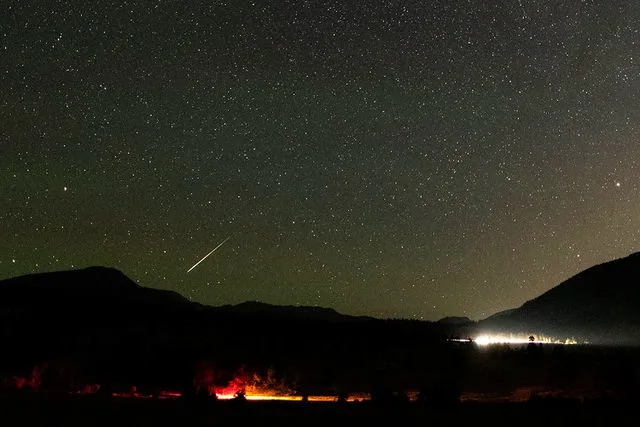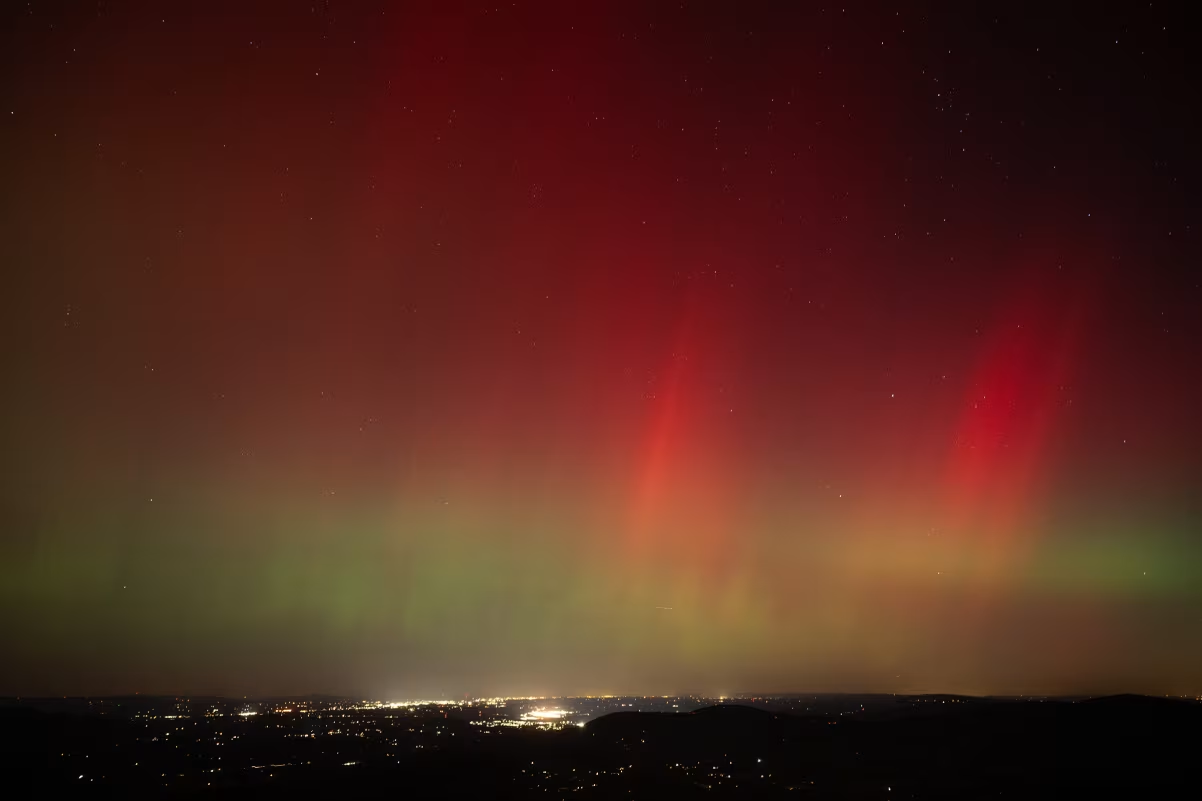
The northern lights glow in the night sky over Shenandoah National Park in Virginia during a solar storm in October 2024. Getty Images
A powerful burst of energy from the Sun is moving toward Earth and could light up skies with rare auroras while causing minor disruptions to modern technology. Forecasters say the event ranks as the strongest solar radiation storm seen in more than 20 years.
A Rare and Powerful Solar Event
Space weather experts confirmed that a severe solar radiation storm reached level four out of five on the intensity scale. Scientists have not recorded a storm of this strength since October 2003. The warning came from the Space Weather Prediction Center, which monitors activity from the Sun around the clock.
“An S4 severe solar radiation storm is now in progress - this is the largest solar radiation storm in over 20 years,” the agency said. “The last time S4 levels were observed was in October 2003. Potential effects are mainly limited to space launch, aviation, and satellite operations.”
What This Means for Earth
When strong solar radiation reaches Earth, it sends fast-moving charged particles toward the planet. These particles can raise radiation levels in space and affect systems that rely on satellites. Astronauts aboard the International Space Station may move to better-shielded areas as a safety step, a practice used during past solar storms.
Flights that travel near the North or South Pole may also face higher radiation exposure. Airlines and aviation officials continue to track conditions closely.
Technology Under Watch
Solar storms can interfere with satellites used for navigation, communication, and weather tracking. Officials alerted airlines, emergency agencies, power grid operators, and space agencies, including NASA, to prepare for possible effects.
“We’ve been making all these phone calls to ensure that we are keeping all the critical technological infrastructure operators in the know of what’s happening,” said SWPC forecaster Shawn Dahl.
Experts say the public should not expect widespread outages. Past storms, including one in May 2024, caused some GPS disruptions but did not lead to major failures.
Aurora Shows Expected Far South
Alongside the radiation storm, a strong geomagnetic storm reached Earth on Monday afternoon. This type of storm happens when huge clouds of solar material crash into Earth’s magnetic field.
The event began with a powerful X-class solar flare, the strongest type known. Scientists say it marks the first major flare of the year and signals an active period on the Sun.
These storms often produce auroras, also known as the northern and southern lights. Forecasters expect colorful displays across much of the northern United States and possibly as far south as Alabama and northern California. Clear skies will give viewers the best chance to see the lights.
Even if colors appear faint, cameras and smartphones may capture them more clearly than the human eye.
More Activity Ahead
Scientists continue to watch the Sun closely. An active sunspot region could release more flares in the coming days, and some may head toward Earth.
Experts advise aurora watchers to find a dark location with a clear view of the northern sky. “Aurora will likely be strongest as soon as it is dark enough to see them at your location,” solar physicist Ryan French said.