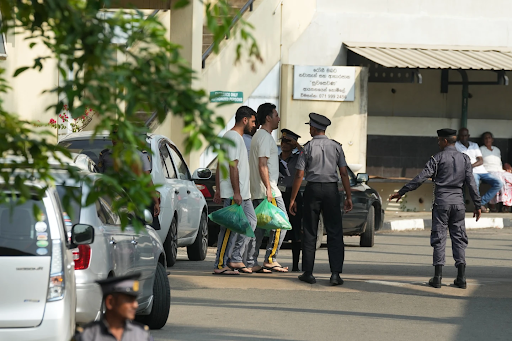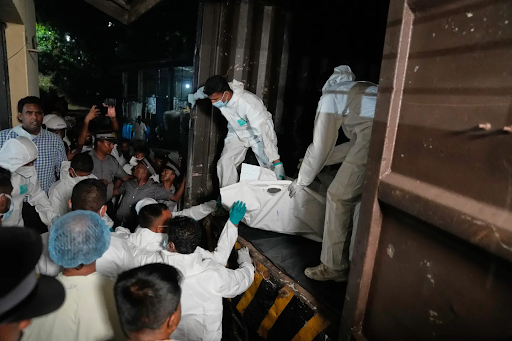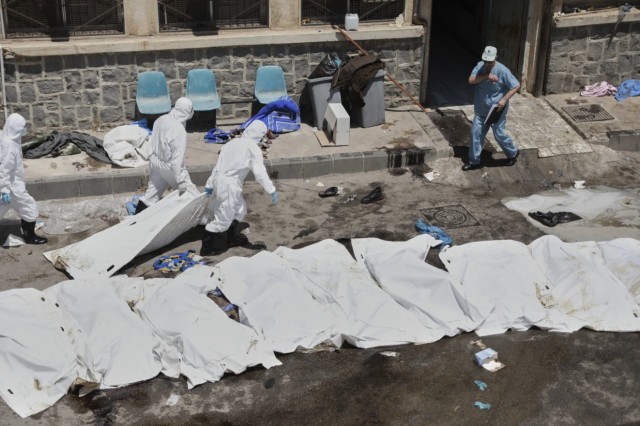
Morgue workers place the bodies of unidentified people killed during clashes between Bedouin clans and Druze militias into plastic bags outside the National Hospital in Sweida, Syria, Monday, July 21, 2025.
Deadly clashes in Syria’s Sweida have started to ease, prompting the government to initiate evacuations. Hundreds were killed in a week of violence between Druze militias and Bedouin fighters. As calm begins to return, the humanitarian crisis deepens, with more than 128,000 people displaced and entire communities shattered.
Ceasefire Offers Breathing Room as Evacuations Begin
The Syrian government launched a large-scale evacuation of Bedouin families from Sweida on Monday. Roughly 1,500 people were transported out of the conflict zone. Syrian Interior Minister Ahmad al-Dalati confirmed that the government coordinated closely with local Sweida officials to carry out the operation.
The move follows a fragile ceasefire after days of intense sectarian clashes between the Druze minority and Sunni Muslim Bedouins. The violence caused widespread displacement and triggered retaliatory attacks on both sides.
The United Nations’ International Organization for Migration reports that 128,571 people have fled their homes.
Israel’s Strikes Add Pressure to Escalating Tensions
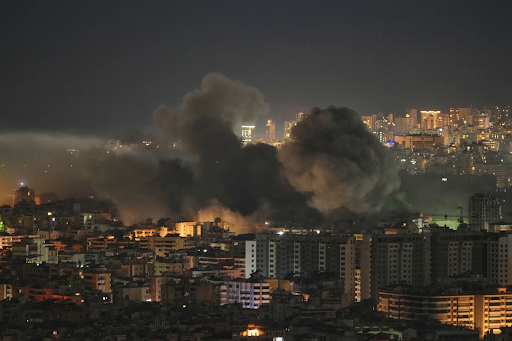
Complicating the unrest further, Israel launched multiple airstrikes in the Druze-majority Sweida province. The targets were Syrian government forces who, according to reports, had aligned themselves with the Bedouins.
The strikes sparked further instability and confusion in the area. Although local activists and monitors claimed to have heard Israeli helicopters and missiles near conflict zones, Israel’s military denied knowledge of any recent overnight raids.
Druze and Bedouins Face a Humanitarian Crisis
Buses carrying evacuated Bedouin families were escorted by Syrian Arab Red Crescent ambulances. Farmers like Ali al-Hawarein described the Druze attacks as “unjustified,” while voicing doubt about the government's ability to maintain order in the region.
Many displaced Bedouins fled to the neighbouring Daraa province, where they now live in abandoned buildings with little to no access to food or clean water.
Families brought only essential belongings. Saif al-Hajj, a father of eleven, shared his ordeal: “I brought my chickens and ducks too, but I don’t even have enough water for myself.”
Druze Residents Also on the Move
While Bedouins evacuated the city, Druze civilians also fled to safer villages and towns. In places like Salkha, displaced Druze families are packed into schools and private homes. Food shortages are rampant.
One Druze woman, speaking anonymously, said her relative was kidnapped in the village of al-Ta’la. “We don’t know who took him — the Bedouins or government security. But most people say the Bedouins are behind the abductions.”
The atmosphere is tense, with many families living in fear of more violence.
Political Fallout: Doubts Over Leadership and Trust
Syria’s interim President Ahmad al-Sharaa has tried to calm tensions by appealing to the Druze community. He condemned the attacks and promised to hold the guilty accountable.
Yet many Druze are skeptical. Some accuse factions loyal to spiritual leader Sheikh Hikmat al-Hijri of provoking violence. Al-Hijri, a former supporter of the Assad regime, has taken a more aggressive stance toward al-Sharaa’s rule, unlike other moderate Druze leaders who favour diplomacy.
The recent killings, kidnappings, and desecration of Druze religious symbols have shaken trust in the government’s promises of protection and peace.
Hope for Long-Term Stability Fades
Peace talks are underway in Jordan to find a sustainable solution. Turkish President Recep Tayyip Erdogan announced that 2,500 lightly armed Syrian government troops would be allowed to enter Sweida to restore stability.
However, the situation on the ground remains volatile. Bedouin fighters have retreated to the outskirts of the city, where they await further instructions.
Meanwhile, aid convoys struggle to reach civilians in need. One Red Crescent convoy entered the city, but another carrying government officials was blocked from proceeding.
A Nation in Disarray
The Sweida violence underscores Syria’s fragile state, even years after the major battles of its civil war ended. The sectarian conflict has reopened wounds that had barely healed, and displaced communities are now caught in a desperate fight for survival.
With over a million Druze worldwide — half of whom live in Syria — the stakes are high. Both sides now face a critical choice: return to peace talks or risk plunging the region into renewed chaos.