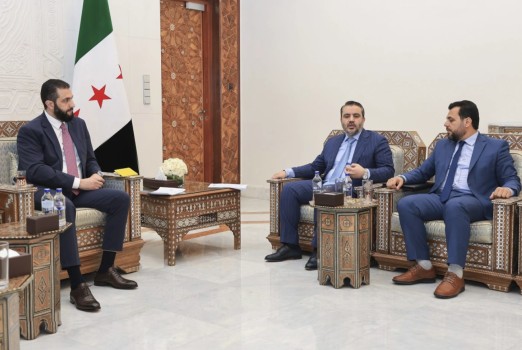
In this photo released by the Syrian official news agency SANA, Syria’s interim President Ahmad al-Sharaa, left meets with Syria’s Foreign Minister Asad Al-Shabab,center, and Mohammed Taha al-Ahmad, chairman of the Higher Committee for People’s Assembly Elections, right, in Damascus, syria, Sunday, July 27, 2025.
Syria will hold its first parliamentary elections since the fall of Bashar al-Assad. The elections are scheduled between September 15 and 20, marking a pivotal step in the country’s ongoing political transition.
The announcement was made by Mohammed Taha al-Ahmad, head of the Higher Committee for People’s Assembly Elections, during an interview with Syria’s state news agency SANA. This election comes months after Assad's regime collapsed following a swift rebel takeover in December.
A New Political Chapter Begins
These upcoming elections will be the first conducted under Syria’s new leadership. Interim President Ahmad al-Sharaa will appoint one-third of the 210 parliamentary seats. The remaining seats will be filled through a nationwide vote.
To manage this, an electoral college will be set up in each Syrian province. Hassan al-Daghim, a member of the elections committee, shared these details in a recent interview with Erem News. The system aims to ensure regional representation and a smoother voting process.
Temporary Constitution Paves the Way
A temporary constitution was signed in March by al-Sharaa, outlining the framework for the current elections. It also called for the establishment of a People’s Committee, which will serve as an interim parliament. This body will function until a permanent constitution is drafted and general elections are held—a process expected to take several years.
The move is being seen as a cautious yet significant step toward stabilizing Syria’s political landscape after more than a decade of civil war and unrest.
Rising Tensions Threaten Stability
However, the upcoming elections come at a time of growing unrest. Earlier this month, sectarian violence erupted in the southern province of Sweida. Clashes between armed Bedouin clans and Druze fighters escalated rapidly, leaving hundreds dead.
The violence began with a series of tit-for-tat kidnappings. The situation deteriorated when Syrian government forces intervened—not as peacekeepers, but in support of the Bedouin clans. Reports suggest that government forces executed Druze civilians and set homes ablaze, inflaming tensions further.
Israel Responds with Military Action
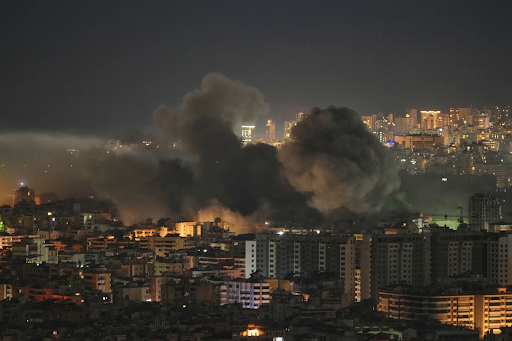
In response to the violence, Israel launched a series of airstrikes targeting Syrian government forces and the Defense Ministry headquarters. Israel stated that its actions were meant to protect the Druze minority, which has close ties with the Druze community in Israel.
These developments have raised concerns about Syria’s fragile postwar recovery and whether the elections can truly reflect democratic aspirations amid rising instability.
The Road Ahead for Syria
While the September elections symbolize a turning point, many Syrians remain skeptical. The political shift after Assad’s fall has not yet led to widespread unity. The sectarian divide, security concerns, and foreign interventions continue to shape Syria’s uncertain future.
Nonetheless, the upcoming parliamentary elections offer a sliver of hope. For the first time in years, Syrians will have the opportunity to shape a new government through the ballot box. Whether this leads to lasting change remains to be seen, but for now, the elections mark a new phase in Syria’s turbulent journey toward rebuilding and reform.