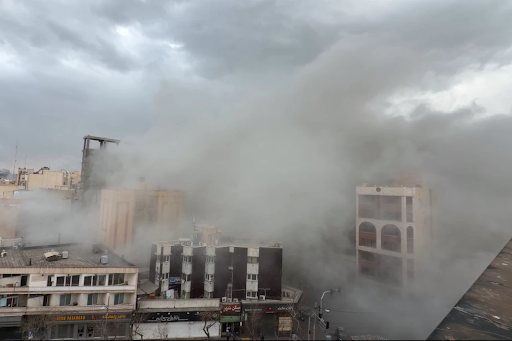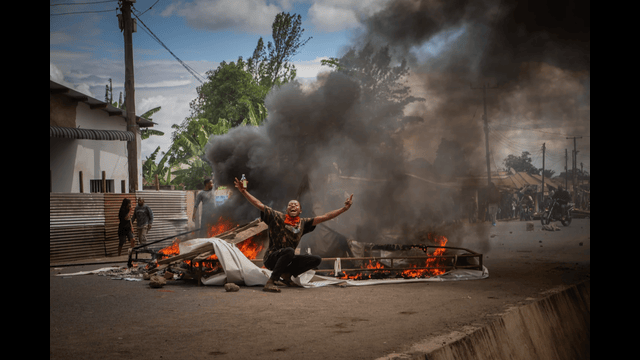
People protest in the streets of Arusha, Tanzania, on election day Wednesday, Oct. 29, 2025.
Hundreds of Tanzanians flooded the streets for a second straight day, challenging what many call a disputed election. The government responded with an internet blackout, curfew, and heavy military presence across key cities.
Anger Boils Over After Disputed Vote
The unrest began Wednesday, following national elections that opposition groups claim were neither free nor fair. The ruling Chama Cha Mapinduzi (CCM) party, in power since independence in 1961, was accused of silencing rival voices. Major opposition leaders were barred from contesting, leaving President Samia Suluhu Hassan facing little competition from smaller, less-known parties.
On Thursday, the National Electoral Commission announced early results showing President Hassan leading with 96.99% of votes from the first eight constituencies counted. The announcement sparked further outrage, with protesters calling the process a “mockery of democracy.”
International Voices Condemn the Election
The European Parliament issued a statement describing the Tanzanian elections as “neither free nor fair.” Lawmakers urged global democratic allies to defend democracy and human rights in the East African nation. Amnesty International also raised alarms over violence against protesters and urged authorities to investigate reports of excessive force.
Two Dead as Protests Turn Violent
According to Amnesty International, two people—a civilian and a police officer—were killed during Wednesday’s demonstrations. The Tanzanian government has yet to release an official statement on the casualties. Witnesses reported scenes of chaos as clashes broke out in several cities, with police using tear gas and batons to disperse crowds.
Curfew, Internet Shutdown, and Military Roadblocks
Authorities imposed a nationwide curfew in Dar es Salaam, the commercial hub, hoping to control the situation. However, protests continued well into the night, with chants demanding transparency and fair elections echoing through the city.
The government also ordered public servants to work from home to limit unnecessary movement. Soldiers manned roadblocks across major highways, turning away anyone who could not prove they were essential workers.
Tension at the Airport and Border Towns
On Thursday morning, hundreds of protesters tried to breach security barriers leading to Julius Nyerere International Airport. They were stopped before reaching the main gates. In Namanga, a busy border town near Kenya, demonstrators set bonfires on highways. Police responded with tear gas, injuring several people. Businesses in the area were forced to close, halting cross-border trade.
Ferry Services and Public Life Disrupted
In another move signaling escalating control, ferry services between the mainland and the semi-autonomous region of Zanzibar were suspended. Zanzibar’s electoral commission was also expected to release its own results, further fueling tensions.
Opposition Leaders Silenced
The election took place amid a crackdown on opposition voices. Tundu Lissu, a leading critic of the government, remains in prison on treason charges for demanding electoral reforms. Luhaga Mpina, the presidential candidate from Tanzania’s second-largest opposition party, was disqualified from the race.
Amnesty Demands Accountability
Amnesty International has called for a transparent investigation into police actions and the reported deaths. The organization emphasized that citizens have the right to peaceful protest and free expression, both of which appear to be under threat.
Democracy Under Pressure
With soldiers patrolling streets, communication networks down, and civil unrest spreading, Tanzania stands at a crossroads. What began as a call for electoral fairness has turned into a broader demand for democratic reform and government accountability.
As tensions rise, the international community watches closely, urging Tanzanian leaders to restore calm and respect the people’s voice.