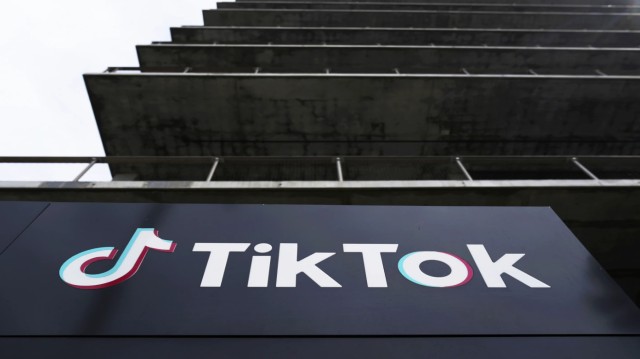
The TikTok Inc. building is seen in Culver City, Calif., March 17, 2023.
A breakthrough has been reported in the long-running dispute over TikTok. The United States and China have reached a framework agreement to address the ownership of the popular video-sharing app. U.S. Treasury Secretary Scott Bessent confirmed the development after weekend trade talks in Madrid.
Bessent stated that U.S. President Donald Trump and Chinese Premier Xi Jinping are expected to discuss final details this Friday. The main objective of the deal is to transfer TikTok’s ownership from China’s ByteDance to a U.S.-based company.
Commercial Terms Already Agreed
Although Bessent declined to reveal financial details, he confirmed both parties had settled the commercial terms. Chinese trade representative Li Chenggang described the agreement as a “basic framework consensus,” aiming to ease TikTok-related tensions and reduce investment barriers.
The Madrid talks marked the fourth round of trade negotiations since Trump launched tariffs on Chinese imports in April. A fifth round is expected in the coming weeks. Analysts suggest a potential Trump-Xi summit later this year to cement a wider trade deal.
Why the TikTok Deal Matters
The push for a TikTok agreement has been largely driven by U.S. national security concerns. American lawmakers fear ByteDance could be compelled under Chinese law to share sensitive user data.
U.S. Trade Representative Jamieson Greer stressed that the deal must balance fairness for China with strict protection of U.S. security interests.
A key sticking point has been TikTok’s proprietary algorithm. According to Chinese officials, both sides agreed on terms for managing intellectual property rights and securing U.S. user data through a trusted partner.
During President Biden’s term, Congress supported a ban on TikTok unless ByteDance sold its controlling stake. Trump has since extended the deadline several times, with the current extension set to expire just before his planned call with Xi.
Expert Reactions to the Agreement
Wendy Cutler, vice president at the Asia Society Policy Institute, said the framework suggests both countries have found common ground. She described it as a “significant step” in reducing bilateral tensions and resolving a prolonged dispute over TikTok.
Other Issues Still on the Table
Despite progress on TikTok, major disagreements remain. The talks also addressed export controls, Chinese investment restrictions, and fentanyl-related chemical trade. Bessent noted both sides strongly agreed on tackling money laundering linked to drug trafficking.
Chinese Vice Premier He Lifeng characterized the talks as “constructive and candid.” However, Li Chenggang criticized Washington for politicizing trade and technology, accusing the U.S. of “bullying practices” through sanctions on Chinese firms. He insisted China would not compromise on fairness or company interests.
Trump Links TikTok to Broader Demands
Adding to the tension, Trump suggested the war in Ukraine could end if NATO stopped buying Russian oil and imposed heavy tariffs on China. Beijing dismissed the proposal, labeling it “unilateral bullying and economic coercion.”
A Potential Trump-Xi Summit Ahead
Speculation is growing about a potential leaders’ summit to finalize broader trade terms. Analysts believe the Asia-Pacific Economic Cooperation (APEC) summit in South Korea this October could provide a venue.
However, experts warn time is running short to craft a comprehensive deal. Instead, both countries may opt for smaller commitments, such as increased Chinese purchases of U.S. agricultural goods, or another short-term tariff pause.
For now, the TikTok framework represents a rare sign of progress in strained U.S.-China relations. But with unresolved disputes and tight deadlines, the road to a lasting agreement remains uncertain.