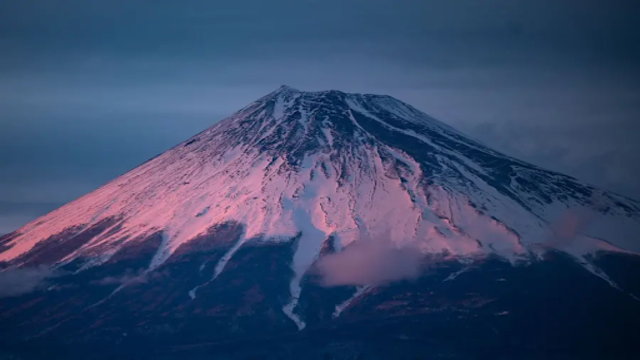
Japan’s iconic Mount Fuji, a landmark known worldwide for its beauty and cultural importance, is pictured here.. AFP
Mount Fuji last erupted in 1707. This week, Japanese officials released AI-generated videos showing what could happen if the country’s most famous volcano erupted today.
The video, launched on Volcanic Disaster Preparedness Day, aims to prepare Tokyo’s 37 million residents for the possibility of a major disaster.
The simulation shows ash clouds reaching central Tokyo within hours. The ash covers streets, halts transit, cuts power, and leaves people struggling to breathe.
The video ends with a clear warning: “We need to arm ourselves with facts and prepare for disaster in our daily lives.” It also shows a stocked pantry with canned food and first-aid supplies as a reminder for families to be ready.
No current signs of eruption
The Tokyo Metropolitan Government stressed that Mount Fuji is not showing signs of activity. Officials said the videos serve only as preparation tools.
“The simulation is designed to equip residents with accurate knowledge and preparedness measures they can take in case of an emergency,” the government explained in a statement.
Mixed reaction from residents
Some Tokyo-area residents said the videos raised fears instead of offering reassurance.
“Are there actually any signs of eruption?” asked Shinichiro Kariya, a 57-year-old hospital worker. “Why are we suddenly hearing things like ‘10 centimetres of ash could fall,’ even in Tokyo?”
Others said the videos served as a good wake-up call. Hiromi Ooki, who lives in Mishima City near Fuji, said she planned to buy extra supplies. “Nature’s power is so great that maybe it’s better if it scares us a little,” she said.
Experts stress preparation, not panic
Officials from both the Tokyo Metropolitan Government and Japan’s Cabinet Office Disaster Prevention Division said they have not received complaints about the videos.
University of Tokyo professor Naoya Sekiya, who studies risk communication, said the timing has no special meaning. “There’s no particular significance to the timing,” he explained. He noted that Japan has always run simulations for disasters, including earthquakes and volcanic eruptions.
A country shaped by disasters
Japan’s location makes it one of the world’s most disaster-prone countries. The nation faces earthquakes, typhoons, floods, mudslides, and volcanic eruptions almost every year.
Last year, the Japan Meteorological Agency issued its first “megaquake advisory” after a large earthquake struck near Kyushu.
Japan has 111 active volcanoes, making up part of the Pacific “Ring of Fire.” Mount Fuji, the tallest peak in the country, once erupted roughly every 30 years. It has now remained quiet for over 300 years.
Still, experts warn that its long silence does not erase the risk.