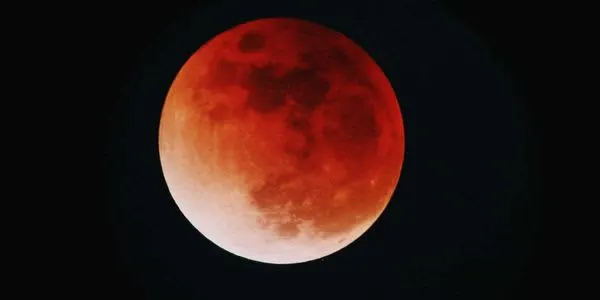
In the early hours of March 3, 2026, a total lunar eclipse will take place, giving people across Ontario, including Toronto, the chance to see the moon glow a deep red colour. Yahoo!
Skywatchers across Ontario will soon have a chance to witness a rare and striking sight. A total lunar eclipse will take place in the early hours of Tuesday, March 3, 2026, turning the moon a deep red colour.
Canada ranks among the best places to see the event, and residents in Toronto and the Greater Toronto Area will have a clear view of most of the eclipse.
What Is a Blood Moon?
A total lunar eclipse occurs when Earth moves directly between the sun and the moon. During this alignment, Earth’s shadow covers the moon.
Instead of disappearing completely, the moon takes on a reddish or orange glow. People often call this event a “blood moon.” The red colour appears because sunlight bends through Earth’s atmosphere and casts a warm hue onto the moon’s surface.
How the Eclipse Unfolds
A total lunar eclipse happens in three stages.
First comes the penumbral phase. During this stage, the moon enters the outer part of Earth’s shadow. The change appears subtle, and the moon may look slightly dimmer.
Next is the partial phase. At this point, a darker shadow begins to move across the moon. Viewers can clearly see part of the moon darken as it slips deeper into Earth’s shadow.
Finally, the full phase begins. Earth’s shadow fully covers the moon, and it turns red. This marks the most dramatic part of the event.
Timing in Toronto
People in Toronto can begin watching the eclipse at 3:44 a.m., when the penumbral phase starts. The partial phase follows at 4:50 a.m.
The full phase begins at 6:04 a.m., and the eclipse reaches its peak at 6:33 a.m. The total phase lasts about 48 minutes, giving viewers nearly an hour to see the red moon.
However, the moon will set at 6:52 a.m., so residents in Toronto will not see the final stages of the eclipse.
What About the Rest of Ontario?
Communities in southwestern Ontario, including Windsor, Sarnia, Chatham and Leamington, will catch a glimpse of more of the full phase before moonset.
In northern Ontario, cities such as Sault Ste. Marie, Timmins, Thunder Bay and Kenora will see the full phase end before the moon dips below the horizon. Still, no region in Ontario will witness the entire eclipse from start to finish.
How to Watch
Unlike a solar eclipse, a lunar eclipse poses no risk to eyesight. People can safely watch it with the naked eye. Binoculars or a small telescope may enhance the view, but they are not necessary.
Clear skies will offer the best experience. Experts suggest finding a spot away from bright city lights for a sharper view.
Early March mornings can still feel cold, so those planning to step outside should dress warmly.
A Rare Early Morning Spectacle
Total lunar eclipses do not happen every year, making this event special for skywatchers.
As the moon glows red over Toronto, many will pause before sunrise to witness one of nature’s most beautiful displays.