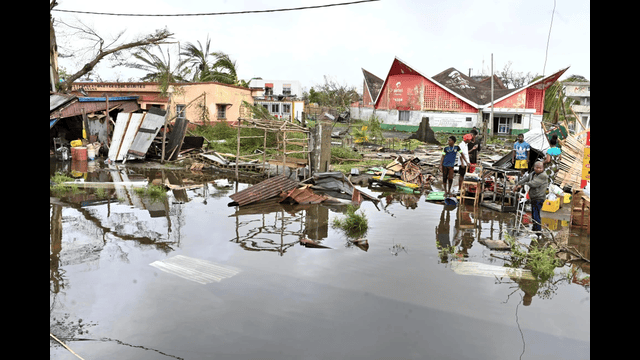
People survey the damage done by cyclone Gezina in Toamasina, Madagascar, Wednesday, Feb. 11, 2026.
Tropical Cyclone Gezani has left a trail of destruction across Madagascar, pushing the confirmed death toll to at least 31.
The powerful storm battered the Indian Ocean island with violent winds and relentless rain, collapsing homes and crippling entire neighborhoods.
Authorities say the impact has been most severe in coastal regions already struggling with poverty and fragile infrastructure.
Madagascar’s vulnerability to cyclones was once again laid bare as Gezani tore across the island late Tuesday and into Wednesday.
Powerful Landfall Triggers Red Alerts
Madagascar’s national weather service issued red alerts for multiple regions ahead of the storm’s arrival.
Officials warned residents to brace for flooding, landslides, and widespread structural damage.
Tropical Cyclone Gezani made landfall with winds exceeding 195 kilometers per hour.
As the storm pushed inland, it swept across communities where many homes lack storm-resistant construction.
Millions of people live in areas exposed to extreme weather, with limited protection against cyclonic systems.
Toamasina Bears the Brunt
The eastern port city of Toamasina suffered the worst destruction, according to authorities and residents.
Most of the reported deaths occurred in and around the city, which is home to about 300,000 people.
Collapsed buildings accounted for many fatalities, officials confirmed.
The National Office for Risk and Disaster Management reported at least 36 people were seriously injured.
Four others remain missing, raising fears the death toll could still rise.
More than 6,000 residents were forced to flee damaged or destroyed homes.
Infrastructure Left in Ruins
Videos released by President Michael Randrianirina’s office showed widespread devastation across Toamasina.
Flooded streets, shattered storefronts, and roofless homes painted a grim picture of the aftermath.
Trees, debris, and downed power lines blocked roads across several districts.
Government officials estimate that nearly 75 percent of the city’s infrastructure was damaged or destroyed.
Electricity has remained cut off since Tuesday, adding to the hardship faced by survivors.
Emergency crews are working to restore basic services, though progress remains slow.
Voices From the Ground
Residents described scenes of chaos as Tropical Cyclone Gezani passed through the city.
Michel, a local resident, said the destruction was overwhelming and deeply unsettling.
He described uprooted trees, fallen power poles, and entire walls reduced to rubble.
For many families, the loss extends beyond property.
Livelihoods, access to clean water, and basic safety have been severely disrupted.
Aid groups warn conditions could worsen if additional storms approach.
Storm Weakens but Threat Remains
By Wednesday, Gezani weakened into a tropical storm as it moved westward inland.
The system passed north of the capital, Antananarivo, which also remained under red alert.
Weather officials continued to warn of flooding in low-lying areas.
Forecasts suggest the storm could regain strength after entering the Mozambique Channel.
Meteorologists cautioned it may curve back toward Madagascar’s southwest coast next week.
Such a shift could bring renewed danger to already affected regions.
Regional Concerns Grow
Mozambique, still recovering from severe floods last month, has issued its own weather warnings.
Authorities there fear Tropical Cyclone Gezani could impact three coastal provinces if it strengthens again.
More than 700,000 people were affected by flooding in Mozambique earlier this year.
The broader region remains on high alert as cyclone activity intensifies across the Indian Ocean.
Repeated Storms Strain Recovery Efforts
Madagascar is no stranger to destructive cyclones.
Just weeks earlier, Tropical Cyclone Fytia killed 14 people and displaced more than 85,000 residents.
Communities barely had time to recover before Gezani struck.
The United Nations released $3 million in emergency funding to support preparedness and response efforts.
Aid agencies say sustained support is critical as storms grow more frequent and intense.
Cyclone season runs from November through March, bringing repeated disasters to the island nation.
Since 2020, more than a dozen storms have caused an estimated $85 million in annual infrastructure damage.
For Madagascar, Tropical Cyclone Gezani is another painful reminder of a growing climate challenge.