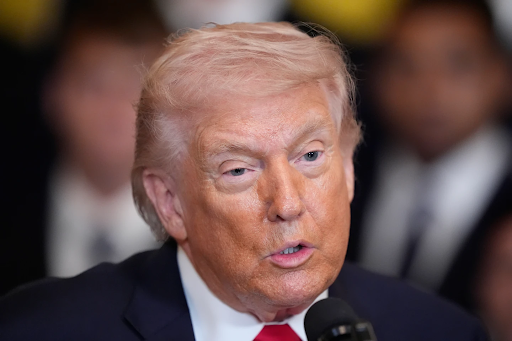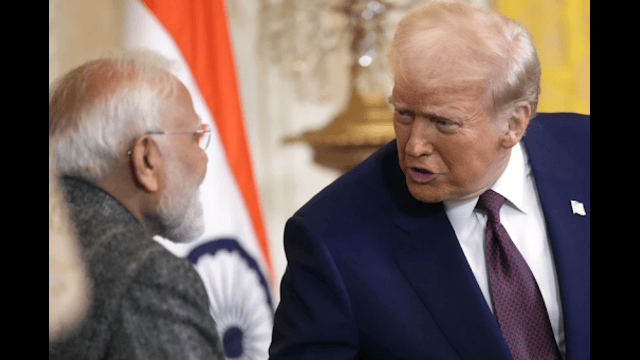
President Donald Trump, right, speaks with India’s Prime Minister Narendra Modi during a news conference in the East Room of the White House, Feb. 13, 2025, in Washington.
In a move stirring global trade waters, former U.S. President Donald Trump has announced steep import duties on India. The decision comes as a response to India's continued purchase of Russian oil, defying Western sanctions.
Trump’s executive order, signed Wednesday, imposes an additional 25% tariff on Indian goods, raising total duties to a staggering 50%. These tariffs will take effect 21 days after signing—leaving a short window for negotiations between Washington, New Delhi, and Moscow.
New Tariff Policy Puts India in Tough Spot
Until now, India was seen as a promising manufacturing alternative to China. But these heavy tariffs could threaten that reputation. Trump’s latest trade order doesn’t target China—despite it also being a major buyer of Russian oil.
China currently faces a 30% tariff from the U.S., notably less than India’s new 50% rate. The difference has raised eyebrows among economists and trade experts alike.
India Calls Tariffs “Unfair and Unjustified”
India’s government quickly reacted to the announcement, calling the tariffs “unfortunate.”
Foreign Ministry spokesperson Randhir Jaiswal said the move is “unfair, unjustified, and unreasonable.” He reiterated that India’s oil imports are based on market demands and the need for energy security for its 1.4 billion citizens.
India is expected to explore all possible options to protect its economic interests.
Experts Warn of Heavy Economic Fallout
Trade expert and former Indian official Ajay Srivastava didn’t mince words.
He warned that these tariffs could push India into the list of most heavily taxed U.S. trading partners—above countries like China, Vietnam, and Bangladesh.
Srivastava believes Indian exports to the U.S. could plummet by 40% to 50%, especially in textiles, pharmaceuticals, and gems.
He also labeled Trump’s decision “hypocritical”, citing that China imported more Russian oil than India in the past year.
Srivastava also pointed out that Washington avoids targeting Beijing due to China's dominance over critical minerals, which are vital for the U.S. tech and defense sectors.
Trade Deficit and Strategic Tensions
According to U.S. Census Bureau data, America had a $45.8 billion goods trade deficit with India in 2024.
This means the U.S. imported significantly more from India than it exported. Key imports include textiles, pharmaceutical drugs, precious stones, and other goods crucial to American businesses and consumers.
India was once seen as a strategic ally to help counter China’s growing influence in Asia. But its neutral stance on the Russia-Ukraine war and continued oil imports from Moscow have sparked growing tensions with the U.S.
Shadow Fleets and Oil Price Caps
Trump’s decision also challenges earlier efforts by the Biden administration and G7 countries, which encouraged India to buy cheaper Russian oil under a $60-per-barrel price cap.
This price cap aimed to slash Russian revenues and curb its war efforts in Ukraine. However, Russia has continued to profit—using shadow fleets and non-compliant insurers to bypass sanctions.
These workarounds have made the cap less effective, prompting stronger actions from the U.S. under Trump’s leadership.
Global Trade Outlook Could Shift
The new tariff threat raises broader questions about future U.S.-India trade ties.
Will New Delhi reconsider its energy strategy?
Can it afford to alienate a major trade partner like the United States?
Meanwhile, Trump has hinted at a possible meeting with Russian President Vladimir Putin in the coming week, as he pushes to end the Ukraine war through direct talks.
India now stands at a crossroads—torn between economic necessity and diplomatic friction.