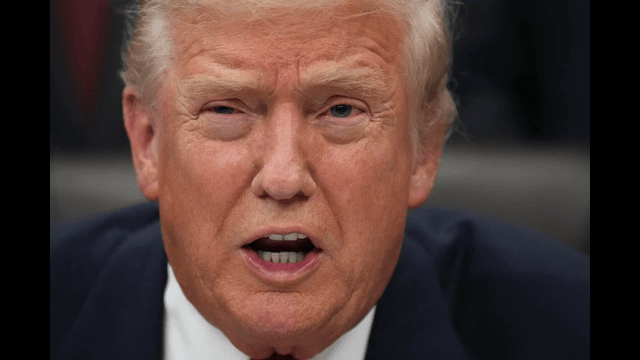
President Donald Trump speaks before signing the funding bill to reopen the government, in the Oval Office of the White House, Wednesday, Nov. 12, 2025, in Washington.
President Donald Trump said Friday that he helped prevent renewed conflict between Cambodia and Thailand by stepping in to preserve a fragile U.S.-brokered ceasefire. The truce had appeared at risk earlier in the week after fresh violence erupted along the disputed border.
Trump Says His Intervention Halted Conflict
Speaking aboard Air Force One, Trump declared that he “stopped a war” after calling the prime ministers of both Cambodia and Thailand. He said the discussions helped calm escalating tensions and restore their commitment to the agreement.
Trump credited his leverage on global trade—particularly his readiness to impose steep tariffs—as a major factor in influencing foreign governments. He suggested that this pressure helped him secure cooperation from both Southeast Asian nations.
“They’re doing great,” Trump said. “They were not doing great. But I think they’re going to be fine.”
Border Dispute Long at the Heart of Cambodia–Thailand Conflict
Fighting between Cambodia and Thailand erupted in late July over disputed border areas. The conflict lasted five days, leaving several soldiers and civilians dead. The source of the dispute traces back to a 1907 French colonial map, which Cambodia recognizes but Thailand disputes.
Trump intervened earlier by threatening to withdraw certain trade privileges unless the two countries halted fighting. This led to a temporary ceasefire. The agreement was reaffirmed more broadly during the ASEAN Summit in Malaysia, which Trump attended.
New Violence Raises Alarm Over Ceasefire
The Cambodia–Thailand ceasefire appeared to be unraveling this week. Cambodian Prime Minister Hun Manet said a villager died when gunfire erupted in Prey Chan, a border community in Banteay Meanchey province. Three more civilians were injured.
Manet accused Thai troops of firing on Cambodian civilians, noting that the same village had seen a tense confrontation in September, though that incident resulted in no casualties.
Thailand disputed Cambodia’s account. Thai military officials claimed Cambodian soldiers fired into Thailand’s Sa Kaeo province, triggering the latest standoff. No Thai casualties were reported.
The conflicting narratives fueled concerns that the ceasefire might collapse without immediate diplomatic intervention.
Historic Rivalry Fuels Modern Dispute
Cambodia and Thailand share a long history of rivalry dating back centuries, when both nations were powerful regional kingdoms. Their modern border tensions are tied to competing claims over several areas, exacerbated by differing interpretations of colonial-era maps.
The current ceasefire focuses only on halting violence. It does not provide a framework for resolving the deeper border dispute. Analysts warn that without a long-term settlement, sporadic clashes remain likely.
Trump’s Role in Maintaining the Ceasefire
Trump’s intervention came at a crucial moment. His threat to use economic pressure encouraged both sides to reaffirm their commitment to peace. While his announcement drew attention, U.S. officials offered no additional details about long-term diplomatic plans.
For now, both nations appear willing to ease tensions. But observers note that the region’s border issues—including territorial claims, historic grievances, and national pride—remain complicated and unresolved.
Ceasefire Holds, But Uncertainty Remains
Though Trump says he “stopped a war,” experts caution that the Cambodia–Thailand ceasefire remains fragile. The underlying disagreements over the border remain untouched. Without a clear path forward, both nations may continue to face periodic tensions.
Still, Trump’s involvement provided temporary stability, keeping the ceasefire intact—at least for now—as both countries navigate the next phase of their long-running dispute.