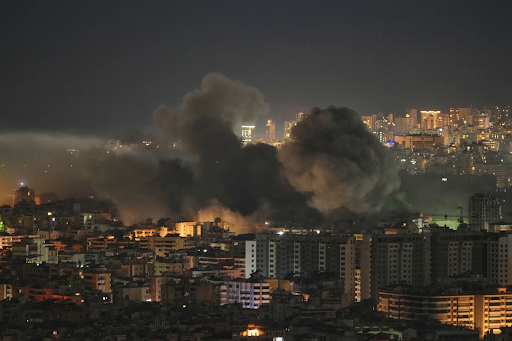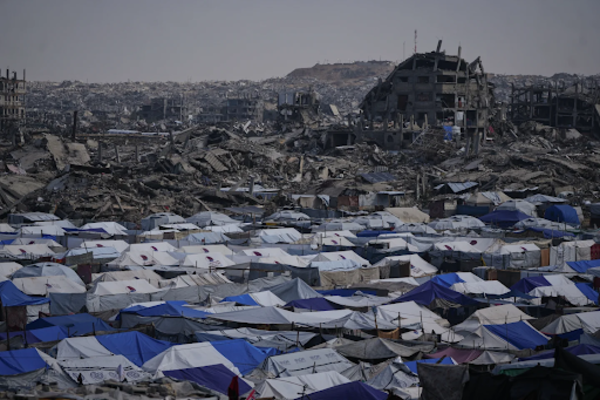
Tents sheltering displaced Palestinians stand amid the destruction left by the Israeli air and ground offensive in Gaza. Associated Press
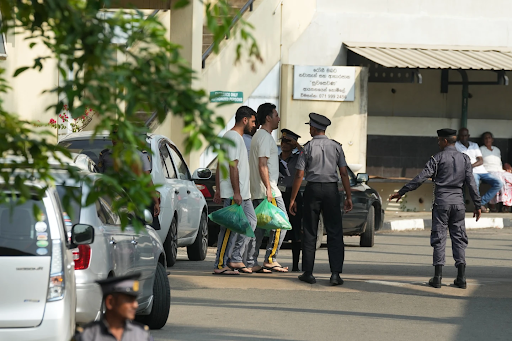
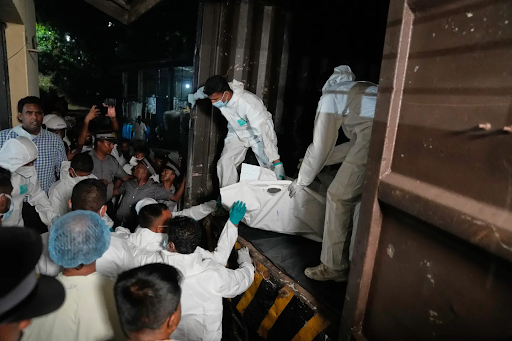
The first phase of the U.S.-brokered ceasefire between Israel and Hamas is nearing completion. Yet the process has been marked by delays, disputes, and uncertainty. With one hostage still in Gaza, the focus now shifts to a more complex second phase under Donald Trump’s ceasefire plan, which could reshape the Middle East — or plunge Gaza into years of instability.
A Turning Point in the Israel-Hamas Ceasefire
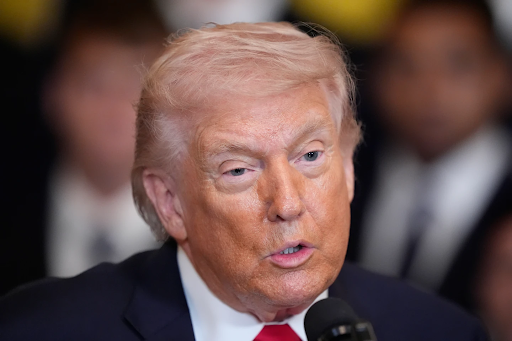
Trump’s 20-point ceasefire plan, approved by the U.N. Security Council, outlines a sweeping vision:
- End Hamas’ rule in Gaza
- Establish a demilitarized, internationally supervised territory
- Rebuild Gaza’s shattered infrastructure
- Normalize relations between Israel and the Arab states
- Create a pathway to eventual Palestinian independence
But the next stage demands cooperation from Israel, Hamas, the U.S., Qatar, and numerous international partners. Any breakdown risks leaving Gaza trapped in limbo — a scenario where Hamas retains pockets of control, Israel continues a long-term military presence, and civilians remain homeless, jobless, and dependent on aid.
Qatar’s Prime Minister Sheikh Mohammed bin Abdulrahman Al Thani warned that the ceasefire is at a critical moment, while Israeli Prime Minister Benjamin Netanyahu will meet U.S. officials to determine next steps.
International Troops for Gaza?
A core element of Trump’s ceasefire plan is the International Stabilization Force, tasked with securing Gaza and training Palestinian police. But the force has not yet been formed. Countries such as Egypt, Turkey, Pakistan, and Indonesia have expressed interest, though no formal commitments exist.
A U.S. official predicts potential troop deployment by early 2026, but major challenges remain:
- No clear command structure
- No defined authority over Gaza
- High risk of armed clashes with Hamas
Hamas insists it will not accept disarmament by foreign forces. Israel is similarly wary of entrusting its security to outsiders. These conflicting positions make troop deployment one of the most fragile points in the ceasefire plan.
Trump’s “Board of Peace”
Another cornerstone of the plan is the Board of Peace, an international body led by Trump to supervise Gaza’s reconstruction and governance. The board will oversee a committee of Palestinian technocrats running daily operations.
At present, Trump is the only officially named member. Tony Blair is being considered, but the full list is pending. The board must be acceptable to Israel, Hamas, mediators, and global aid agencies — a diplomatic puzzle with no easy solution.
Rebuilding Gaza: A $70 Billion Challenge
Trump’s proposal highlights the need for a large-scale economic development plan for Gaza. The territory is devastated, with most of its population displaced and unemployed.
However:
- No reconstruction blueprint has been released
- Donor nations have not finalized commitments
- The U.N. estimates rebuilding may cost $70 billion
Egypt will host a donor conference this month, but securing both funding and political cooperation may prove extremely difficult.
Disarmament: The Most Contentious Issue
The ceasefire requires Hamas to surrender all weapons under international supervision. Fighters who disarm would receive amnesty and the option to leave Gaza.
But Hamas has rejected a full disarmament, citing Israel’s continued presence in Palestinian territories. A Hamas official stated the group might “freeze or store” weapons during political talks — a proposal Israel is unlikely to accept.
Failure to disarm Hamas threatens:
- renewed conflict with Israel
- clashes with international troops
- The collapse of the entire ceasefire plan
Palestinian Government Under Oversight
The plan calls for a technocratic Palestinian committee to administer Gaza under the supervision of the Board of Peace. But choosing committee members will be contentious:
- Israel rejects involvement from anyone tied to Hamas or the Palestinian Authority
- Palestinians may reject a body seen as symbolic rather than sovereign
Without genuine local representation, public support for the new system could crumble.
Israeli Withdrawals: No Timetable, Big Questions
Israel is obligated to withdraw from Gaza except for a buffer zone along the border. But currently, Israel still controls more than half the territory.
Further withdrawals will depend on demilitarization benchmarks, with no fixed dates. Israel’s military chief has already called the dividing “Yellow Line” a new defensive border, raising doubts about future pullbacks.
Palestinian Authority Reforms and the Statehood Question
Trump’s ceasefire plan includes reforming the Palestinian Authority and creating a “credible pathway” to Palestinian statehood. The PA has initiated reforms in governance and education.
But Israel opposes both Palestinian statehood and PA involvement in postwar Gaza. Without clear timelines or guarantees, public support for the plan risks collapsing.
What Comes Next?
Trump’s ceasefire plan offers a bold blueprint — but one fraught with political, diplomatic, and security obstacles. The coming months will reveal whether the parties move toward a reimagined Gaza or fall back into conflict, occupation, and uncertainty.
The next phase will determine whether the ceasefire becomes a bridge to long-term stability or another stalled promise in a region burdened by decades of war.