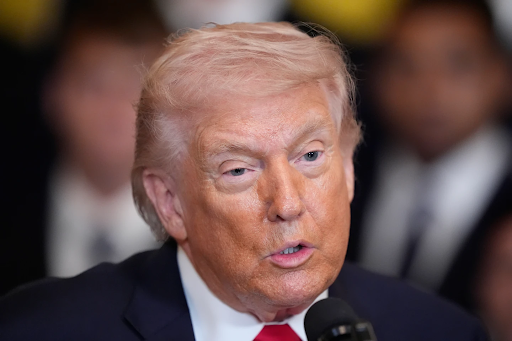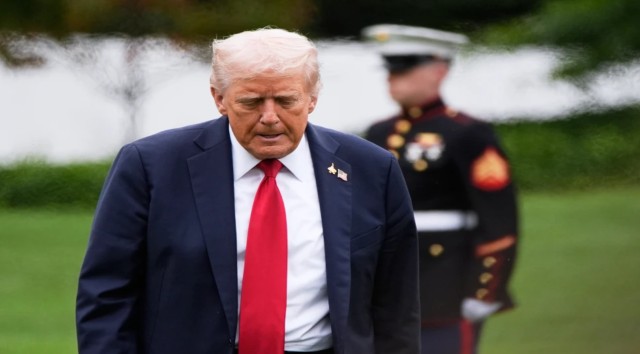
President Donald Trump walks from Marine One after arriving on the South Lawn of the White House, Tuesday, Sept. 30, 2025, in Washington.
President Donald Trump has escalated America’s fight against drug cartels, declaring them unlawful combatants and announcing that the United States is in an “armed conflict” with these groups. The declaration follows U.S. military strikes on boats in the Caribbean, sparking intense debate over the scope of presidential war powers.
Trump’s Memo Redefines the Drug War
A confidential Trump administration memo, obtained by the Associated Press, claims drug trafficking into the U.S. now amounts to armed conflict. Trump directed the Pentagon to conduct operations under the “law of armed conflict.” The memo justifies military force as a means of self-defense against ongoing cartel activity.
New Grounds for Military Action
The President’s declaration signals a dramatic expansion of executive authority. Experts warn it could allow targeting cartel members with lethal force, as well as capture and detention without trial. Former Bush administration national security official Matthew Waxman called the move “a dangerous stretch of international law.”
Strikes in the Caribbean Raise Questions
The U.S. military recently carried out three strikes on suspected drug boats in the Caribbean. At least two of the vessels reportedly originated from Venezuela. One September 15 strike destroyed a vessel, its narcotics, and killed three alleged cartel members. The operations followed a significant naval buildup in the region, with eight U.S. warships and over 5,000 personnel deployed.
White House Defends Action
The White House maintains the actions were lawful and aimed at protecting the country from deadly narcotics. “The President acted in line with the law of armed conflict,” a statement said. Pentagon officials later briefed senators and House staffers, but lawmakers questioned both the legality of the strikes and Congress’s role in approving military action.
Legal and Constitutional Concerns
The memo, also reported by The New York Times, has been sent to Congress. Lawmakers expressed frustration that the administration did not identify which cartels were targeted. Trump previously designated several Latin American cartels as foreign terrorist organizations, but no full list was shared.
Critics argue that Trump is justifying his actions in a manner similar to the Bush administration after 9/11, except Bush had congressional approval. Waxman warned that the administration is moving away from case-by-case decision-making, claiming any cartel-linked vessel could be attacked, regardless of its location.
Lawmakers Push Back
Senators from both parties have demanded Trump seek war powers authorization before engaging in military operations against drug traffickers. Sen. Jack Reed, a Democrat and ranking member of the Senate Armed Services Committee, criticized the administration’s justification. “Cartels are despicable,” Reed said, “but the President has provided no credible legal basis or intelligence for these strikes.”
Human rights groups have also raised alarms, accusing the administration of blurring the line between law enforcement and military action. Critics fear the move risks setting a precedent for unilateral presidential wars.
What Comes Next?
Experts believe more strikes are likely and warn the U.S. may expand operations into foreign territories. Waxman predicted the administration could escalate to direct use of force on the soil of another country.
For now, Trump’s declaration has set off a constitutional clash, forcing Congress to decide whether to restrain or endorse this expanded use of presidential war powers. The outcome could reshape how the U.S. conducts its fight against drug cartels for years to come.