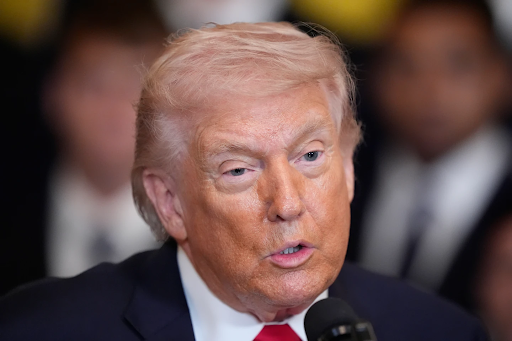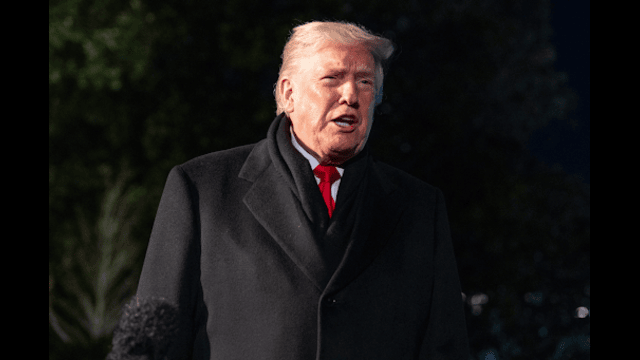
President Donald Trump speaks before departing on Marine One from the South Lawn of white house.
President Donald Trump heads to Davos this week with an ambitious, controversial agenda.
His renewed push to acquire Greenland threatens to dominate discussions.
The move could strain ties with European allies.
It may also overshadow his planned focus on affordability issues at home.
Trump arrives at the World Economic Forum amid fresh tariff threats.
He has warned Denmark and seven other allied nations of steep trade penalties.
The pressure is directly linked to his demand over Greenland.
Trump Greenland Stance Sparks Alarm in Europe
Trump Greenland ambitions have unsettled European leaders.
He has threatened tariffs unless Denmark negotiates Greenland’s transfer.
The territory is semi-autonomous but remains part of the Danish kingdom.
Denmark has firmly rejected any such discussion.
The proposed tariffs would begin at 10 percent next month.
They could rise to 25 percent by June.
Economists warn these levels could raise prices and slow economic growth.
European officials say the Trump Greenland strategy risks destabilizing long-standing alliances.
Several leaders fear it undermines trust within NATO.
They also see it as an escalation without precedent.
Tariffs and Markets React to Trump Greenland Signals
Financial markets reacted sharply to Trump’s latest threats.
Wall Street fell as investors assessed rising trade tensions.
The S&P 500 recorded its biggest drop since October.
The Dow and Nasdaq followed similar downward paths.
Analysts link the volatility to uncertainty around Trump Greenland tariffs.
Investors worry about long-term damage to transatlantic trade relations.
A fragile U.S.–EU trade framework now appears at risk.
European Commission President Ursula von der Leyen issued a warning.
She said the European Union would respond firmly if tariffs proceed.
Her message emphasized unity and proportional retaliation.
Davos Speech Risks Being Derailed
Trump planned to use Davos to highlight affordability challenges.
Housing costs and inflation remain major voter concerns in the United States.
However, Trump Greenland tensions threaten to steal the spotlight.
Experts warn trade conflict could worsen affordability problems.
Higher tariffs may fuel inflation and push interest rates upward.
That scenario would make housing even less attainable.
A recent U.S. survey shows growing public frustration.
Six in ten adults believe Trump policies have raised living costs.
This sentiment adds pressure to his Davos message.
Macron and Allies Push Back
French President Emmanuel Macron addressed global instability in Davos.
He cited economic and security imbalances without naming Trump.
Macron urged leaders to reject rule by brute force.
The remarks were widely viewed as a response to Trump Greenland rhetoric.
European leaders remain wary of unilateral American actions.
Many fear a breakdown in diplomatic norms.
Trouble Even Before Arrival
Trump’s trip faced an early setback.
Air Force One turned back due to a minor electrical issue.
The delay fueled speculation around the visit’s tense atmosphere.
Trump appeared unfazed by the incident.
He described the trip as unpredictable.
He offered no clarity on potential outcomes.
Trump Greenland Meets Peace Diplomacy
Beyond trade, Trump plans to unveil his “Board of Peace.”
The body aims to oversee efforts to end the Gaza conflict.
It may later expand its mandate.
Only a small group of leaders have joined so far.
Several major European powers remain hesitant.
Some fear it could rival existing global institutions.
Trump suggested the board could reduce reliance on the United Nations.
Yet he later said the U.N. should continue.
He described its potential as still significant.
Davos Uncertainty Ahead
Trump Greenland ambitions have reshaped expectations for Davos.
What was meant to be an economic message now feels politically charged.
Allies, markets, and voters are watching closely.
The coming days may define Trump’s global standing.
They could also shape U.S.–Europe relations for years ahead.