A protester draped in a flag stood surrounded by smoke during a demonstration in Portland. Reuters
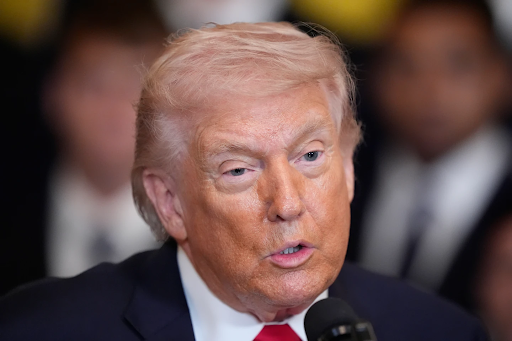
Hundreds of Texas National Guard troops gathered Tuesday at an army base outside Chicago, as U.S. President Donald Trump once again hinted at using the Insurrection Act to send troops into Democratic-led cities.
The act, which dates back to the early 1800s, allows the president to deploy military forces within the country during emergencies. Trump said he might use it to override local and state opposition and continue sending troops where he sees a need.
He told reporters in Washington that previous presidents had invoked the act and said, “If you look at Chicago, there’s a lot of crime, and if the governor can’t do the job, we’ll do it.”
Courts Split Over Troop Deployments
A federal judge recently blocked Trump’s plan to send troops to Portland, Oregon, but another judge allowed the deployment to Chicago to proceed for now. Federal agents are already active in Chicago, focusing on what the administration describes as efforts to fight illegal immigration.
Legal experts say Trump’s possible use of the Insurrection Act would mark a serious expansion of presidential power. The law has not been used since 1992, when then-President George H.W. Bush deployed troops during the Los Angeles riots.
Normally, the National Guard operates under state control and assists with natural disasters or emergencies. The Insurrection Act, however, gives the president the authority to use troops for law enforcement if local governments are unable—or unwilling—to maintain order.
Military Leaders Warn of Dangerous Precedent
Randy Manner, a retired Army major general, called the move “an extremely dangerous slope.” He said, “It essentially says the president can do whatever he wants. That’s the definition of dictatorship and fascism.”
Trump recently told top military leaders that American cities could serve as “training grounds” for soldiers, worrying Democrats and civil liberties groups who say the president is trying to use the military for political gain.
Growing Tension in Chicago and Portland
Trump has ordered National Guard troops to Chicago and Portland, despite opposition from Democratic leaders. Illinois Governor JB Pritzker accused Trump of using soldiers as “political props” in an attempt to justify militarization.
“Donald Trump is using our service members as pawns,” Pritzker said Monday. Illinois and Chicago have filed lawsuits to block the deployments.
Texas Guard troops were spotted at an Army Reserve base in Elwood, about 80 kilometres southwest of Chicago. It’s unclear when they plan to begin operations in the city.
While Trump describes these cities as “war zones,” local officials report that protests remain mostly peaceful. Demonstrations against immigration policies have continued, but daily life in Chicago remains largely unaffected. Restaurants and beaches are full, and crime has dropped compared to past years.
In Portland, some protests have turned tense, with federal officers clashing with small groups outside immigration facilities. Several people, including journalists, have been arrested.
Legal Battles Ahead
Federal judges in Illinois and Oregon continue to review the administration’s deployment plans. The Justice Department argues that Trump’s actions are lawful, while critics say the president is ignoring state authority.
Legal scholars note that the Supreme Court has previously ruled that only the president can decide when the Insurrection Act applies—a power that gives Trump wide discretion.
As tensions rise, both sides brace for a long legal and political fight over how far presidential power should go.