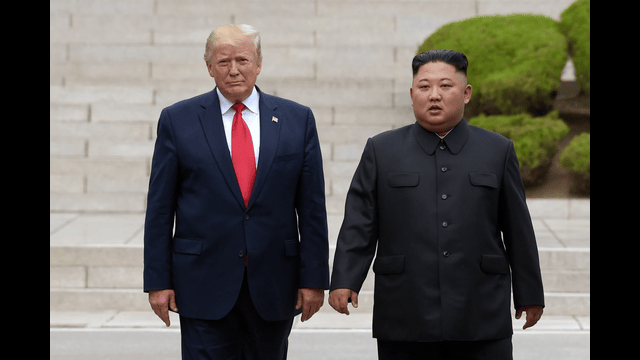
U.S President Donald Trump, left, meets the North Korean Leader Kim Jong Un at the north korean side of the border village.
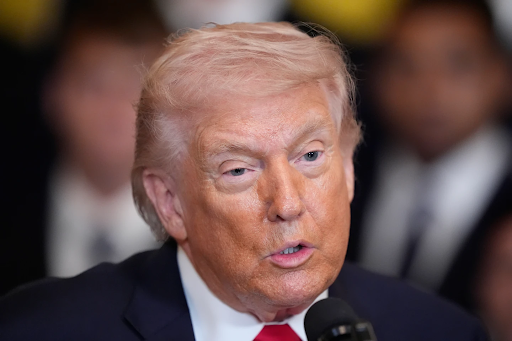
As U.S. President Donald Trump prepares for his first Asia trip since returning to office, whispers of a potential reunion with North Korean leader Kim Jong Un are spreading fast. The buzz follows their dramatic 2019 meeting at the Korean border, which marked a turning point in the stalled nuclear talks. This time, as Trump’s visit to South Korea approaches, questions arise — will history repeat itself?
Hopes for a Trump-Kim Reunion
Trump’s upcoming visit to South Korea between October 31 and November 1 has sparked intense curiosity. Analysts wonder if the trip will bring another surprise encounter between the two leaders. Their previous meetings — in Singapore (2018), Hanoi (2019), and at the border village of Panmunjom (2019) — drew global attention.
While experts doubt a spontaneous meeting this time, many believe renewed diplomacy between Washington and Pyongyang could soon follow. Trump’s repeated praise of Kim as a “smart guy” and his eagerness to restart talks suggest he still values personal diplomacy.
Recently, Kim responded positively, saying he holds “good memories” of Trump and could return to negotiations — but only if the U.S. drops its “delusional obsession with denuclearization.”
South Korea Signals Possible Meeting
South Korea’s Unification Minister Chung Dong-young told lawmakers that another Trump-Kim meeting at Panmunjom is “possible.” He pointed to the recent suspension of civilian tours in the area and Kim’s softened tone as signs of preparation.
Ban Kil Joo, a professor at the Korea National Diplomatic Academy, also noted an increase in the chances of a meeting. However, he cautioned that even if no talks occur now, Kim may reconsider diplomatic engagement during North Korea’s key party conference in January.
So far, there are no visible signs of logistical preparation. But given that the 2019 meeting happened just a day after Trump’s impromptu tweet, observers say nothing can be ruled out.
Kim Jong Un’s Growing Leverage
Since diplomacy collapsed in 2019, Kim Jong Un has expanded his nuclear arsenal and strengthened ties with Russia and China. His alignment with Moscow amid the Ukraine war and Beijing’s continued support have given him more diplomatic weight than before.
Experts say this newfound strength reduces Kim’s urgency to negotiate with Washington. Still, some analysts argue that Kim might seek talks later to secure relief from U.N. sanctions, which continue to strain North Korea’s economy.
“Kim now wants recognition as a nuclear power,” said Kim Tae-hyung, a professor at Soongsil University. “But that would go against the U.S. stance that sanctions will remain until North Korea fully denuclearizes.”
What’s at Stake for Trump
A potential Trump-Kim meeting could benefit both leaders politically. For Trump, it would be a powerful foreign policy moment — proof that he can achieve what others couldn’t. For Kim, it could mean leverage for sanctions relief and a platform to push for nuclear recognition.
“Trump would boast of such a meeting,” said Chung Jin-young, former dean at Kyung Hee University. “But what could the U.S. offer in return that’s meaningful to Kim?”
Koh Yu-hwan, former head of South Korea’s Institute of National Unification, echoed that sentiment, warning that without real incentives, any summit would likely end without results.
North Korea’s Evolving Threat
Even without an immediate meeting, experts believe future Trump-Kim diplomacy remains possible. Kim may view Trump as a U.S. leader open to concessions, while Trump may see an opportunity to score a major diplomatic win.
However, many worry about the implications. Some urge diplomacy to curb the risk of nuclear escalation, while others fear Trump might settle for a “small deal” — easing sanctions in exchange for limited restrictions on long-range missile tests.
Kim Taewoo, former head of the Institute of National Unification, said even a partial deal could improve regional security. “After decades of failed denuclearization efforts, even freezing some programs would be progress,” he noted.
Still, he raised a crucial question: “If North Korea can strike the U.S., can Washington truly protect South Korea under its nuclear umbrella?”
The Road Ahead
Experts largely agree that North Korea won’t give up its nuclear ambitions. Any agreement that relaxes sanctions for minor concessions could pressure South Korea and Japan to seek nuclear capabilities of their own.
Whether or not a Trump-Kim meeting happens this month, one thing is clear — the stakes are higher than ever. As both leaders navigate complex domestic and global pressures, the world watches closely, waiting to see if diplomacy will make a comeback on the Korean Peninsula.