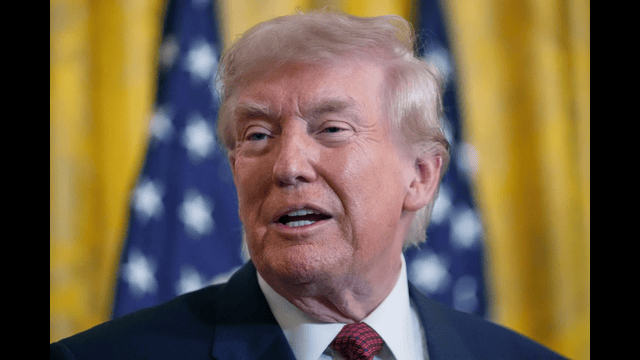
President Donald Trump speaks during an event on coal power in the East Room at the White House, Wednesday, Feb. 11, 2026, in Washington.
President Donald Trump is set to host Latin American leaders in Florida next month, as part of a broader diplomatic push ahead of his expected visit to China. The March 7 gathering comes at a moment when the administration is intensifying its focus on China’s growing footprint across the Western Hemisphere.
A White House official confirmed plans for the Trump Latin American summit, noting that formal announcements are still pending. The timing is significant, as Trump is scheduled to travel to Beijing weeks later for talks with Chinese President Xi Jinping.
Strategic Timing Before China Visit
The Trump Latin American summit reflects Washington’s renewed emphasis on regional influence. Administration officials have repeatedly voiced concern over China’s economic and political reach in Latin America. Over the years, Beijing has expanded ties through infrastructure investments, trade agreements, and large-scale loans.
By convening regional leaders in Florida, Trump aims to reinforce U.S. leadership in its own hemisphere. The summit also serves as a diplomatic counterweight before high-level discussions in Beijing.
Military and Diplomatic Signals
The administration’s regional outreach has not been limited to diplomacy alone. Earlier this week, Gen. Dan Caine, chairman of the Joint Chiefs of Staff, hosted defense leaders from 34 Western Hemisphere nations in Washington. The meeting underscored the administration’s focus on security coordination.
Defense Secretary Pete Hegseth addressed the gathering, emphasizing the goal of achieving what he described as “permanent peace” in the hemisphere. The Trump Latin American summit now adds a political dimension to those military discussions.
Venezuela Operation Shapes Narrative
Recent U.S. actions in Venezuela have further defined the administration’s regional stance. Last month, U.S. forces carried out an operation that led to the removal of Venezuelan leader Nicolás Maduro. He was transported to New York to face federal drug conspiracy charges.
Trump has defended the move by citing concerns about Chinese and Russian influence in Venezuela. Speaking to oil industry officials, he argued that failing to act would have allowed rival powers to expand their control.
China remains the largest buyer of Venezuelan oil, although those purchases represent a small portion of Beijing’s total imports. Still, the administration views the relationship as strategically sensitive.
Panama Canal Dispute Resurfaces
The Trump Latin American summit also unfolds amid renewed tensions over the Panama Canal. Trump has described the canal as vital to U.S. interests, while claiming it is influenced by China. Historically, the canal was built and operated by the United States before being handed over to Panama in 1999.
Recently, Panama’s high court annulled a contract held by Hong Kong-based CK Hutchison to operate two canal ports. The development has fueled debate about foreign control over critical infrastructure.
Trump had raised the canal issue even before securing a second term, suggesting that the U.S. reconsider its position if foreign influence grew unchecked.
Concerns Extend to Peru
U.S. officials have also expressed unease about developments in Peru. A Peruvian court ruling limited oversight of the Chinese-built Chancay deepwater port, prompting concern from Washington. The State Department’s Bureau of Western Hemisphere Affairs warned that weak regulatory control could undermine national sovereignty.
In a social media statement, the department described the situation as a cautionary example. It emphasized support for Peru’s right to manage its own infrastructure without external dominance.
A Broader Regional Message
As the Trump Latin American summit approaches, the administration appears intent on sending a clear message. Washington aims to reaffirm its influence while challenging China’s expanding role in the region.
The Florida meeting is likely to blend diplomacy, security discussions, and economic strategy. It also sets the stage for Trump’s upcoming talks in Beijing, where hemispheric dynamics may shape broader negotiations.
For now, the summit represents a calculated effort to strengthen alliances closer to home, while preparing for a high-stakes encounter abroad.