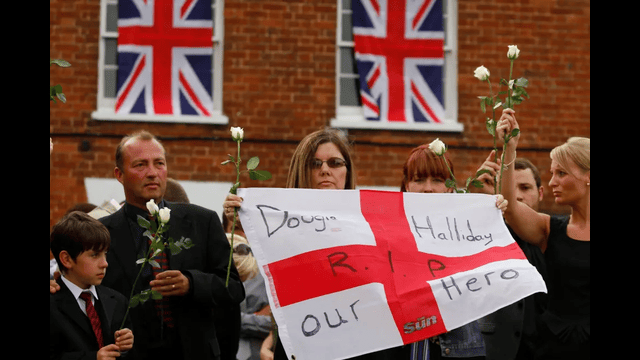
Relatives of British Army Private Douglas Halliday, of the 1st Battalion The Mercian Regiment, one of the seven British soldiers killed in Afghanistan, line a street as his coffin is driven through the town of Wootton Bassett, England, following repatriation, Tuesday, June 29, 2010
British Prime Minister Keir Starmer has sharply criticised comments made by former U.S. President Donald Trump about NATO allies in Afghanistan. Starmer described the remarks as “insulting” and “frankly appalling.” He indicated that an apology was warranted.
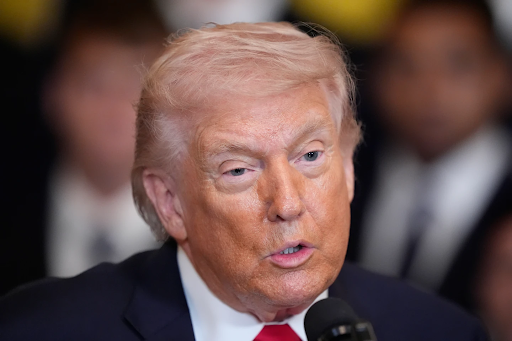
Trump’s statements questioned the role of non-U.S. NATO troops during the Afghanistan war. He suggested they avoided frontline combat and would not reliably support the United States. The comments sparked anger across the United Kingdom, cutting across political divides.
The controversy has reopened painful memories of Britain’s long military involvement in Afghanistan.
Trump Questions NATO Allies
Speaking to Fox Business Network in Davos, Trump cast doubt on NATO’s commitment to the U.S. He claimed America had rarely needed help from allies. He also alleged that foreign troops stayed away from the front lines in Afghanistan.
Trump said NATO partners “sent some troops” but kept them “a little back.” His remarks immediately drew backlash from veterans, lawmakers, and families of fallen soldiers.
Critics said the claims ignored well-documented facts of the war.
Reality of the Afghanistan War
After the September 11 attacks, the U.S. led a global coalition into Afghanistan. The mission aimed to dismantle al-Qaida and remove the Taliban. NATO’s Article 5 mutual defence clause was triggered for the first time.
Troops from dozens of countries joined the fight. British forces played a major role, especially in Helmand Province. They engaged in some of the fiercest combat of the war.
The U.K. lost 457 service personnel. Many more returned with life-changing injuries.
Starmer Pays Tribute
Starmer responded by honouring British troops who served and died in Afghanistan. He spoke of their courage and sacrifice. He said Trump’s remarks caused deep hurt to bereaved families and veterans.
The prime minister stressed that the nation would never forget those sacrifices. He added that any leader who misspeaks in such a way should apologise.
His comments were widely supported across Parliament.
Prince Harry Joins the Debate
Prince Harry also addressed the controversy, without naming Trump directly. The Duke of Sussex served two tours in Afghanistan with the British Army. He lost friends during the conflict.
Harry said the sacrifices of British soldiers deserved truth and respect. He spoke of families forever changed by the war. Parents buried children. Children grew up without parents.
His remarks resonated strongly with the public.
Britain’s Military Commitment
Former Prime Minister Tony Blair pledged support to the U.S. after 9/11. British troops remained in combat roles until 2014. They later stayed in support roles until the 2021 withdrawal.
More than 150,000 British troops served in Afghanistan. It was the largest NATO contribution after the United States.
Lawmakers with military backgrounds criticised Trump’s comments as dismissive and inaccurate.
Draft Dodging Allegations Resurface
Anger intensified because Trump never served in Vietnam despite being eligible. He received a deferment for bone spurs. He has since been unable to recall which foot was affected.
Authors and veterans called his remarks ironic and disrespectful. They said criticism of allied soldiers rang hollow given his own record.
NATO Tensions and Greenland Row
The Afghanistan remarks followed other Trump criticisms of NATO allies. He recently questioned their reliability amid threats involving Greenland. He even suggested tariffs against European nations opposing his stance.
Although Trump later softened his position after talks with NATO’s secretary-general, tensions remain. Analysts say trans-Atlantic relations have suffered.
Families Demand Accountability
Diane Dernie, whose son was severely injured in Afghanistan, called the comments the “ultimate insult.” She urged Starmer to confront Trump directly.
Starmer responded by saying he would apologise if he had spoken that way. His statement was seen as a clear rebuke.
The episode has reinforced the depth of feeling around NATO, Afghanistan, and shared sacrifice.