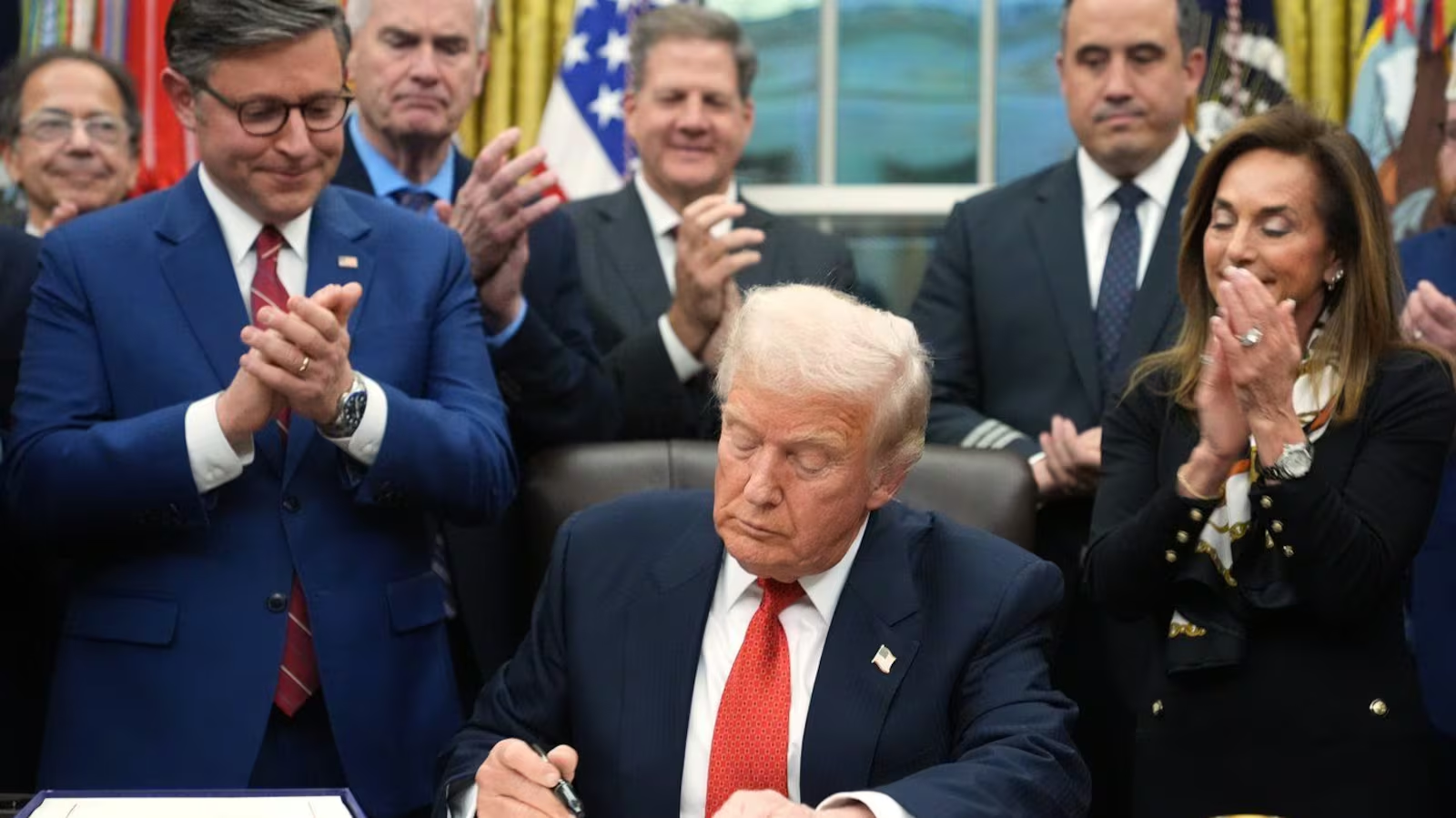
U.S. President Donald Trump signs the bill to reopen the government in the Oval Office on Nov. 12, 2025, in Washington. The Associated Press
U.S. President Donald Trump signed a long-delayed government funding bill Wednesday night, ending a 43-day shutdown that strained federal services and left thousands of workers without pay. Travellers dealt with crowded airports and long waits, while community food banks saw more families seeking help. The shutdown became the longest in U.S. history and deepened political division in Washington.
Trump placed blame on Democrats and urged Americans to remember the standoff next year. “When we come up to midterms and other things, don’t forget what they’ve done to our country,” he said during brief remarks.
The House approved the funding bill earlier in the day with a 222-209 vote, mostly along party lines. The Senate had already passed it earlier in the week.
A Bitter Fight Over Health Care
The shutdown began when Democrats refused to support a short-term funding bill that left out an extension of an enhanced tax credit. That credit lowers the cost of health insurance purchased through the Affordable Care Act. Democrats insisted the extension remain part of the deal. Republicans argued the two issues required separate debates.
Republican lawmaker Tom Cole criticized the shutdown strategy, saying, “Government shutdowns don’t work. They never achieve the objective that you announce.”
The battle over the expired health-care credit will continue. Democrats said they will not abandon their push to keep premiums from rising. “This fight is not over,” said Democratic leader Hakeem Jeffries.
Intense Emotions on Capitol Hill
Lawmakers’ frustration showed as they debated the new funding bill. Republicans accused Democrats of using the shutdown to force a policy win. “They knew it would cause pain and they did it anyway,” said House Speaker Mike Johnson.
Democrats responded by pointing to earlier tax cuts that, in their view, favoured the wealthy. They argued that the current bill leaves families uncertain about health-care costs.
The House had not held a regular legislative session since mid-September, after passing a temporary measure to keep the government open. Johnson sent members home after that vote and urged the Senate to move first.
What the Bill Includes
The final package came after eight senators from different parties negotiated a compromise. The bill funds three major departments and extends all other government funding through January 30. It guarantees that federal workers receive pay for the shutdown period and protects them from further layoffs until the end of January.
The bill also restores employment for federal workers who lost jobs during the shutdown and ensures food assistance programs stay funded for the rest of the budget year. It sets aside more than $200 million for enhanced security for members of Congress and additional funds for Supreme Court protection.
One controversial part allows senators to sue if federal agencies search their electronic records without notice. Critics argue it could help lawmakers tied to previous investigations seek damages.
A Continuing Health-Care Battle
The biggest unresolved issue remains the health-care tax credit. Without it, insurance premiums could more than double for many Americans next year. The Congressional Budget Office estimates that more than two million people could lose coverage altogether.
Some Republicans say they are open to keeping the credit with new limits based on income. Democrats say they may consider adjustments but remain cautious. Many remain doubtful the two sides will reach a deal by December.