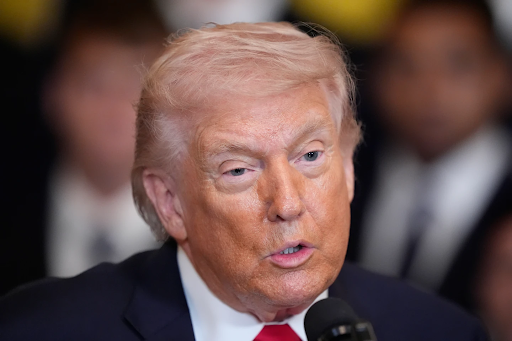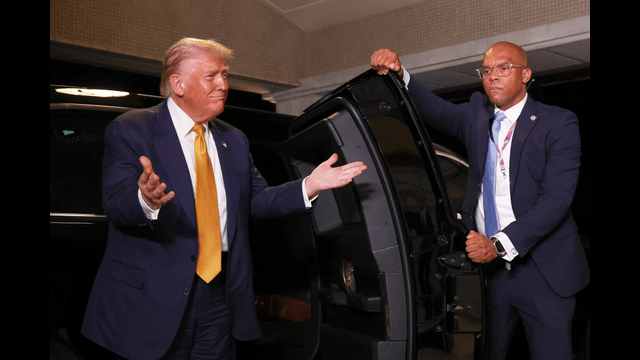
President Donald Trump, left, and Japan’s Emperor Naruhito talk during their meeting at the Imperial Palace in Tokyo, Oct. 27, 2025.
President Donald Trump’s efforts to secure a major trade deal with South Korea hit a roadblock this week. Despite his success in Japan, where he secured massive investment commitments, talks with Seoul are proving more complex and cautious.
Elusive Trade Deal Despite Strong Ties
Trump met South Korean President Lee Jae Myung on Wednesday in Gyeongju during the Asia-Pacific Economic Cooperation (APEC) summit. The meeting aimed to finalize a trade deal, but negotiations have stalled over one key demand — Trump’s call for South Korea to invest $350 billion in the U.S. economy.
While Trump insists the deal is close, South Korean officials say such a large direct investment could destabilize their domestic economy. Instead, they propose offering loans and guarantees, along with a swap line to manage currency flow. This difference has created a major impasse.
Seoul Hesitates Over Trump’s Demands
Officials in Seoul believe meeting Trump’s investment target in cash form is unrealistic. “We haven’t yet agreed on the structure or distribution of profits,” said Oh Hyunjoo, South Korea’s deputy national security director. Negotiations, she admitted, are “moving more slowly than expected.”
In Japan, Trump’s charm offensive yielded smoother results. Tokyo pledged $550 billion in investments, and $490 billion was formally announced by U.S. Commerce Secretary Howard Lutnick. But South Korea’s economic planners remain wary of overcommitting in a fragile global economy.
Trump Praises Ties but Presses Hard
During a business forum, Trump called the U.S.–South Korea relationship “very special” and claimed the two nations were “very close to a deal.” His tone was notably softer than usual, signaling a more diplomatic approach.
President Lee, however, struck a more cautious note. He warned against rising nationalism and protectionism, urging cooperation instead. “In times of crisis, solidarity matters most,” he said, emphasizing APEC’s role as a bridge between nations.
Tariffs Add Pressure on Seoul
Until a trade deal is reached, South Korean automakers face a 25% U.S. tariff on vehicles — higher than the 15% rate applied to Japan and Europe. Companies like Hyundai and Kia are feeling the squeeze, losing ground to global rivals.
Adding to tensions, a U.S. immigration raid on a Hyundai plant in Georgia last month left more than 300 South Koreans detained. The incident angered Seoul and created new distrust in trade talks. President Lee said the visa system must improve for future investments to continue.
“If our workers face visa hurdles, building factories in the U.S. will be nearly impossible,” he warned. The U.S. has since agreed to allow short-term visas and a waiver program to support South Korean workers in American industrial projects.
Upcoming Talks With China and Regional Challenges
While in South Korea, Trump is also preparing for a meeting with Chinese President Xi Jinping. Both leaders are expected to discuss easing trade tensions and lowering tariffs related to fentanyl ingredients. “China is going to be working with me,” Trump said optimistically aboard Air Force One.
However, a meeting with North Korean leader Kim Jong Un remains off the table. North Korea rejected diplomatic overtures, demanding the U.S. drop its denuclearization stance. The regime also tested sea-to-surface missiles during Trump’s visit — a pointed reminder of ongoing regional instability.
Trump dismissed the missile launches, saying, “He’s been launching missiles for decades.”
A Test of Diplomacy and Economic Leverage
For Trump, South Korea represents both a diplomatic challenge and an economic opportunity. His push for a $350 billion commitment reflects his broader “America First” agenda, but Seoul’s hesitation underlines the risks of economic overreach.
As talks continue, both sides seem eager to maintain friendly ties — yet a final South Korea trade deal remains elusive. The coming days at the APEC summit will reveal whether Trump’s deal-making power can bridge the divide or if his bold investment demands will push Seoul further away.