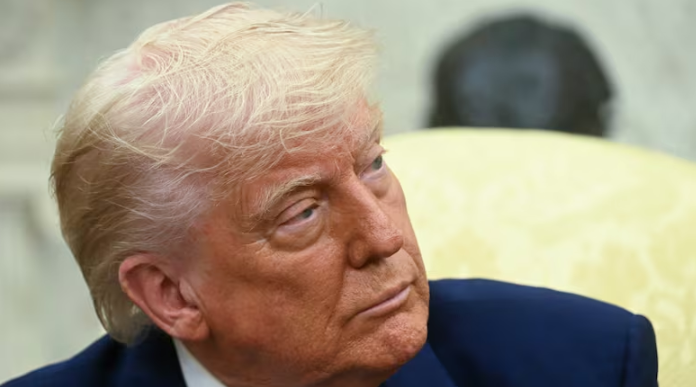
On May 21, 2025, President Donald Trump, seen in the Oval Office, raised tensions over trade by taking aim at tech company Apple and goods coming from the European Union. (Jim Watson/AFP/Getty Images)
Former U.S. President Donald Trump is back in the headlines, shaking up global trade discussions with bold new tariff threats. On Friday, Trump suggested a steep 50% tariff on goods from the European Union, set to begin on June 1. He also floated a 25% tariff on Apple and other smartphone makers like Samsung if their products are sold in the U.S. but not made there.
Trump shared these statements on social media earlier in the day, later confirming and elaborating on them at the White House. The proposed EU tariffs would affect a wide range of products, including luxury items and pharmaceuticals—key exports for European businesses.
The European Union has yet to respond publicly. A phone call took place between EU trade chief Maros Sefcovic and U.S. trade representative Jamieson Greer, but details from that conversation remain under wraps.
Meanwhile, U.S. Treasury Secretary Scott Bessent weighed in during an appearance on Fox News. He expressed hope that Trump’s threat would push the EU to take negotiations with Washington more seriously.
Trump also issued a warning to Apple. He said that if the company continues to sell phones in the U.S. that are made outside the country—particularly in India—a 25% tariff will be applied. He extended the same warning to other smartphone brands, including Samsung.
Trump reminded the public that he had long told Apple CEO Tim Cook to manufacture iPhones in the U.S. “If they’re not made here,” he posted on Truth Social, “then Apple must pay a 25% tariff.”
Currently, over 60 million smartphones are sold annually in the U.S., yet none are made domestically. Trump didn’t offer a deadline for the proposed Apple tariff.
The news initially shook Wall Street, sending major indices into a slump. However, markets later bounced back. Investors seem to be holding off on panic, possibly due to past tariff threats that fizzled before being enforced.
Analysts doubt Trump’s idea of U.S.-made iPhones will become reality. Dan Ives, an analyst at Wedbush Securities, called the concept “a fairy tale.” He said producing iPhones in the U.S. would push prices up to nearly $3,500 per unit. Moreover, it would take five to ten years to shift production stateside due to the scale and complexity of Apple’s supply chain.
It’s also unclear whether a U.S. president can legally impose tariffs on individual companies. Apple has yet to respond to media requests.
Currently, Apple is working to reduce its dependence on Chinese manufacturing. The company plans to have most iPhones sold in the U.S. assembled in India by the end of 2026. This move is part of Apple’s strategy to stay ahead of rising tariffs on Chinese imports.
As Trump ramps up his trade rhetoric again, tech companies and global markets are watching closely. Whether these new tariff threats will turn into actual policy remains to be seen—but the potential impact is already being felt.