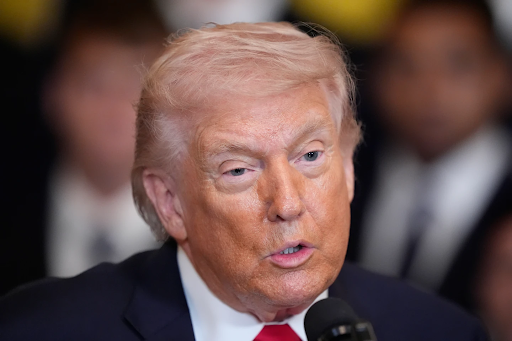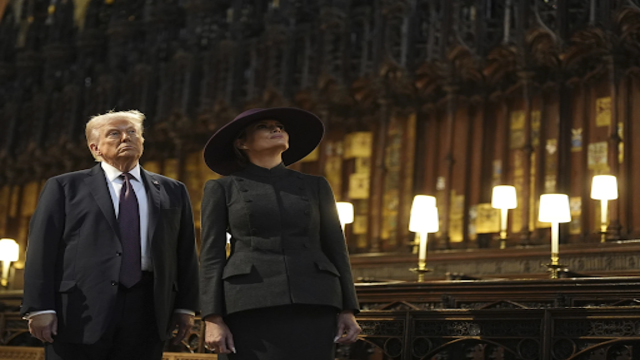
President Donald Trump and first lady Melania Trump attend their visit to St George’s Chapel at Windsor Castle, in Windsor, England, Wednesday Sept. 17, 2025. Associated Press
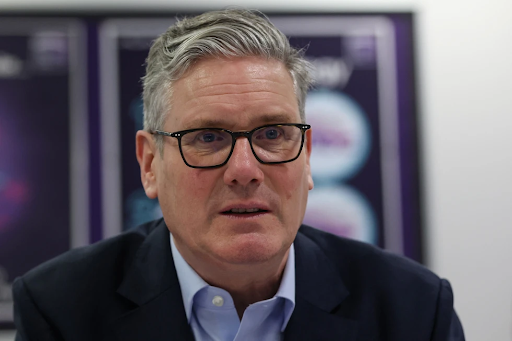
After a day of royal pageantry, U.S. President Donald Trump turns to the political stage in Britain. On Thursday, he meets Prime Minister Keir Starmer at Chequers, the prime minister’s historic countryside retreat. The agenda includes tech investment, steel tariffs, and thorny diplomatic issues.
The visit marks Trump’s second state visit to Britain, a rare honor. On Wednesday, King Charles III and Queen Camilla hosted the president and First Lady Melania Trump at Windsor Castle. They enjoyed a full display of royal tradition — from gold-trimmed carriages and artillery salutes to a lavish banquet.
But beyond the pomp, Thursday’s talks are about shaping the future of the U.S.–U.K. relationship.
Starmer Welcomes Trump at Chequers
The prime minister is hosting Trump at the 16th-century Chequers estate. The welcome includes a ceremonial honor guard, Scottish bagpipers, and a viewing of Winston Churchill’s wartime archive — a nod to the “special relationship.”
Lunch will feature Dover sole followed by key lime pie, while the Red Devils parachute team performs in Trump’s honor. The symbolic touches underscore the importance Britain places on strengthening ties with Washington, even as challenges loom.
Trans-Atlantic Tech Partnership
One of the highlights will be the signing of a “tech prosperity deal.” Officials say the agreement could create thousands of jobs and bring billions in investment into artificial intelligence, quantum computing, and nuclear energy.
A centerpiece of the deal is a U.K. branch of Stargate, a Trump-supported AI infrastructure project led by OpenAI. Major American companies are investing £31 billion ($42 billion) into Britain’s AI sector, with Microsoft alone contributing $30 billion to build the nation’s largest supercomputer and AI data centers.
British leaders insist the agreement does not include scrapping the digital services tax or loosening internet regulations. Still, some details remain under wraps, leaving questions about the fine print.
Tariffs and Trade Tensions
Trade remains a sticking point. In May, Trump and Starmer secured a deal cutting U.S. tariffs on Britain’s auto and aerospace industries. However, talks to reduce steel and aluminum tariffs from 25% to zero have stalled.
The British Chambers of Commerce warned that failure to lower tariffs would disappoint the struggling U.K. steel industry. Officials admit negotiations with Washington are often complex, with progress slower than promised.
Starmer’s Political Balancing Act
For Prime Minister Starmer, the state visit comes at a delicate time. His Labour government faces political turbulence after losing key figures, including Deputy Prime Minister Angela Rayner, who resigned over a tax dispute. Polls show Labour slipping as Britain’s economy continues to drag.
Analysts suggest the visit benefits Trump more than Starmer. “This plays well for Trump both at home and abroad,” said Leslie Vinjamuri of the Chicago Council on Global Affairs. “For Starmer, it’s a difficult moment.”
Epstein Questions Loom Over Talks
The meeting could also be overshadowed by uncomfortable questions about Jeffrey Epstein. Days before Trump’s arrival, Starmer dismissed Britain’s ambassador to the U.S., Peter Mandelson, over his past ties with the disgraced financier.
Epstein’s name disrupted Trump’s last U.K. visit in 2019, when questions dominated press conferences. With a joint appearance scheduled at Chequers, Starmer may again face unwelcome queries.
Difficult Conversations on Ukraine and the Middle East
Foreign policy differences could further complicate talks. Britain has been urging Washington to maintain strong support for Ukraine. Trump, however, has repeatedly delayed new sanctions on Russia, suggesting instead that Ukraine’s President Volodymyr Zelenskyy “make a deal.”
The latest Russian drone strike into Poland drew condemnation from NATO allies, but Trump downplayed the incident, calling it “possibly a mistake.”
On the Middle East, Starmer has pledged that Britain will formally recognize a Palestinian state at the U.N. this month. Trump strongly opposes such moves and has threatened to penalize other allies, including Canada, for similar decisions.
From Pomp to Policy
Trump’s state visit to Britain reflects both celebration and strain in the U.S.–U.K. relationship. The royal honors projected friendship, but the discussions at Chequers highlight unresolved challenges — from trade disputes to foreign policy divisions.
As Trump departs, the balance sheet may favor him politically. For Starmer, however, the visit is a test of leadership at a time of domestic and international pressures.