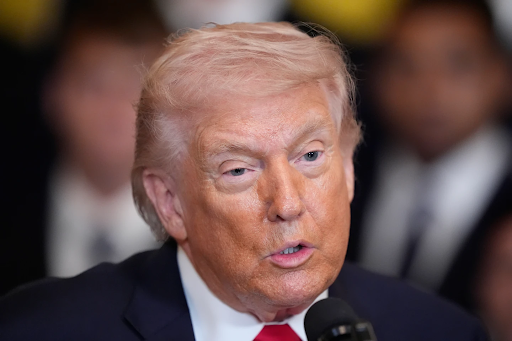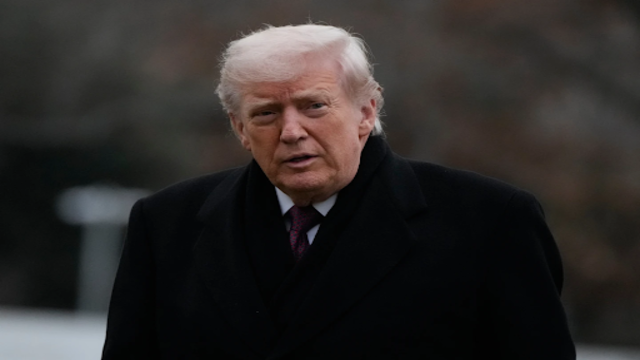
President Donald Trump looks over after stepping off Marine One on the South Lawn of the White House, Wednesday, Dec. 17, 2025, in Washington. Associated Press
President Donald Trump has renewed pressure on Venezuela, demanding the return of U.S. oil assets seized years ago. He defended his call for a new blockade targeting oil tankers linked to the South American nation, arguing that American investments were taken illegally and must be recovered.
Trump framed the move as part of a broader campaign against President Nicolás Maduro, citing oil disputes and allegations of drug trafficking. Several sanctioned tankers have already diverted away from Venezuelan ports.
Trump Links Blockade to Oil Seizures
Speaking to reporters on Wednesday, Trump said Venezuela wrongfully expropriated U.S. energy assets. He insisted his administration would block vessels that violate American sanctions.
“They took our oil rights,” Trump said. “They illegally took it, and we want it back.”
U.S. oil companies once dominated Venezuela’s petroleum sector. That changed after nationalization drives in the 1970s and later under Hugo Chávez and Maduro. Compensation disputes followed, souring relations for decades.
ExxonMobil Case Resurfaces
In 2014, an international arbitration panel ordered Venezuela to pay $1.6 billion to ExxonMobil. The ruling followed the seizure of oil projects during Chávez’s expansion of state control.
Economists say the payment remains unresolved. “There is a case that Venezuela still owes Exxon,” said energy analyst Philip Verleger. “I don’t believe it was ever paid.”
Trump blamed previous U.S. leaders for failing to act decisively. He argued stronger measures could have prevented the loss of American oil interests.
Drug Trafficking Accusations Intensify
The Trump administration has increasingly linked Venezuela’s oil revenues to alleged drug trafficking networks. In a recent social media post, Trump claimed oil profits were funding criminal operations.
Last week, U.S. forces seized an oil tanker near Venezuela’s coast. The action coincided with a major military buildup, including deployment of the Navy’s most advanced aircraft carrier.
American forces have also struck suspected drug boats in the Caribbean and eastern Pacific. Officials say at least 99 people have been killed in those operations. The strikes have drawn scrutiny from lawmakers and legal experts.
‘Stolen Assets’ Rhetoric Escalates
White House Deputy Chief of Staff Stephen Miller compared Venezuela’s oil nationalization to theft. He argued American labor and expertise built the industry.
Miller claimed the expropriated wealth later funded terrorism and drug violence. His remarks echoed Trump’s hardline messaging on Venezuela.
Meanwhile, Chevron continues limited operations under a U.S. government waiver. Experts say Venezuela’s debt to Chevron has declined since export licenses resumed in 2022, though figures remain undisclosed.
Confusion Over Terrorist Label
Trump recently suggested Maduro’s government had been designated a foreign terrorist organization. U.S. officials later clarified the statement was rhetorical, not a formal designation.
National security agencies were told no policy change had occurred. The State Department declined to comment publicly.
However, the Justice Department has previously indicted Maduro on narcoterrorism charges. Last month, a group tied to his government was officially labeled a terrorist organization.
Venezuela Pushes Back at the U.N.
Venezuela strongly condemned the tanker seizure, calling it “piracy.” Maduro contacted U.N. Secretary-General António Guterres to discuss rising regional tensions.
The U.N. urged restraint and respect for international law. Venezuelan officials demanded the release of the seized crew and oil cargo.
Ambassador Samuel Moncada requested an emergency U.N. Security Council meeting. He accused Washington of attempting to claim Venezuela’s oil reserves.
Blockade Seen as Lower-Risk Strategy
Military experts say targeting sanctioned tankers is less risky than direct conflict. Retired Vice Admiral Robert Murrett noted such actions align with long-standing U.S. policy.
He said Washington still supports a peaceful democratic transition in Venezuela. “If Maduro steps down and allows free elections, the response would be bipartisan,” Murrett added.
For now, Trump’s blockade threat signals intensified economic pressure, with oil once again at the center of U.S.–Venezuela tensions.