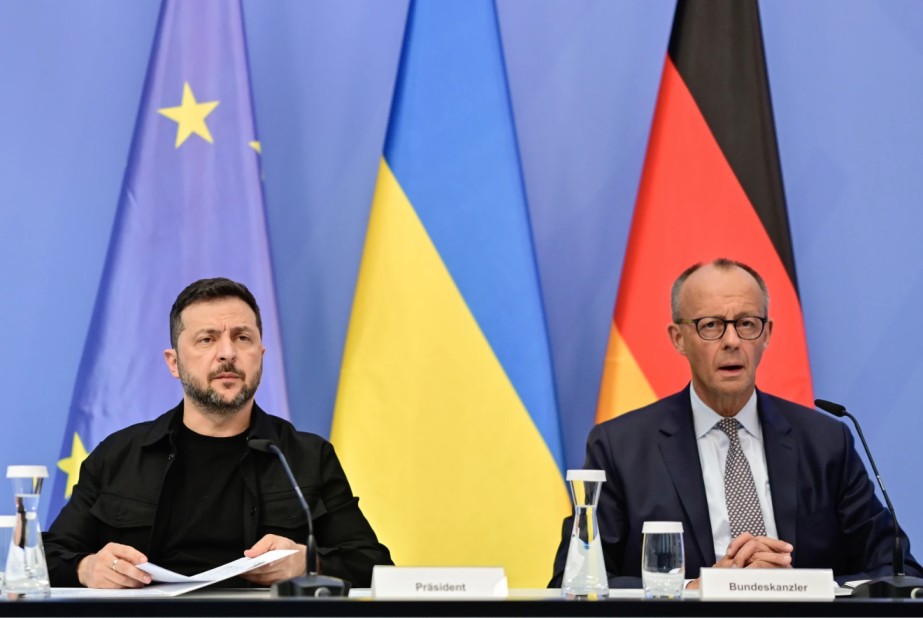
Ukrainian President Volodymyr Zelenskyy, left, and German Chancellor Friedrich Merz attend a video meeting of European leaders with US President Donald Trump on the Ukraine war in Berlin, Germany, Wednesday, Aug. 13, 2025, ahead of the summit between the US and Russian leaders.
U.S. President Donald Trump has issued a strong warning to Russian President Vladimir Putin. Speaking to reporters in Washington, Trump said there would be “very severe consequences” if Putin refuses to halt the war in Ukraine after their upcoming summit in Alaska.
The president did not specify the measures but made it clear that ending the war is a top priority.
Summit Set for High-Stakes Talks
The Alaska meeting follows Trump’s consultations with European leaders. They say Trump assured them that achieving a Ukraine ceasefire is central to Friday’s discussion with Putin in Anchorage.
Ukrainian President Volodymyr Zelenskyy joined a virtual meeting with Trump and key allies. Zelenskyy accused Putin of “bluffing” about Russia’s capacity to take full control of Ukraine and resist Western sanctions.
Europe’s Security Concerns
German Chancellor Friedrich Merz stressed that Ukraine’s and Europe’s security must remain intact. He called for a ceasefire as the first step in any negotiations.
French President Emmanuel Macron said Trump had been “very clear” about seeking a ceasefire. Macron revealed Trump’s interest in a future trilateral meeting with Putin and Zelenskyy in a neutral European country.
Merz and other European leaders insist Ukraine must be part of any follow-up talks to avoid outcomes favoring Moscow.
Zelenskyy Questions Putin’s Intentions
While hopeful that a ceasefire will be discussed in Alaska, Zelenskyy doubts Putin’s willingness to seek peace. He claims Russia is applying intense pressure across the Ukrainian frontlines to project dominance.
Zelenskyy also said sanctions are biting hard, despite Putin’s claims they are ineffective. He stressed that sanctions have weakened Russia’s war economy significantly.
Trump’s Balancing Act
Trump describes the Alaska summit as a “feel-out meeting” to gauge Putin’s sincerity. However, his suggestion that Ukraine may need to give up some Russian-held territory has alarmed Kyiv and its allies.
The U.S. president has been non-committal about including Zelenskyy directly in Friday’s talks. He hinted at the possibility of arranging a later meeting between himself, Putin, and the Ukrainian leader.
European officials fear a peace deal without Kyiv’s involvement could grant Putin strategic advantages. Many warn that if Russia wins in Ukraine, it could threaten other European nations next.
Merz stated that if Russia refuses to move towards peace in Alaska, the U.S. and Europe should intensify pressure on Moscow.
Kyiv Rejects Land Concessions
Zelenskyy said Putin wants Ukraine to withdraw from the remaining 30% of the Donetsk region still under Kyiv’s control. He flatly rejected the proposal, calling it unconstitutional and a prelude to further Russian aggression.
He also expressed frustration that ongoing U.S.-led discussions have not addressed key Ukrainian demands. These include binding security guarantees and Europe’s full participation in talks.
Since Trump’s return to office, his administration has removed Ukraine’s potential NATO membership from negotiations — a long-standing Russian demand. The move signals that Europe, not America, will shoulder more responsibility for regional security.
Russian Advances in Donbas
On the battlefield, Russian troops are closing in on Pokrovsk, a strategically vital city in eastern Donbas. The region is Ukraine’s industrial heartland and a long-coveted target for Putin.
Military experts warn that losing Pokrovsk would be a major setback for Ukraine. It could disrupt supply lines and strengthen Russia’s position before the Alaska summit.
The coming days could decide whether Alaska marks the start of peace talks or the next phase of escalation.