An investigation has been launched over flight safety violations that resulted in multiple deaths, a procedure standard in aviation accidents.
A tragic air accident has shaken Russia’s Far East. A passenger plane operated by Angara Airlines crashed near Tynda in the Amur region, reportedly killing all 49 people onboard.
The aircraft, an Antonov An-24, vanished from radar on Thursday while approaching its destination in eastern Russia. It was carrying 43 passengers, including five children, and six crew members.
Jet Disappears Before Landing
According to initial reports, the plane lost communication with air traffic control shortly before landing in Tynda, a small town near the China-Russia border. Moments later, it disappeared from radar screens.
The flight was operated by Angara Airlines, a Siberia-based carrier that often flies in remote and rugged parts of Russia.
Wreckage Found on Remote Mountainside
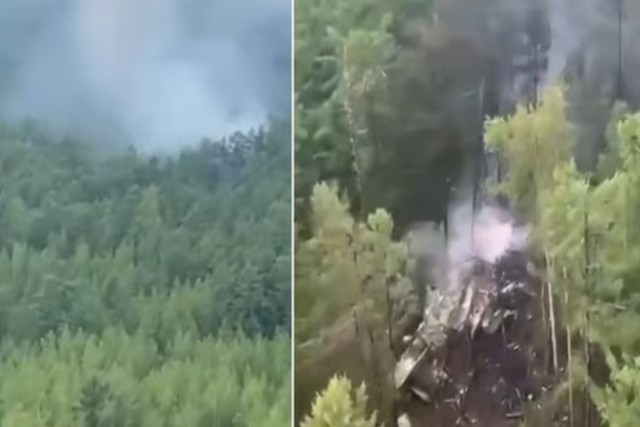
Search and rescue efforts began quickly. A Mi-8 helicopter from Rosaviatsiya, Russia’s civil aviation authority, eventually spotted the aircraft’s burning fuselage.
The wreckage was located on a forested mountainside about 16 kilometers from Tynda. Rescue workers found no signs of survivors from the air.
“The site is difficult to reach due to thick forest and rough terrain,” a rescuer told TASS news agency. “Most of the operation is happening by helicopter because ground access is limited.”
Emergency Crews Mobilised
Russian emergency services acted swiftly. The region’s civil defense team sent 25 personnel and five rescue vehicles to the crash zone.
Four additional aircraft were kept on standby to assist if needed. But heavy forest cover and challenging terrain hampered rescue and recovery operations.
Cause of the Plane Crash: Early Findings
Preliminary data from Russian news agency TASS suggests human error was a key factor in the crash.
Officials believe poor visibility during landing contributed to the crew’s misjudgment. However, investigations are still underway.
The Antonov An-24, the plane involved, has a long history in Russian aviation. First developed in the 1950s, it is widely used for both cargo and passenger transport in the country’s remote regions. Over 1,000 units have been produced since its inception.
Deadly Crash Sparks Safety Concerns
This incident has reignited concerns over the safety of aging aircraft in Russia, especially in harsh, isolated regions like Siberia and the Far East.
Angara Airlines, although relatively small, regularly operates flights across difficult terrain and extreme weather zones. The tragic loss of this flight may bring renewed scrutiny to aviation standards and safety protocols in the region.
Investigation and Recovery Continue
Recovery teams are now focused on retrieving remains and securing the site for a full investigation. Russian aviation authorities will be working to determine exactly what went wrong.
For now, families and communities in the Amur region are left mourning the devastating loss of life. All eyes remain on the ongoing recovery and the official probe into the fatal Russian plane crash.