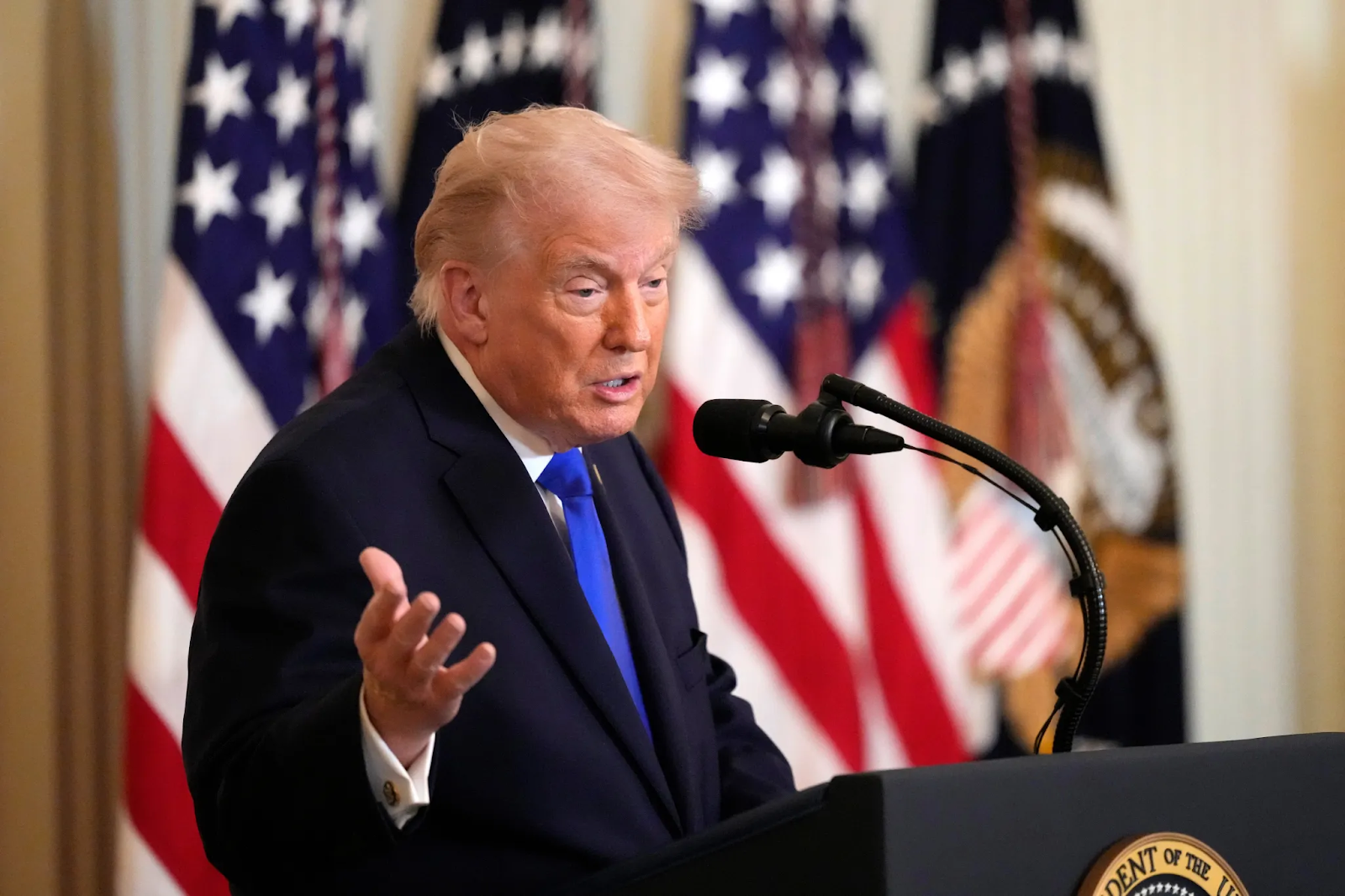
File photo shows President Donald Trump speaking at an “Angel Family Day” event in the East Room of the White House on Feb. 23, 2026, in Washington. AP Photo
A U.S. federal judge has permanently stopped the Justice Department from releasing a prosecutor’s report tied to the criminal case against former president Donald Trump over classified documents.
U.S. District Judge Aileen Cannon issued the ruling Monday. She concluded that making the report public would amount to a “manifest injustice” for Trump and two former associates. The case ended before a trial took place, and no jury ever reviewed the evidence.
The decision prevents the public from seeing details contained in a report prepared by Special Counsel Jack Smith, who led the investigation.
Case Ended Before Trial
The criminal case centred on allegations that Trump unlawfully kept classified government documents after leaving office following his first term. Prosecutors accused him of storing sensitive national defence materials at his Mar-a-Lago property in Florida.
Authorities also alleged that Trump obstructed government efforts to retrieve those documents.
Trump denied all accusations. He pleaded not guilty to every charge. His co-defendants — personal aide Walt Nauta and Mar-a-Lago manager Carlos de Oliveira — also entered not guilty pleas.
The case was dismissed before it reached trial. As a result, no jury heard the evidence or determined guilt or innocence.
Why the Judge Blocked the Report
Judge Cannon ruled that releasing the report would unfairly expose detailed allegations in a case that never moved forward in court. She stated that publication could cause harm because it would outline claims of criminal wrongdoing without a trial to test them.
The phrase “manifest injustice,” which she used in her ruling, reflects her view that public disclosure would create serious unfairness.
Trump and his co-defendants had asked the court to stop the report’s release. They argued that making it public would damage their reputations without giving them a chance to defend themselves before a jury.
Impact on Public Access
The ruling limits public access to information about one of four criminal cases Trump faced after leaving office. Observers had expected the report to provide a detailed explanation of why prosecutors brought charges in the first place.
With the judge’s order now in place, the Justice Department cannot release that report.
The decision adds another chapter to the legal battles surrounding Trump during his years out of office. Each case has drawn intense political attention and debate across the United States.
What Comes Next
The judge’s order stands as a permanent bar unless overturned by a higher court. For now, the report will remain confidential.
The ruling closes off what many saw as a potential window into the prosecutor’s reasoning and the evidence gathered during the investigation.
The legal dispute over classified documents may no longer move forward in court, but public interest in the matter remains strong.