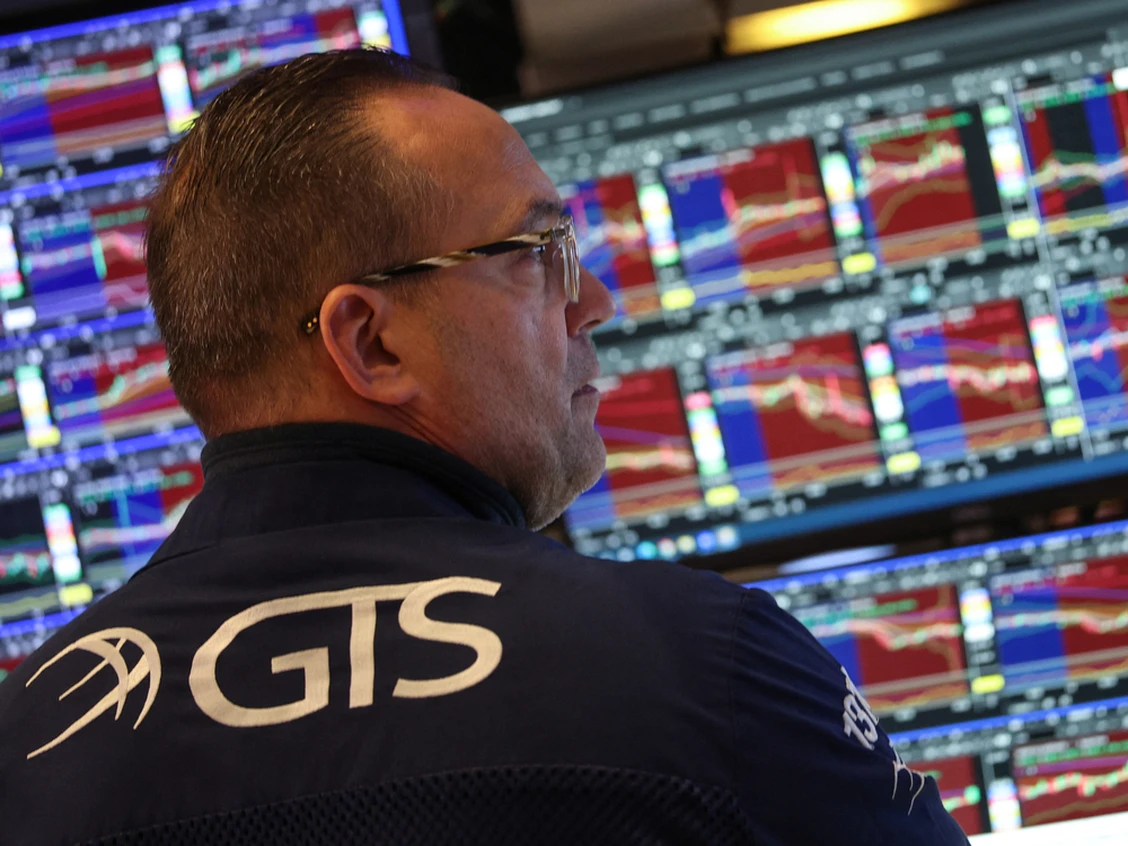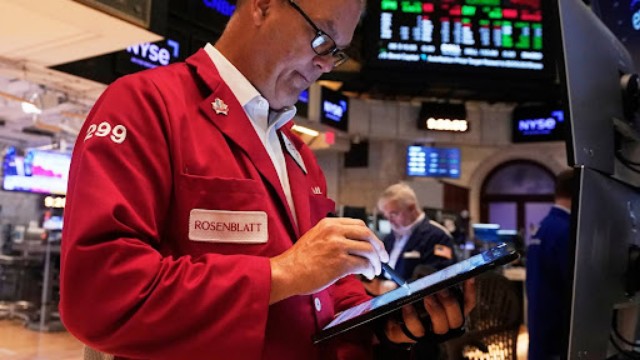
William Lawrence, a trader, is seen at work on the floor of the New York Stock Exchange on Tuesday, July 29, 2025. (Photo: Richard Drew/AP)
Most U.S. stocks ended lower on Wednesday after the Federal Reserve signaled it might not cut interest rates in September—casting a shadow over market expectations and investor optimism.
The S&P 500 slipped 0.1%, snapping its winning streak after six straight record-high closings. The Dow Jones Industrial Average lost 171 points (0.4%), while the Nasdaq managed a slight gain of 0.1%.
The downturn was sparked by rising Treasury yields, which climbed after the Federal Reserve chose to keep its main interest rate unchanged. While this move had been widely anticipated, Fed Chair Jerome Powell's refusal to hint at a September rate cut caught investors off guard.
Powell Holds Firm, Market Reacts Cautiously
Though President Trump and two members of the Fed’s own committee have pushed for rate reductions to boost the economy, Powell remained cautious. He cited persistent inflation—still above the Fed's 2% target—and a balanced job market as reasons to hold steady.
Cutting rates could energize the economy and ease pressure on jobs, but with inflation still high and tariffs looming, the Fed is walking a tightrope. Trump’s latest tariff announcement—a 25% tax on Indian imports and an additional levy related to India’s Russian oil trade—further complicates the inflation outlook.
“The economy is in good shape, but it’s in an unusual situation,” Powell remarked, noting the Fed will wait for more data over the next two months before deciding on future moves.
Odds of a September Cut Shrink Sharply
Powell’s cautious tone quickly shifted market sentiment. The chance of a September rate cut fell from 65% to just 45%, according to CME Group data.
Treasury yields climbed in response. The two-year yield, which closely mirrors Fed rate expectations, rose to 3.93% from 3.86%. The 10-year yield—reflecting broader economic and inflation forecasts—edged up to 4.36% from 4.34%.
A morning economic report suggested stronger-than-expected growth during the spring. Still, analysts warned that deeper trends hint at a slowdown. “The economy is still moving, but it’s starting to sputter,” said Brian Jacobsen, chief economist at Annex Wealth Management.
Winners and Losers on Wall Street
Amid the uncertainty, some companies posted strong gains:
- Humana soared 12.4% after delivering solid spring results and raising its annual outlook.
- Electronic Arts jumped 5.7% on better-than-expected earnings.
But not all results impressed:
- Trane Technologies sank 8.4%, even after reporting a profit beat. Revenue missed expectations, and its current-quarter outlook fell short.
- Freeport-McMoRan tumbled 9.5% after Trump imposed a hefty 50% import tax on copper.
- Starbucks dipped 0.2% after reporting lower-than-expected earnings, despite efforts to revive its business with new drinks and store upgrades.
The Numbers at a Glance
- S&P 500: Down 7.96 points to 6,362.90
- Dow Jones: Down 171.71 points to 44,461.28
- Nasdaq: Up 31.38 points to 21,129.67
Global markets were mixed. Hong Kong’s Hang Seng dropped 1.4%, while South Korea’s Kospi rose 0.7%.