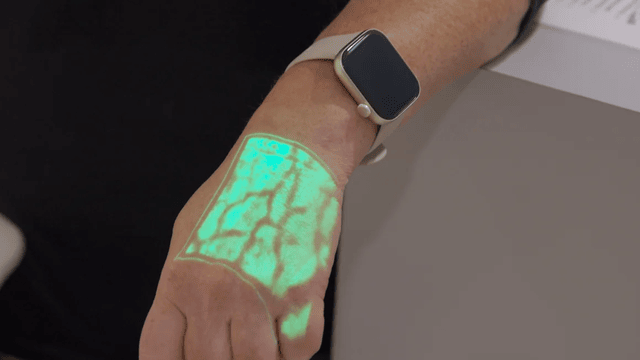
Service manager Lynn MacDonald demonstrates how to use the vein finder.
In Glasgow’s East End, a quiet revolution in public health is underway. The UK’s first official supervised drug consumption facility, called The Thistle, opened in January 2024, offering a new, compassionate approach to Scotland’s drug crisis. The initiative, spearheaded by the Scottish government, aims to reduce drug-related harm, save lives, and offer dignity to users — without judgment or punishment.
A Response to a Deepening Crisis
Scotland has the highest drug-related death rate in Europe. Traditional policies have failed to curb the crisis. In response, health officials and public advocates have pushed for innovative strategies. The Thistle represents a radical departure from punitive methods. Instead of criminalizing drug use, it provides a safe, medically supervised space for injecting illicit substances like heroin and cocaine.
People using the service register anonymously. No questions are asked about the origin of the drugs. Staff are there to supervise, advise, and intervene during medical emergencies — not to interrogate.
Inside The Thistle: Safety and Supervision
The facility does not supply drugs. Users bring their own, but inject in clean, controlled conditions. Medical staff are on hand to prevent overdoses, offer harm reduction advice, and respond to emergencies. More than 2,500 injections have been safely carried out at the site since its launch.
Clinical lead Dr. Saket Priyadarshi revealed that over 30 overdoses have been managed on-site. Many, he says, could have been fatal had they occurred on the streets. Staff use advanced tools like infrared “vein finders” to guide safer injections and reduce infection risk.
A Space That Feels Human
The Thistle is intentionally designed to break away from the cold, clinical feel of medical centres. Instead, users are welcomed into a warm, inviting environment with soft lighting, books, jigsaw puzzles, and even laundry and shower facilities. The goal is simple — treat people with dignity and respect.
Lynn MacDonald, service manager at The Thistle, explained: “This is about creating a space where people feel valued. We want them to walk out knowing someone cares.”
A Mother’s Hope and Support
Margaret Montgomery knows the pain of addiction too well. Her son, Mark, started using heroin as a teenager. After years of struggle, he’s now in recovery. She believes The Thistle would have helped him earlier.
“It’s not approval, it’s relief,” she said. “At least if they’re using, they’re doing it in a place where someone can help.” She now chairs a family support group that was consulted during the project’s development.

Margaret Montgomery says her son struggled with drug addiction for 30 years.
Debate Over Harm Reduction vs. Recovery
Not everyone is on board. Some critics argue that facilities like The Thistle risk normalizing drug use instead of promoting recovery. Annemarie Ward, a recovery advocate with 27 years of sobriety, believes the focus should be on helping people quit, not on making addiction safer.
“If we’re just maintaining people’s addiction without offering a way out,” she asked, “are we really helping them?”
Ward, CEO of the charity Faces and Voices of Recovery UK, worries that the absence of a clear path to sobriety raises moral and ethical questions.
A Broader Support Network
Glasgow City Council insists that The Thistle is only one part of a wider addiction support strategy. It says the facility does not detract from other drug and alcohol recovery services and instead complements them.
“All services are equally important,” the council said. “This is about meeting people where they are and guiding them safely forward.”
A Model Proven Abroad, Now Tested in the UK
Supervised drug consumption rooms aren’t new. The first opened in Switzerland in 1986. Since then, similar models have been adopted in countries including Portugal, Spain, Germany, Canada, and the US. The Thistle follows their example, operating 365 days a year and sharing space with social care services.
Cocaine accounts for over 70% of injections at the facility, with heroin making up about 20%. Most users are long-term injectors, overwhelmingly male, and at constant risk of overdose.
Mixed Reactions From the Community
Local opinion is divided. Some residents say the facility has attracted more drug users to the area. Others report a cleaner environment, with fewer discarded needles and less drug-related litter.
Chief Inspector Max Shaw of Police Scotland acknowledges long-standing issues in the area but remains committed to reducing drug-related harm. He affirms continued collaboration with local communities to address concerns.
Saving Lives, Offering Hope
For the doctors, nurses, and support workers at The Thistle, the mission is clear: keep people alive and treat them with compassion. Scotland’s bold experiment in harm reduction is still in its early stages, but for many families, it's already offering hope — and for some, a second chance.