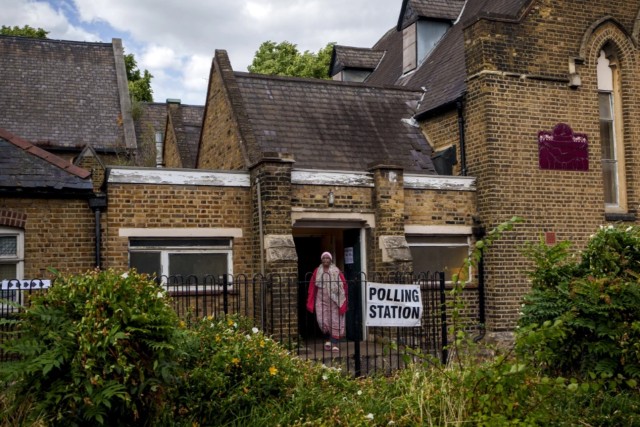
A woman exits a polling station set up at St. Anne’s Church, Bermondsey, in London, on July 4, 2024.
In a landmark decision aimed at revitalizing democracy, the UK government has announced plans to lower the voting age from 18 to 16. The change will come into effect before the next national election, scheduled no later than 2029. The move is part of a broader electoral reform package designed to improve voter participation and public trust in the political system.
A Promise Kept by Labour
The initiative fulfills a key campaign promise made by the Labour Party before its victory in July 2024. With this change, Britain will join countries such as Austria, Brazil, and Ecuador in allowing 16-year-olds to cast their votes in national elections.
Scotland and Wales already permit 16- and 17-year-olds to vote in regional and local elections. This nationwide rollout extends that right to all parliamentary elections across the UK.
Modernizing Elections and Strengthening Democracy
The government’s reforms go beyond the voting age. Measures will be introduced to tighten campaign financing rules and prevent donations from anonymous shell companies. These changes aim to shield British politics from foreign influence and financial opacity.
Democracy Minister Rushanara Ali stated that the reforms are “a critical step in protecting the integrity of our democracy.”
New Voter ID Rules: Bank Cards Now Acceptable
The government will also roll out automatic voter registration to simplify the electoral process. In a significant change to ID policy, voters will be allowed to use bank cards as valid identification at polling stations. This amendment aims to address the criticisms surrounding the voter ID law introduced by the Conservative government in 2022.
The previous photo ID requirement led to concerns of voter suppression, especially among young people, low-income groups, and ethnic minorities. The Electoral Commission estimates that roughly 750,000 people were unable to vote in 2024 due to lack of ID.
Tackling Intimidation and Increasing Accountability
To ensure safer and fairer elections, the government plans to impose stricter penalties on those who intimidate political candidates. This move seeks to protect free speech and the democratic process by discouraging harassment and abuse in political life.
Voter Turnout at Record Low
The 2024 election saw a turnout of just 59.7%—the lowest in more than 20 years. This statistic underscores the urgency of these reforms. Officials hope that by lowering the voting age and making the registration process easier, more citizens—especially the youth—will feel empowered to participate.
Experts Weigh In on Youth Engagement
Reactions to the voting age reform have been mixed among academics. Stuart Fox, a politics lecturer at the University of Exeter, welcomed the idea but expressed skepticism about its impact on actual youth turnout.
“It’s right to help young people be heard,” Fox said. “But for meaningful change, we also need stronger citizenship education and more civic engagement programs, particularly for students from underprivileged backgrounds.”
A Historic Shift in the UK’s Electoral System
Harry Quilter-Pinner, director of the Institute for Public Policy Research, called the reform “the biggest change to our electoral system since 1969,” when the voting age was lowered from 21 to 18.
Deputy Prime Minister Angela Rayner emphasized that the reforms are about rebuilding trust. “For too long, public faith in our institutions has declined,” she said. “We are removing the barriers that prevent people from fully participating in UK democracy.”
What Comes Next?
The reforms still require Parliamentary approval before becoming law. If passed, they will reshape the future of British politics by encouraging earlier civic involvement and making the electoral system more inclusive and transparent.
With these changes, Britain signals a clear intention: to make democracy more accessible, accountable, and future-ready.