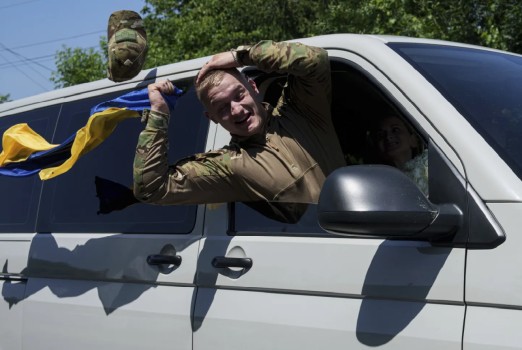
Ukrainian soldier Denys Zalizko, 21, greets his fellow villagers after returning from Russian captivity in Holovyno, Zhytomyr region, Ukraine, Monday, July 7, 2025.
Since his release from a Russian prison in April, 25-year-old Stanislav Tarnavskyi has wasted no time rebuilding his life. After nearly three years in captivity, he proposed to his girlfriend, bought an apartment, and adopted a golden retriever—all in one week in July.
But despite the new beginnings, the emotional wounds of war linger. Like thousands of former Ukrainian prisoners of war (POWs), Tarnavskyi is haunted by the trauma of beatings, starvation, and humiliation inflicted during captivity. These scars, say psychologists, are invisible but deep—and they demand lifelong care.
Haunted by the Past
Captured during the brutal siege of Mariupol in April 2022, Tarnavskyi still experiences vivid nightmares. In his dreams, the officers who tormented him appear, threatening him all over again. The anxiety is real and physical—racing heartbeats, cold sweats—until he reminds himself he is now safe in Kyiv.
His hometown of Berdiansk remains under Russian occupation. Displacement adds another layer to the emotional toll, making his journey of healing more complex.
More than 5,000 Ukrainian ex-POWs are now back home. Most receive regular psychological support. Experts insist that mental health care must continue for years, as the effects of trauma resurface unpredictably—even decades later.
A Moment of Light: Love and Hope
In a sunlit photography studio in Kyiv, Tarnavskyi made a bold step toward the future. He proposed to his longtime girlfriend, Tetiana Baieva, who had waited for him throughout his captivity.
"You've always been my support,” he told her. “Will you marry me?”
During his darkest days, thoughts of Baieva helped him survive. He admitted that he had considered ending his life three times but held on because of her.
Although reunited, he finds it hard to speak about his experience. He avoids sharing painful memories, not wanting sympathy. Even daily sights—like surveillance cameras—can trigger flashbacks.
“I still feel like I’m being watched,” he said.
Psychological counseling is gradually helping him reclaim a sense of normalcy. But recovery, he knows, is not linear.
Trauma Doesn't Fade Easily
Kseniia Voznitsyna, director of the Lisova Polyana Mental Health Center near Kyiv, sees the challenges firsthand. She explains that former POWs often isolate themselves. They avoid crowds, struggle with trust, and are constantly on edge.
“Time doesn't heal. It just makes the pain feel less sharp,” she said.
A long-term study on Israeli ex-POWs revealed increased risks of chronic illness, depression, and early death. The conclusion: trauma must be monitored and treated for a lifetime.
From Pain to Passion: An Artist Emerges
Denys Zalizko, another former POW, is just 21. He returned to Ukraine a few months ago after enduring 15 months of beatings, torture, and starvation. The first time his mother saw him again, she was shocked. He was a shell of the vibrant boy she remembered.
Today, Denys looks healthier. He works out regularly and finds comfort in music. Movement helps him manage anxiety. Still, his sleep is fragmented, and hypervigilance remains—a survival instinct he cannot switch off.
“Pauses bring fear,” he shared.
He too receives counseling at Lisova Polyana. And like Tarnavskyi, Denys leans on creativity to cope. He has a treble clef tattoo behind his ear and writes songs about love, war, and survival. He hopes to turn music into a career.
Reintegration: A Family Struggle
For the families of returning POWs, healing isn’t straightforward either. Denys’ mother, Maria, was advised to give him space, but the roles have reversed. Denys often calls her to sing the melodies she once taught him as a child.
“I love music. It unites people,” he said.
Despite everything, Denys feels stronger now. “I fear nothing anymore,” he stated. “Not death, not pain. I’ve survived the worst.”
Healing Takes Time—and Support
As Ukraine’s war with Russia stretches on, the number of returning POWs continues to rise. While their bodies may heal, the emotional damage requires constant care. These brave individuals are trying to rebuild their lives—but they cannot do it alone.
Mental health support, love, and purpose are essential tools in their recovery. And as Ukraine continues its fight on the battlefield, the silent battle within its heroes rages on at home.