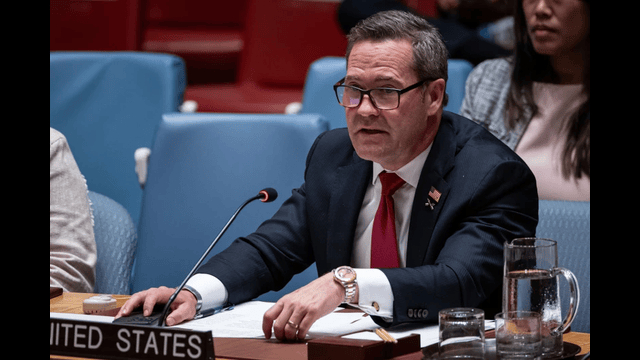
U.S. Ambassador to the U.N. Mike Waltz addresses the High-Level Security Council on Palestinians and Israel during the 80th session of the United Nations General Assembly, Sept. 23, 2025.
The UN approves the Trump Gaza plan, giving the United States a major diplomatic win and opening the door to a new framework for peace in the war-torn territory. The approval came on Monday after the UN Security Council endorsed Washington’s proposal to stabilize, secure, and rebuild Gaza following two years of brutal conflict.
Global Backing for the UN-Approved Trump Gaza Plan
The U.S. resolution passed the Security Council with a 13-0 vote, while Russia and China abstained. The vote authorizes an international stabilization force, supports a transitional governing body, and outlines a potential path toward Palestinian statehood.
Former U.S. President Donald Trump celebrated the vote, calling it “a moment of true historic proportion.” He said the UN approving the Trump Gaza plan would advance peace efforts around the world.
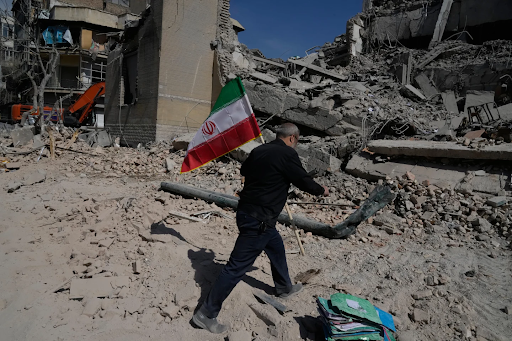
The plan builds on the fragile ceasefire Trump helped negotiate with regional allies. It also seeks to structure Gaza’s future after the devastating Israel-Hamas war that killed tens of thousands and left much of Gaza in ruins.
How the UN-Approved Trump Gaza Plan Would Work
At the center of the proposal is a new Board of Peace, a transitional authority to be overseen by Trump. Its mandate runs until the end of 2027.
The international stabilization force will secure borders, demilitarize the territory, and oversee law and order. Several Arab and Muslim nations expressed willingness to contribute troops but insisted on UN authorization. That authorization is now in place.
The resolution also endorses Trump’s 20-point ceasefire plan, a blueprint that aims to maintain stability as reconstruction begins.
Mixed Reactions to the UN Approval
Not everyone welcomed the UN-approved Trump Gaza plan.
Hamas rejected the resolution, saying it fails to protect Palestinian rights. The group argued the disarmament provisions undermine neutrality and favor Israel.
Russia and China abstained during the vote, with Moscow criticizing the lack of stronger Security Council involvement and clearer commitments to Palestinian statehood.
Meanwhile, U.S. Ambassador Mike Waltz called the approval “a significant step toward a stable and secure Gaza.” He said the revised resolution now includes stronger language on Palestinian self-determination after negotiations with Arab states.
Although the text mentions a potential pathway to Palestinian statehood, it does not offer a timeline or guarantees. Instead, it links progress to governance reforms and successful reconstruction.
Israel Welcomes the UN-Approved Trump Gaza Plan
Israel reacted positively. Prime Minister Benjamin Netanyahu has long opposed Palestinian statehood but welcomed the broader peace initiative. Israel’s UN Ambassador Danny Danon thanked Trump “for leading peace to the Middle East.”
Arab nations were divided. Algeria praised the ceasefire efforts but insisted real peace requires justice for Palestinians. Other key countries, including Qatar, Egypt, Saudi Arabia, Jordan, Türkiye, Pakistan and the UAE, issued a joint statement supporting swift approval of the plan.
What Comes Next After the UN Approves Trump Gaza Plan
The resolution also addresses one of the hardest questions: Hamas disarmament.
The international force is authorized to use “all necessary measures” to demilitarize Gaza. Israeli forces will gradually withdraw as milestones linked to demilitarization are met. These benchmarks must be approved by the stabilization force, Israeli forces, the U.S., and ceasefire guarantors.
The force will also train Palestinian police, secure border zones, and ensure humanitarian aid flows smoothly. It must work closely with Israel and Egypt during the transition.
Trump said members of the Board of Peace will be announced soon, with “more exciting updates” expected.
As Gaza attempts to rebuild after massive loss and destruction, the UN-approved Trump Gaza plan becomes the central roadmap for the territory’s immediate future and long-term stability.