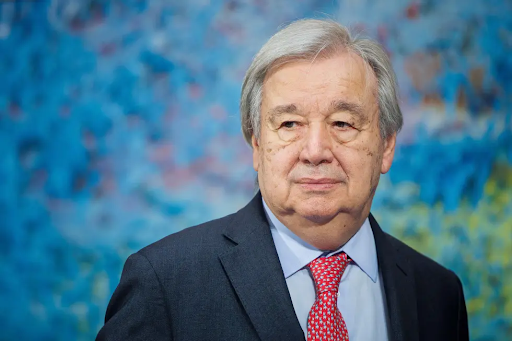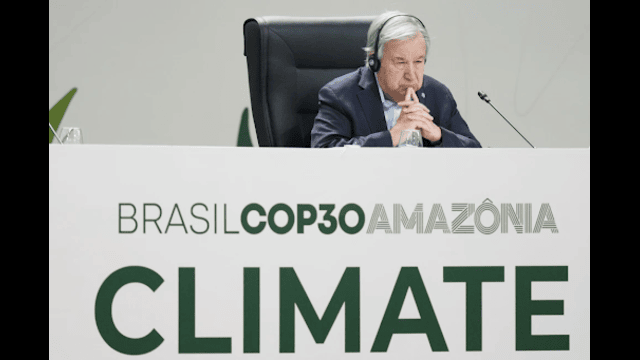
United Nations Secretary-General Antonio Guterres listens to Brazilian President Luiz Inacio Lula da Silva’s speech at the COP30 U.N. Climate Summit in Belem, Brazil, Thursday, Nov. 6, 2025.
Gathered at the edge of the Amazon rainforest, world leaders issued a stark warning — time is slipping away to avert the worst effects of climate change. The annual United Nations Climate Summit in Belem, Brazil, opened with urgent calls for action, frustration over unkept promises, and sharp criticism aimed at major polluters for their absence and inaction.
Leaders Sound Alarm on Climate Inaction
UN Secretary-General António Guterres opened the summit with a blunt message. He accused powerful nations of being “captive to fossil fuel interests,” putting profits before the planet.
He warned that allowing global warming to exceed 1.5°C — the critical limit set by the Paris Agreement — would be a “moral failure.” Even a small rise beyond that, he said, would bring devastating consequences like hunger, mass displacement, and biodiversity loss.
“The longer we wait, the harder it gets,” Guterres cautioned.
Lula Calls for Action — and Accountability
Host nation Brazil took center stage. President Luiz Inácio Lula da Silva urged wealthy nations to deliver on their funding pledges to protect tropical forests. He described the Amazon as the “lungs of the world” — essential for absorbing carbon dioxide and stabilizing global temperatures.
But Lula also struck a somber note. Only about half as many heads of state attended compared to last year’s summit. Notably missing were the leaders of the world’s top three polluters — the United States, China, and India.
“The window of opportunity is rapidly closing,” Lula said. “If the Amazon falls, so does humanity’s chance at balance.”
Over the past 50 years, nearly 17% of the Amazon’s forest cover has vanished due to farming, logging, and mining. Fires and deforestation continue to threaten its fragile ecosystem.
US Absence Casts a Shadow
The absence of U.S. President Donald Trump loomed large. Trump, who withdrew the U.S. from the Paris Agreement and has dismissed climate change as a hoax, did not send any senior officials to Brazil. Flight cancellations caused by a U.S. government shutdown also prevented lawmakers from attending.
Latin American leaders did not hold back their criticism. Colombia’s President Gustavo Petro called Trump’s absence “100% wrong” and accused him of being “against humankind.” Chile’s President Gabriel Boric added that denying the climate crisis “is a lie that delays global progress.”
Environmental activists echoed those concerns. Nadino Kalapucha, spokesperson for Ecuador’s Kichwa Indigenous group, said Trump’s stance “encourages denial and weakens environmental protections across South America.”
Argentina’s President Javier Milei, who has also threatened to abandon the Paris Agreement, boycotted the meeting altogether.
Europe Steps Up as Others Step Back
With U.S. leadership missing, European nations took the lead in pushing for renewed climate commitments. U.K. Prime Minister Keir Starmer warned that global unity forged by the Paris Agreement “is crumbling.” German Chancellor Friedrich Merz and French President Emmanuel Macron joined calls to strengthen collective action.
Some experts saw a potential upside to the U.S. absence. Rachel Cleetus, senior policy director at the Union of Concerned Scientists, said it could reduce the chances of Washington blocking ambitious climate deals. “Over 190 nations are ready to move forward,” she said.
Brazil’s Balancing Act
As host, Lula sought to position Brazil as a climate leader — but his stance drew scrutiny. Environmentalists pointed to his recent approval for state-run oil giant Petrobras to explore new drilling sites near the Amazon River. Critics said it undermines his green credentials.
“I never claimed to be an environmental leader,” Lula countered. “I just want fair solutions that protect people and the planet.”
His signature proposal, the Tropical Forests Forever Facility, aims to pay 74 developing countries to preserve their forests. Backed by $5.5 billion in initial pledges from Norway, Indonesia, and others, the fund still awaits major commitments from global powers.
A Decisive Decade Ahead
As the summit closed, the message was clear — the world is running out of time. With 2025 projected to be among the hottest years on record, greenhouse gas levels and sea temperatures continue to rise.
Without urgent collective action, leaders warned, the planet risks crossing irreversible thresholds.
“Every fraction of a degree counts,” Guterres reminded delegates. “The future depends on what we do — or fail to do — now.”