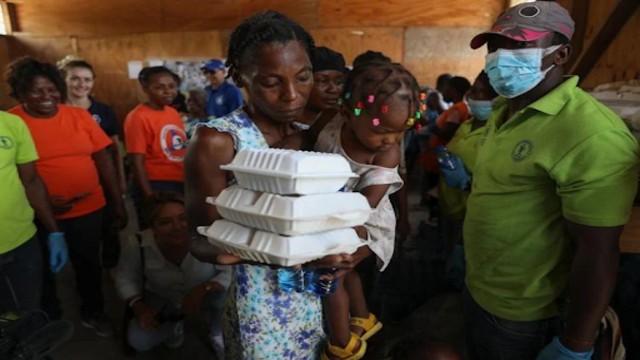
A woman carrying a child walks with food from the World Food Program at the Jean Marry Vincent High School. July 25, 2024. AP Photo
The United Nations’ World Food Program (WFP) has raised alarms over drastic funding cuts that threaten millions with severe hunger. The agency said Wednesday that sharp reductions in aid from its top donors are disrupting operations in six critical countries.
According to the WFP, nearly 14 million people may face emergency levels of hunger if funding does not improve. The countries most at risk include Afghanistan, Congo, Haiti, Somalia, South Sudan, and Sudan.
“We are watching the lifeline for millions of people disintegrate before our eyes,” WFP Executive Director Cindy McCain said.
Severe Budget Cuts Impacting Relief
The WFP, traditionally the most-funded agency of the UN, is facing its most challenging financial year yet. Cuts from major Western donors, including a significant reduction in U.S. aid, have left the agency scrambling.
The organization projects a budget of $6.4 billion for 2025, a sharp decline from roughly $10 billion last year. This represents a 40% drop in expected funding.
“This is not just a funding gap – it’s a reality gap between what we need to do and what we can afford to do,” McCain warned. “We risk losing decades of progress in the fight against hunger.”
Hunger at Record Levels
Global hunger is already at unprecedented levels. The WFP reports that 319 million people are experiencing acute food insecurity worldwide. Among them, 44 million are facing emergency conditions.
Famine has already erupted in Gaza and Sudan. In Afghanistan, the situation is dire. Food assistance currently reaches fewer than 10% of people facing food insecurity. Millions there do not know where their next meal will come from.
Funding Cuts From Top Donors
The United States, historically the largest contributor to the WFP, is providing approximately $1.5 billion this year, down from nearly $4.5 billion last year. Other major Western donors have also reduced their contributions.
These cuts are forcing the WFP to scale back operations, reduce rations, and leave millions without life-saving assistance.
The WFP is not alone in facing financial shortfalls. Other UN agencies dealing with migration, health, and refugee support have also announced major aid and staffing reductions. The U.S. Agency for International Development (USAID) has further reduced humanitarian support, amplifying the crisis.
Impact on Vulnerable Populations
The WFP stresses that these cuts do not merely affect budgets—they threaten lives. Communities already struggling with conflict, climate disasters, or economic instability are most vulnerable.
In countries like South Sudan and Somalia, where violence and drought exacerbate food shortages, reduced aid could push populations further into hunger and malnutrition. Children, pregnant women, and the elderly are at highest risk.
McCain emphasized that the global community must act quickly. “Without urgent support, we could see a humanitarian catastrophe unfold,” she said.
A Call to Action
The WFP urges governments and donors to restore funding and prevent further deterioration. Every dollar cuts translates to fewer meals, less medical support, and increased suffering for millions.
“The world has made significant strides in reducing hunger over decades,” McCain added. “We cannot allow these gains to be reversed now.”
As the UN agency struggles with record-low funding, millions remain on the brink. Experts warn that without immediate intervention, emergency hunger levels could rise dramatically in some of the world’s most vulnerable regions.
The WFP’s warning underscores the fragile nature of global humanitarian aid. It also highlights the urgent need for international collaboration to prevent a deepening food crisis.