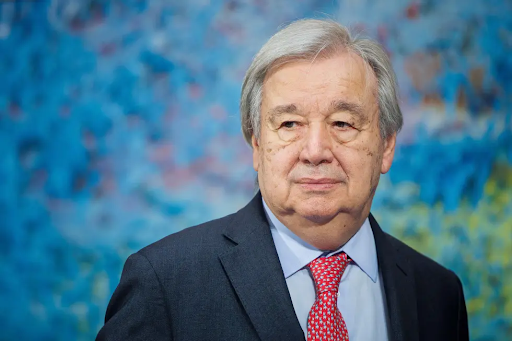
Delegates address rising tensions at the UN Security Council as US, Israel and Iran trade accusations amid fears of wider war.
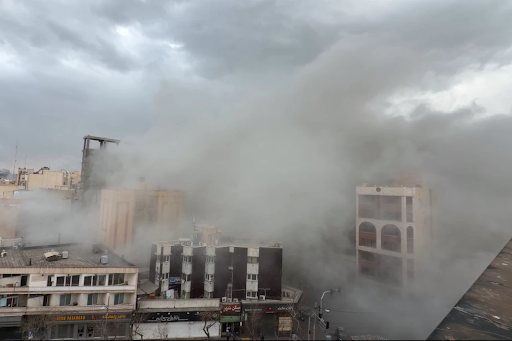
Tensions between Washington, Tel Aviv, and Tehran spilled onto the world stage as the United Nations Security Council convened an emergency session to address the escalating conflict. The urgent gathering quickly became a forum for sharp accusations, legal arguments, and diplomatic appeals, with global leaders warning that the situation could spiral into a wider regional war if left unchecked.
At the heart of the debate was a familiar but increasingly volatile issue: the balance between national security and international law.
UN Chief Warns of Dangerous Escalation
Opening the session, UN Secretary-General António Guterres delivered a stark warning about the risks of further military escalation. He urged all parties to exercise maximum restraint and return to dialogue, cautioning that continued hostilities could destabilize the broader Middle East and endanger countless civilians.
Guterres described the recent U.S. and Israeli airstrikes as violations of international law, including the UN Charter. At the same time, he condemned Iran’s retaliatory strikes, noting that they breached the sovereignty of several neighboring states, including Bahrain, Iraq, Jordan, Kuwait, Qatar, Saudi Arabia, and the United Arab Emirates. His message was clear: any expansion of the conflict would have grave consequences for regional stability.
US and Israel Defend Military Action
The United States and Israel, however, firmly defended their actions before the council. U.S. Ambassador Mike Waltz insisted that Washington’s military response was lawful and necessary to prevent Iran from obtaining a nuclear weapon. He framed the operation not as a political choice but as a matter of global security.
Echoing that stance, Israel’s Ambassador Danny Danon described the airstrikes as a preemptive measure against what he called an existential threat. According to Danon, allowing a radical regime to develop nuclear capabilities would endanger not only Israel but international security as a whole.
Their statements underscored the deep divide within the chamber, where interpretations of legality and self-defense sharply differed.
Iran Accuses West of War Crimes
Iran’s Ambassador Amir Saeid Iravani responded forcefully, accusing the United States and Israel of committing war crimes that had resulted in hundreds of civilian casualties. He argued that the strikes represented unlawful aggression and criticized the Security Council for failing to respond to what he described as weeks of inflammatory rhetoric from Washington.
In a pointed question to the council, Iravani challenged whether any state, including a permanent member of the body, had the right to use force to dictate another nation’s political future.
The diplomatic sparring intensified when Waltz and Iravani exchanged direct rebukes toward the session’s close. Each accused the other’s government of violating international norms, highlighting just how strained relations have become.
Khamenei’s Death Raises Stakes
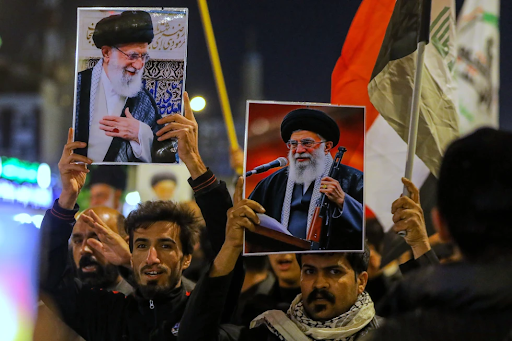
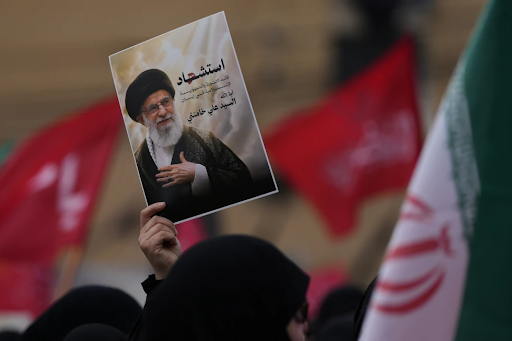
Complicating matters further were reports surrounding Iranian Supreme Leader Ayatollah Ali Khamenei. During the session, Iran’s envoy did not address claims made by U.S. President Donald Trump that Khamenei had been killed in the strikes. Iranian state media later confirmed his death, a development that has dramatically heightened uncertainty about Iran’s leadership and potential retaliation.
With no designated successor publicly identified, analysts warn that the power vacuum could fuel internal instability and prolong confrontation with the West.
Divided Council, Calls for Diplomacy
Other Security Council members offered varied responses. Russia’s ambassador strongly condemned the U.S.-Israeli strikes and demanded an immediate halt to what he described as aggressive actions. China expressed serious concern over the rapid escalation and supported calls for renewed diplomacy.
Meanwhile, the Arab League’s observer questioned Israel’s justification for its operation, pointing to longstanding disputes over nuclear transparency in the region.
European leaders from Britain, France, and Germany urged a return to negotiations over Iran’s nuclear program, emphasizing that diplomacy remains the only sustainable solution. Their appeal reflected lingering efforts to revive dialogue following Washington’s withdrawal from the 2015 nuclear agreement.
As the United Kingdom prepared to hand over the Security Council’s rotating presidency to the United States, the emergency meeting closed without resolution. Yet the message from much of the international community was unmistakable: without restraint and renewed talks, the clash between the U.S., Israel, and Iran risks igniting a far broader and more dangerous conflict.