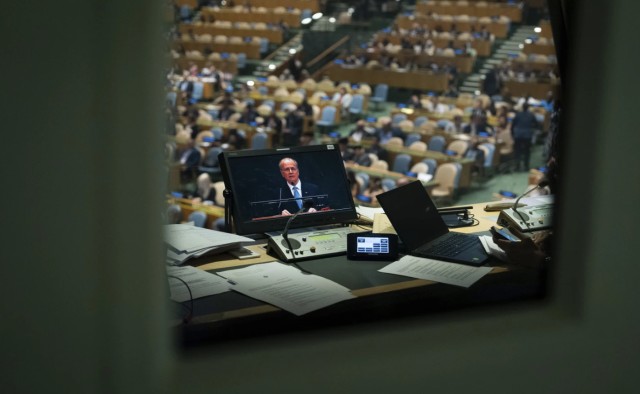
Palestinian Prime Minister Mohammed Mustafa is seen on a interpreter monitor as he speaks during a high-level International Conference for the Peaceful Settlement of the Question of Palestine and the Implementation of the Two-State solution at United Nations Headquarters, Monday, July 28, 2025.
A high-level United Nations conference has reignited global momentum for the long-discussed two-state solution. Held in New York, the meeting produced a new document—the “New York Declaration”—urging Israel to recognize a future Palestinian state. Leaders expressed “unwavering support” for a peaceful resolution to one of the world’s longest-running conflicts.
A Roadmap to Peace and Coexistence
The “New York Declaration” outlines a phased peace plan. It envisions a demilitarized, independent Palestine coexisting peacefully beside Israel. The long-term goal is to integrate both nations into a stable and cooperative Middle East.
This renewed effort comes against the backdrop of Gaza’s deepening humanitarian crisis. Alarming reports highlight growing famine and starvation in the region. Many international voices blame Israeli policies for blocking food aid—a claim Israel firmly denies.
Initially planned as a two-day event, the conference was extended to accommodate over 50 countries that had yet to speak.
Israel Rejects Two-State Proposal
Israeli Prime Minister Benjamin Netanyahu dismissed the conference outright, citing national security and sovereignty concerns. Israel continues to reject the two-state framework.
Backing this position, Israeli U.N. Ambassador Danny Danon criticized the 125 nations participating. “Some in the world fight terrorism. Others ignore or appease it,” he said. The United States also boycotted the event, labeling it “unproductive and ill-timed.”
Conference Structure and Global Support
Despite opposition, the conference made key progress. For the first time, eight high-level working groups were formed to explore actionable proposals for a two-state solution. The event was co-chaired by France and Saudi Arabia, with the European Union, Arab League, and 15 participating countries taking the lead in these working groups.
Saudi Foreign Minister Prince Faisal bin Farhan called on all 193 U.N. member nations to back the declaration ahead of September’s General Assembly session.
Condemnation of Violence on Both Sides
The declaration openly condemned Hamas for the October 7, 2023, attacks on Israeli civilians. This marked the first formal condemnation of Hamas by Arab nations. The attack killed around 1,200 Israelis and saw 250 hostages taken, about 50 of whom remain in captivity.
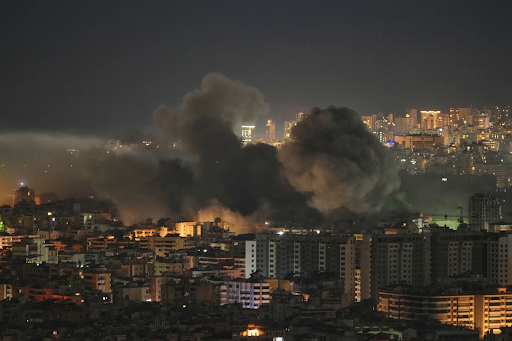
At the same time, the document strongly criticized Israel for targeting civilians and infrastructure in Gaza. It called out the ongoing siege and starvation that has led to what it described as a “humanitarian catastrophe.” Gaza’s Health Ministry reports over 60,000 Palestinian deaths in the conflict—figures that do not distinguish between fighters and civilians.
Empowering the Palestinian Authority
The proposed plan would hand governance of all Palestinian territories to the Palestinian Authority. After a ceasefire, an interim administrative committee would be set up under the Authority’s umbrella.
Hamas would be required to surrender power in Gaza and hand over its weapons. The declaration also proposes deploying a temporary international stabilization force. This U.N.-led mission would protect Palestinian civilians and oversee the peace process, including ceasefire monitoring.
Global Calls for Recognizing Palestine
A crucial element of the declaration is its call for countries to officially recognize the State of Palestine. Recognition is framed as “essential” to realizing a two-state solution. Though Israel was not named directly, the document condemned “illegal unilateral actions” threatening Palestinian statehood.
France announced it will recognize Palestine at the U.N. General Assembly in September. Responding to Israeli criticism that recognition empowers Hamas, France’s Foreign Ministry clarified: “Recognition isolates Hamas, not empowers it.”
UK Prime Minister Keir Starmer echoed the move, stating that Britain would also recognize Palestine—unless Israel agrees to a ceasefire and peace framework within eight weeks. If carried out, France and the UK would become the only G7 nations backing Palestinian statehood formally.
The “New York Call” Gains Limited Traction
A separate document—the “New York Call”—was also circulated by France. Its stronger language drew hesitation from Arab nations. Only 15 Western countries endorsed it, including Australia, Canada, New Zealand, and six that have already recognized Palestine.
The statement urged all countries to consider recognition of Palestine “as an essential step toward a two-state solution.”
Global Pressure Mounts
The conference marks a pivotal moment in international diplomacy. With rising civilian casualties, humanitarian disaster in Gaza, and increased global scrutiny, the push for a two-state solution has regained urgency. Whether Israel will engage with this vision remains uncertain. But the message from much of the world is clear: the time for a peaceful resolution is now.