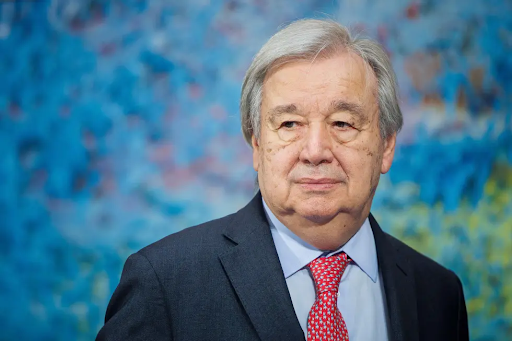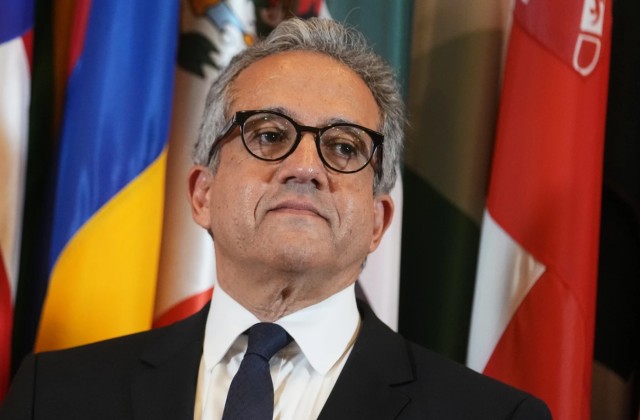
Egypt’s Khaled EL Enany attends a press conference after being elected Secretary -General by UNESCO executive board members, at the UNESCO headquarters in Paris, Monday, Oct 6, 2025.
UNESCO is poised to welcome its first-ever director from the Arab world. Former Egyptian Minister of Tourism and Antiquities, Khaled el-Anani, has been officially nominated by the agency’s executive board to lead the United Nations Educational, Scientific and Cultural Organization.
If confirmed at the UNESCO General Assembly meeting in Uzbekistan next month, el-Anani will take charge at a critical juncture. The organization faces financial instability following the recent withdrawal of the United States, one of its largest contributors.
A Historic Nomination for Egypt and the Arab World
El-Anani, 54, emerged victorious against his only rival, Firmin Edouard Matoko, an economist from the Republic of Congo known for his educational initiatives in refugee camps. The vote by UNESCO’s 58-member executive board paves the way for formal confirmation by the agency’s 194 member states.
Egyptian President Abdel Fattah el-Sissi hailed the nomination as a “historic achievement,” emphasizing its significance for Egypt, the Arab world, and the African continent. The Arab League and African Union also endorsed el-Anani’s candidacy, marking a moment of regional unity in global cultural diplomacy.
From Egyptologist to Global Leader
El-Anani’s journey from guiding tourists through ancient sites to leading UNESCO is remarkable. A trained Egyptologist, he earned his doctorate in France and later returned to Egypt to serve in various ministerial roles. As Minister of Antiquities (2016–2019) and later as Minister of Tourism and Antiquities (2019–2021), he spearheaded several mega cultural projects, including the National Museum of Egyptian Civilization and the restoration of the historic Jewish Temple in Cairo.
Currently, el-Anani teaches Egyptology at a public university in Cairo, maintaining close ties to the academic and archaeological communities.
Challenges Await at UNESCO
If confirmed, el-Anani will inherit an organization struggling to navigate financial and political headwinds. The Trump administration’s decision to pull the U.S. out of UNESCO in protest of what it described as “anti-Israel bias” created a significant budget gap. Washington’s withdrawal, critics say, allowed China to gain greater influence within the agency.
El-Anani has pledged to work toward re-engaging the United States, strengthen cultural cooperation, and restore financial stability. Supporters believe his outsider status could help him introduce long-overdue reforms within the 80-year-old institution.
Upholding UNESCO’s Mission
UNESCO, based in Paris, is best known for protecting World Heritage Sites, promoting education for girls, advancing scientific research in developing nations, and fostering cultural preservation. Outgoing director-general Audrey Azoulay led notable efforts, including the reconstruction of Mosul in Iraq after its devastation by ISIS.
However, the agency has also faced criticism for bureaucratic inefficiency and politicization. With global divisions deepening over the wars in Gaza and Ukraine, UNESCO’s mission of fostering unity through culture and education has never been more vital—or more difficult.
Focus on Cultural Preservation and Inclusion
El-Anani is expected to prioritize UNESCO’s cultural and heritage programs while promoting tolerance and dialogue. He has expressed strong support for combating antisemitism and religious intolerance, continuing the organization’s ongoing initiatives in these areas.
His academic and ministerial experience, combined with his deep cultural understanding, could help revitalize UNESCO’s global image and reinforce its role as a guardian of shared human heritage.
A New Era for UNESCO
While el-Anani’s nomination symbolizes progress for the Arab world, it also comes at a time of profound transformation for UNESCO. Both el-Anani and his challenger Matoko have emphasized the need for private sector partnerships to address funding shortages.
As the world watches, the upcoming general assembly will determine whether UNESCO’s future lies in new leadership that bridges political divides and renews global faith in the power of culture and education.
If confirmed, Khaled el-Anani’s leadership could mark the beginning of a new chapter for UNESCO—one that honors its legacy while steering it toward a more inclusive, financially secure, and culturally united future.