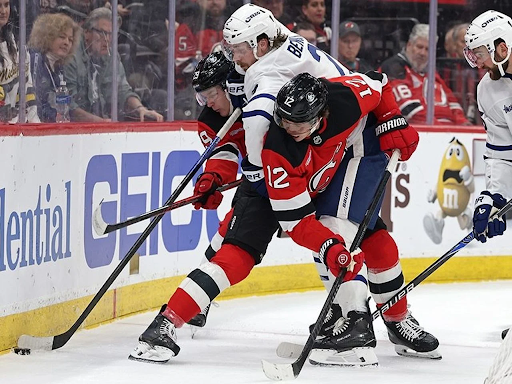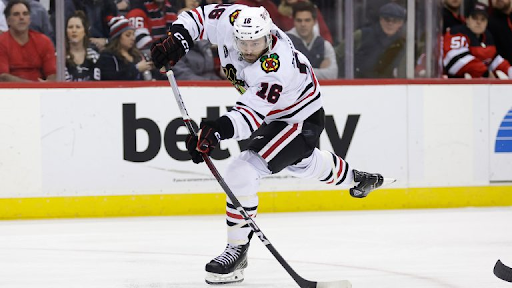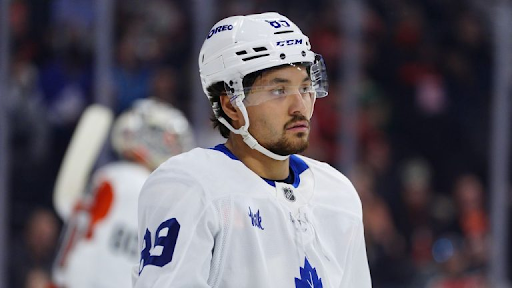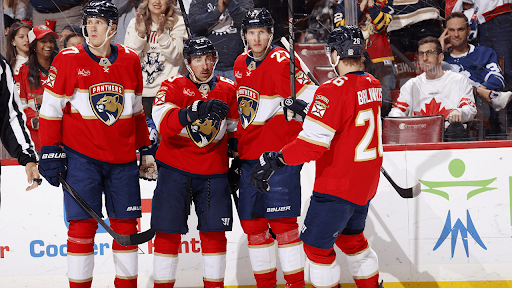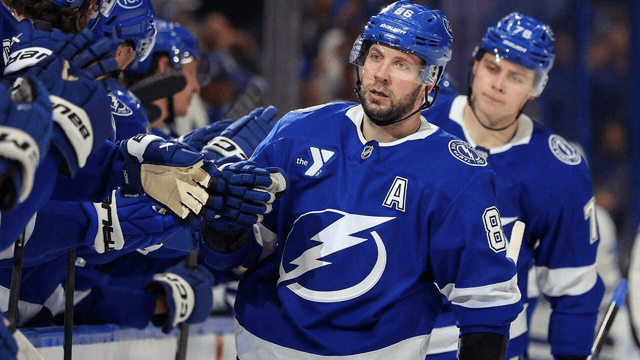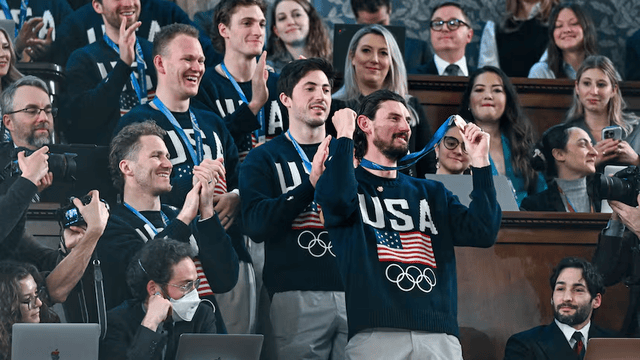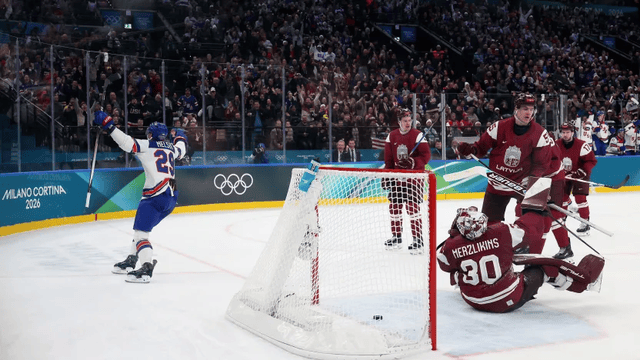
Team USA player is seen celebrating after the goal.
Team USA began its Olympic journey with confidence and control, defeating Latvia 5-1 in its Group C opener at the Olympic Winter Games Milano Cortina 2026. The victory at Santagiulia Arena reflected depth, discipline, and balanced scoring, setting an early tone for a team chasing gold.
Although the Americans needed time to settle, they gradually imposed their structure and skill. By the final horn, the result felt decisive and well-earned.
Nelson Scores Twice to Spark United States Attack
Brock Nelson scored twice and led a relentless American surge. His performance anchored a night where contributions came from every corner of the lineup. Ten U.S. players recorded at least one point, highlighting the team’s depth.
Jack Hughes assisted on both of Nelson’s goals, showcasing his creativity in tight spaces. Quinn Hughes, Matthew Tkachuk, and Jack Eichel each added two assists, driving play throughout the evening. Brady Tkachuk, Tage Thompson, and Auston Matthews also found the net.
Remarkably, Nelson and Jack Hughes skated on the fourth line despite their scoring pedigree. That willingness to accept roles underscored the team-first identity forming inside the locker room.
Matthew Tkachuk praised Nelson’s adaptability, emphasizing his defensive work and penalty killing. He described the team’s success as rooted in sacrifice, commitment, and collective trust.
Latvia Holds Early Before United States Surges
The game began evenly, with both teams exchanging early chances. Brady Tkachuk opened the scoring midway through the first period, finishing a feed from his brother Matthew. Latvia responded quickly when Renars Krastenbergs capitalized on a rebound to tie the game.
The United States thought it had regained momentum twice in the opening frame. However, two goals were disallowed, each involving Nelson. Despite the setbacks, the Americans maintained composure and stuck to their plan.
That patience paid off during a dominant second period.
Second-Period Control Defines United States Win
Nelson broke the tie at 10:38 of the second period, finishing a slick passing sequence initiated by Jack Hughes. He maneuvered around Elvis Merzlikins before tucking the puck inside the right post.
From there, the United States accelerated. Tage Thompson extended the lead with a power-play backhand late in the period. Nelson then added his second goal with just seconds remaining, converting another crisp feed from Hughes.
The Americans outshot Latvia 17-2 in the second period, overwhelming the Latvian defense with sustained pressure. Merzlikins allowed four goals on 32 shots before being replaced by Arturs Silovs.
Latvia captain Kaspars Daugavins acknowledged the American cycle game wore his team down. Goaltender Merzlikins admitted the skill gap became evident as the game progressed.
Matthews Caps Strong Finish
Auston Matthews sealed the result early in the third period, scoring on the power play against Silovs. The goal pushed the margin to 5-1 and effectively ended Latvia’s hopes of a comeback.
Coach Mike Sullivan praised Nelson’s mature two-way play and hockey intelligence. He noted Nelson’s defensive awareness complements his scoring touch, making him invaluable in tournament play.
Defenseman Zach Werenski pointed to resilience as a key takeaway. He said the team never panicked after disallowed goals, trusting its process instead.
United States Eyes Bigger Goal
While the opener delivered confidence, the Americans understand the path remains long. The program seeks its first Olympic gold medal since 1980. With NHL players back in the Games, expectations are high.
Jack Hughes stressed the importance of growth with each game. He described the win as a strong start but emphasized the need for daily improvement.
Team USA next faces Denmark, aiming to build momentum in Group C. Latvia will regroup against Germany, hoping to rebound quickly.
For now, the United States can reflect on a complete performance. Nelson scored twice, but the broader story centered on unity and balance. If that formula holds, the Americans may find themselves playing meaningful hockey deep into February.