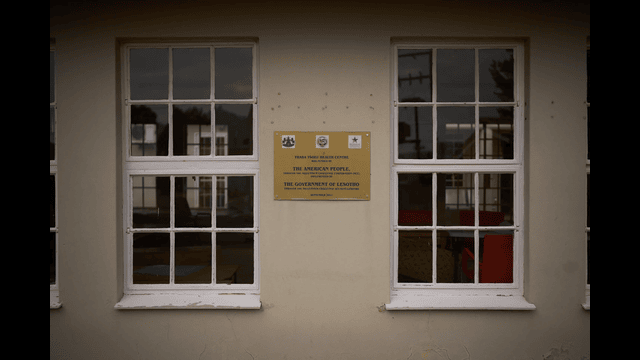
A donation plaque recognizing “The American People” hangs outside a clinic.
The United States has signed new health funding agreements with at least nine African countries, marking a major shift in its global health strategy. These deals reflect Trump-era priorities, focusing on reduced aid, negotiated benefits, and stronger self-reliance for partner nations.
The agreements replace older aid models and redefine how the U.S. supports public health programs abroad.
A New Model for US Global Health Aid
The new health deals fall under Washington’s revised global health framework. Funding is now tied to direct negotiations between the U.S. and recipient governments.
Officials say the approach promotes mutual benefit, accountability, and efficiency. It also reduces long-term dependence on U.S. assistance.
The framework replaces programs once managed by the United States Agency for International Development, which has since been dismantled.
Countries Signing the New Health Deals
Several African nations have already signed agreements with the U.S. These include Kenya, Nigeria, Rwanda, Uganda, Cameroon, Eswatini, Lesotho, Liberia, and Mozambique.
Some of these countries previously suffered sharp U.S. aid cuts. Others have separate agreements with Washington on immigration cooperation.
U.S. officials insist health funding decisions are not directly linked to deportation arrangements.
Reduced Funding, Higher Local Contributions
According to the Center for Global Development, the new health deals significantly cut U.S. spending. Annual American health funding is down 49% compared with 2024.
The agreements also require countries to increase domestic health spending. Support is now largely government-to-government, rather than routed through NGOs.
Experts say this creates pressure on weaker health systems already strained by funding losses.
Nigeria’s Faith-Based Health Agreement
Nigeria’s deal has drawn attention for its strong emphasis on Christian-based health providers. The country has a slight Muslim majority.
Between 2021 and 2025, the U.S. gave Nigeria about $2.3 billion in health aid. The new five-year agreement offers just over $2 billion.
Nigeria is expected to contribute $2.9 billion to its health programs during that period.
The State Department said the deal reflects reforms aimed at protecting Christian communities from extremist violence.
Lifelines for Vulnerable Health Systems
For some countries, the agreements provide crucial relief after aid cuts disrupted essential services.
Mozambique will receive over $1.8 billion for HIV and malaria programs.
Lesotho, among the world’s poorest nations, secured more than $232 million in support.
In Eswatini, the U.S. pledged up to $205 million for disease surveillance and outbreak response. The country agreed to boost domestic health spending by $37 million.
South Africa Left Without a Deal
South Africa remains notably absent from the agreements. Tensions with the Trump administration have blocked negotiations.
Trump has threatened to cut all aid, citing disputed claims of persecution against the Afrikaner minority.
The dismantling of USAID alone cost South Africa over $436 million annually, endangering HIV programs and thousands of health jobs.
Health Deals and Deportation Agreements
At least four signatory countries have also agreed to host third-country deportees from the U.S. This policy is a hallmark of Trump’s immigration agenda.
The State Department denies a direct connection. Officials admit political considerations may influence negotiations.
Rwanda signed a $228 million health pact, with $158 million from the U.S.
Uganda agreed to a deal worth nearly $2.3 billion, including $1.7 billion in U.S. support.
A Transactional Shift in Foreign Aid
The new health deals reflect a broader transactional approach to foreign policy. Supporters say it strengthens accountability and protects U.S. interests.
Critics warn it could weaken health systems and limit responses to disease outbreaks.
As these agreements roll out, their long-term impact on African public health remains closely watched.