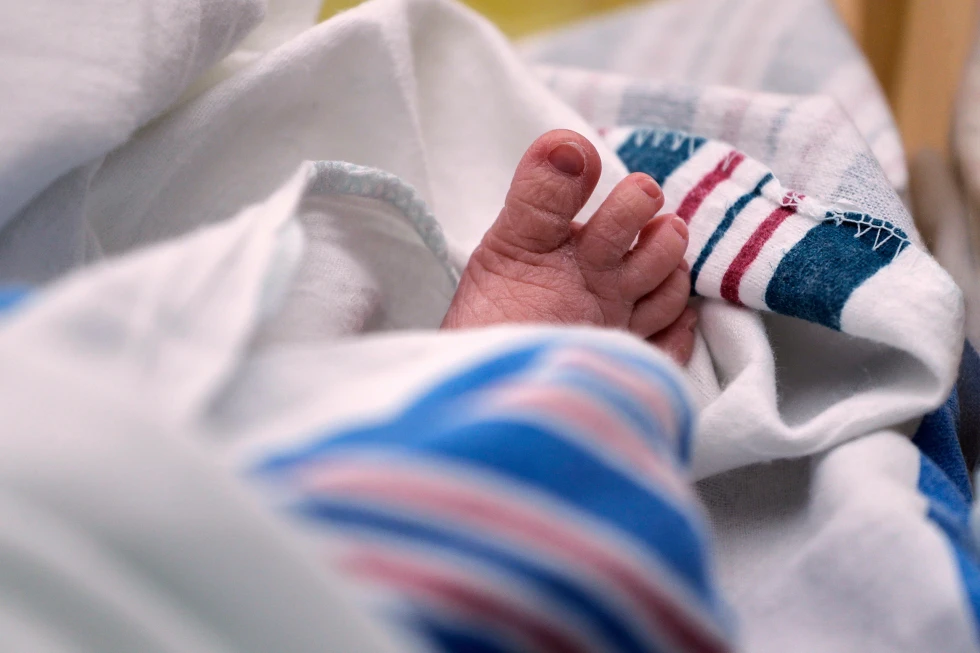
The toes of a baby are seen at a hospital in McAllen, Texas, on Wednesday, July 29, 2020. (AP Photo)
A slight decline in U.S. births last year is raising fresh questions about whether the modest increase recorded in 2024 was only temporary. Newly released provisional data suggests that long-term demographic shifts — including financial pressures and delayed parenthood — continue to shape family planning decisions across the country.
According to updated figures from the Centers for Disease Control and Prevention (CDC), just over 3.6 million babies were born in 2025. That represents roughly 24,000 fewer births compared with the previous year. The numbers are based on nearly complete birth certificate records, with only minor additions expected once final data is compiled.
A Small Drop, but a Familiar Pattern
The CDC’s latest update filled gaps from earlier months and offers the clearest picture yet of last year’s birth totals. Experts say the slight dip aligns with expectations, especially after some analysts cautioned that the 2024 rise might not signal a long-term recovery.
Demographers note that the number of births alone does not reveal the full story. Fertility trends — which measure how many children women have on average — provide deeper insights into generational changes. Even when births rose briefly in 2024, fertility rates continued to fall, reinforcing the idea that the broader downward trend remains intact.
Why Fewer Babies Are Being Born
Researchers point to a mix of social and economic factors influencing family decisions. Many Americans are choosing to marry later or delay starting families due to financial uncertainty. Concerns about housing costs, access to health insurance, and the ability to provide long-term stability are shaping how and when people consider having children.
Economic anxiety and political uncertainty during 2024 — when many of the 2025 births were conceived — may also have played a role. Experts emphasize that childbearing patterns often reflect how secure people feel about their future prospects.
Policy Efforts and Population Concerns
The previous U.S. administration attempted to encourage higher birth numbers through initiatives such as expanding access to in vitro fertilization and discussing potential financial incentives like “baby bonuses.” However, early data suggests these measures have not yet produced a measurable increase in births.
Analysts say it is too soon to draw firm conclusions without more detailed information, including demographic breakdowns that show which groups are having children and how birth rates vary by age or income level.
A Long-Term Decline Still in Motion
The broader trajectory of U.S. births has been downward for nearly two decades. After a pandemic-related dip in 2020, the country saw a brief rebound as delayed pregnancies occurred in subsequent years. However, births fell again in 2023, reaching the lowest annual total since the late 1970s.
With fertility rates well below the replacement level of roughly 2.1 children per woman, researchers believe the nation may continue to see modest declines unless major economic or social shifts change how families plan for the future. For now, the latest data suggests that the small surge recorded in 2024 may have been more of a pause than a turning point.