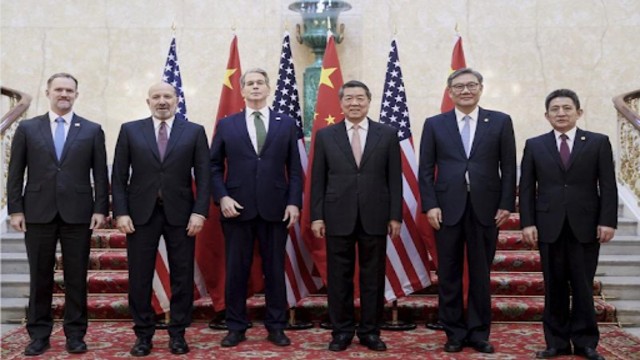
US Trade Representative Jamieson Greer, US Secretary of Commerce Howard Lutnick, US Secretary of Treasury Scott Bessent, Chinese Vice Premier He Lifeng, Chinese Commerce Minister Wang Wentao, and Chinese International Trade Representative and Vice Minister of Commerce Li Chenggang. AP Photo
In a surprising turn of events, the United States and China have struck a preliminary trade agreement, defusing growing tensions. The breakthrough came during crucial negotiations in London, led by China’s Vice Premier He Lifeng and US officials—Treasury Secretary Scott Bessent and Commerce Secretary Howard Lutnick.
Rare Earths Take Centre Stage
Although the finer details remain under wraps, both sides confirmed the agreement covers a framework to implement the Geneva consensus. US negotiators expressed optimism that the long-standing dispute over rare earth minerals—critical for electric vehicle batteries and other tech—would be resolved under this new deal.
Commerce Secretary Lutnick stated, “We have reached a framework to implement the Geneva consensus. Once the presidents approve it, we will move to implementation.” The move signals a potential thaw in relations, especially on the highly sensitive issue of rare earth exports.
Communication to Continue, No New Talks Yet
Despite the progress, no further talks are currently scheduled. US officials clarified that lines of communication remain open and that both sides are free to re-engage as needed.
Lutnick also reiterated the importance of resolving the rare earth issue within the new deal structure. "We absolutely expect that the topic of rare earth minerals and magnets will be addressed in this framework," he confirmed.
Export Controls Still a Sticking Point
While the rare earths topic is central to the agreement, export controls remain a persistent challenge. US negotiator Greer reflected on previous rounds of talks, saying, “In eight years of negotiating with the Chinese, I’ve never had a meeting where they didn’t bring up export controls.”
The statement highlights how deeply rooted the issue is in the wider trade conflict between the world’s two largest economies.
From Tariff Wars to Tentative Peace
Tensions between Washington and Beijing have escalated sharply since the Trump administration launched an aggressive tariff campaign. The trade standoff had both nations slapping triple-digit duties on each other’s exports, leading to what many considered a near-embargo.
The Geneva consensus offered temporary relief. Under the deal, US tariffs on Chinese goods were slashed from 145% to 30%, while China’s retaliatory tariffs dropped from 125% to 10%. However, Trump later accused Beijing of “totally violating” the pact—mainly over the contentious rare earth shipments.
Hope on the Horizon?
The London talks may mark a turning point. While challenges remain, the deal’s framework suggests a willingness to move forward and resolve key issues.
For now, both sides appear committed to maintaining dialogue, with rare earths and export controls at the top of the agenda. The world watches closely as two economic giants take tentative steps toward restoring stability in global trade.