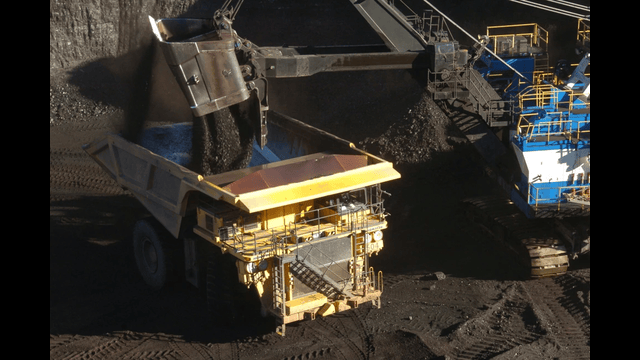
A mechanized shovel loads coal into a haul truck at a mine near Decker, Mont., on Nov. 15, 2016.
President Donald Trump’s efforts to revive the U.S. coal industry are facing a major hurdle abroad. Despite easing domestic regulations, coal exports have sharply declined—largely due to ongoing trade tensions with China.
Coal Exports Drop Amid Trade War
The U.S. Energy Information Administration (EIA) reports a 14% decline in coal exports this year. Analysts attribute most of this drop to China halting imports of U.S. coal following tariff escalations.
Beijing imposed a 15% tariff on U.S. coal in February, followed by an additional 34% reciprocal tariff in April. Since then, Chinese buyers have completely stopped sourcing coal from the U.S., according to government data released in early October.
Coal analyst Andy Blumenfeld from McCloskey by OPIS noted that this sudden halt had an outsized impact on overall exports, even though China only accounted for about 10% of total U.S. coal exports.
Trump’s Coal Revival Strategy
The Trump administration has been working aggressively to support the domestic coal sector. Regulations have been rolled back, new federal lands opened for mining, and royalty rates for coal extracted from public lands reduced.
According to Interior Department spokesperson Charlotte Taylor, these efforts aim to “keep our lights on, our economy strong, and America Energy Dominant.”
In September, the administration pledged $625 million to strengthen coal-fired power generation. This includes modernizing old coal plants and recommissioning closed ones—partly to meet rising power demand from artificial intelligence and data centers.
Mixed Results on Domestic Production
U.S. coal production has risen about 6% this year, but experts say the growth isn’t directly tied to policy changes. Instead, it’s driven by higher natural gas prices, said Seth Feaster of the Institute for Energy Economics and Financial Analysis.
Feaster added that the real test for coal’s future lies in export recovery, especially as domestic consumption continues to decline.
Hope for Trade Talks, but Uncertain Outlook
President Trump’s recent meeting with Chinese leader Xi Jinping has sparked cautious optimism about trade progress. However, it remains unclear whether coal exports will benefit from any agreements that emerge.
“It’s hard to tell whether this will increase coal exports or just maintain the status quo,” Feaster remarked.
For now, coal exports to key Asian and European markets like India, Japan, South Korea, Brazil, and the Netherlands continue, but the loss of China’s demand is deeply felt.
China’s Impact on the U.S. Coal Industry
Nearly three-quarters of U.S. coal once shipped to China was metallurgical coal, used in steel production. The remaining share was thermal coal, burned to produce electricity.
Most metallurgical coal comes from Appalachia, meaning that region would benefit most if trade resumed. “There is optimism,” Blumenfeld said, “but there is little documentation to back that up right now.”
The majority of coal shipments bound for China last year passed through Baltimore, with smaller volumes via Norfolk, Virginia, and the Gulf of Mexico.
In contrast, coal mined in the Western U.S. faces steep transportation costs to reach coastal ports. Political resistance has also hindered plans to expand West Coast export terminals, further limiting export potential.
The Road Ahead for U.S. Coal
Despite Trump’s push for “energy dominance,” the U.S. coal sector remains under pressure. Domestic gains have been overshadowed by global trade barriers and shifting energy trends.
While upcoming trade negotiations may open doors, analysts agree the outlook for coal exports remains uncertain. For now, optimism persists—but so does the reality that the trade war has dealt a significant blow to one of America’s oldest energy industries.