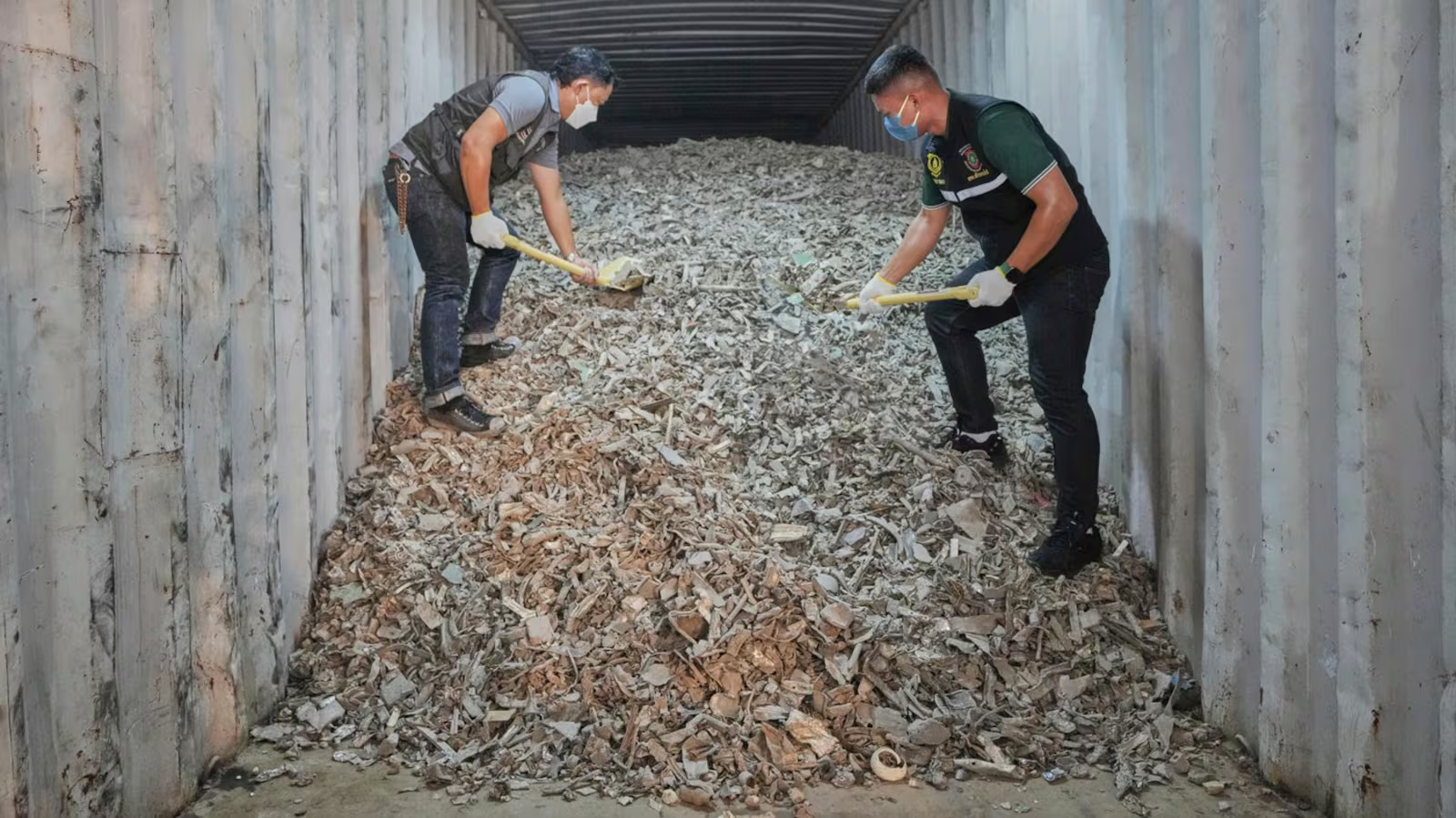
Thai authorities display samples of electronic waste illegally imported from the United States, which they said were confiscated at Bangkok Port, during a news conference in Bangkok on May 14, 2025. (AP Photo)
A new investigation has uncovered that millions of tonnes of discarded electronics from the United States are being sent to Southeast Asia, where many countries lack the proper systems to safely process hazardous waste.
The report, released Wednesday by the Basel Action Network (BAN), a Seattle-based environmental watchdog, calls the growing trade a “hidden tsunami” of e-waste that threatens both human health and the environment.
According to BAN, at least 10 American recycling companies have been shipping used electronics overseas during the past two years, often under misleading trade labels.
“This almost invisible tsunami of e-waste is padding profits for recycling firms while exposing people in Southeast Asia to toxic conditions,” the report said.
Mountains of Toxic Waste
E-waste includes items such as old phones, computers, and other discarded electronics that contain valuable materials but also toxic substances like lead, mercury, and cadmium.
As technology advances and devices are replaced faster, global e-waste continues to pile up. The United Nations estimates that the world generated a record 62 million tonnes of e-waste in 2022 and will reach 82 million tonnes by 2030.
Asia already produces nearly half of the world’s total e-waste, and the inflow from North America is making matters worse. Much of this waste ends up in illegal dumps or informal scrapyards, where workers—often unprotected—burn and dismantle electronics, releasing poisonous fumes into the air and soil.
BAN’s report estimates that about 2,000 containers of American e-waste leave U.S. ports every month, roughly 33,000 tonnes of discarded electronics.
Companies Named in the Report
The watchdog identified ten companies involved in exporting e-waste, including Attan Recycling, Corporate eWaste Solutions (CEWS), Creative Metals Group, GEM Iron and Metal, PPM Recycling, and Semsotai.
Some of these companies denied wrongdoing. PPM Recycling said it only ships non-toxic metals and follows trade regulations. CEWS claimed it maintains strict environmental standards. Others said they were reviewing the allegations or had no comment.
BAN estimates that between January 2023 and February 2025, these companies exported over 10,000 containers of e-waste worth more than $1 billion. Across the industry, the global trade could reach $200 million a month.
Violating International Rules
Many shipments go to countries like Malaysia, Thailand, and Indonesia, all of which restrict or ban the import of hazardous waste under the Basel Convention, an international treaty controlling cross-border waste movement.
However, the United States has never ratified the treaty. The report says exporters disguise shipments under trade codes describing them as “metal scrap” or “recyclable materials” to avoid detection.
Researchers say Malaysia has become a major hub for imported e-waste since China banned foreign waste imports in 2017. “Malaysia suddenly became this mecca of junk,” said Jim Puckett of BAN.
Environmental Impact and Local Response
Experts warn that dumping toxic waste in developing nations amounts to “waste colonialism.” Local communities face the consequences as chemicals seep into soil and water, causing long-term health and environmental damage.
Authorities in Thailand and Malaysia have recently cracked down, seizing large shipments of U.S. e-waste. In May, Thai officials intercepted 238 tonnes of scrap at Bangkok’s port, while Malaysian officials seized $118 million worth of illegal e-waste in June.
Most of the recycling plants involved lacked environmental protections and operated without permits.
“This trade puts an unfair burden on developing countries already struggling with their own waste,” said SiPeng Wong, from Malaysia’s Centre to Combat Corruption & Cronyism.