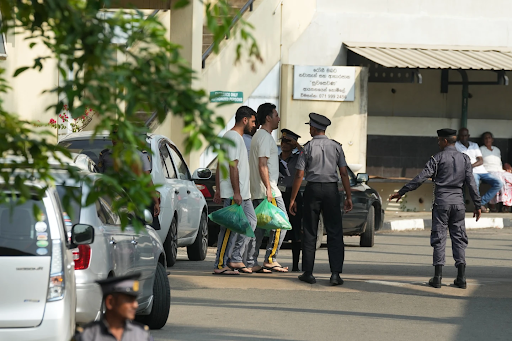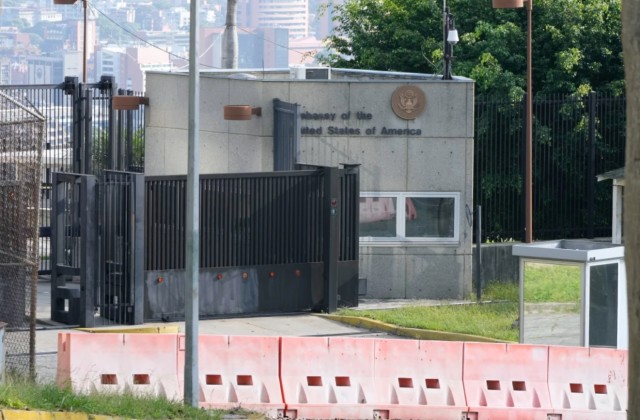
The entrance to the U.S. embassy in Caracas, Venezuela, Monday, Oct. 6, 2025.
Venezuela has alleged that extremist groups planned to attack the shuttered U.S. Embassy in Caracas with explosives. The accusation surfaced as tensions between the two nations continue to rise over Washington’s recent military presence in the Caribbean.
Government Warns of “False-Flag” Operation
Jorge Rodríguez, President of Venezuela’s National Assembly and chief negotiator in U.S.-Venezuela talks, issued the warning on Monday. He said that “three different channels” had alerted U.S. authorities about a “serious threat” from far-right groups posing as government supporters.
“Extremist factions from the local right are attempting to plant explosives at the U.S. Embassy in Caracas through a false-flag operation,” Rodríguez stated.
He claimed the Venezuelan government had increased security at the diplomatic site, which remains under the protection of local authorities. The large compound, though closed since 2019, is still guarded by Venezuelan police.
Embassy Closed Since 2019 Diplomatic Rift
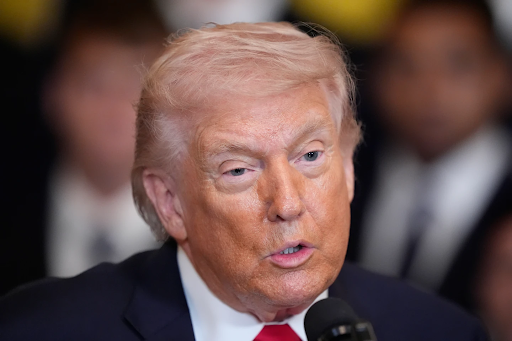
The U.S. Embassy in Caracas has been closed for more than six years following a diplomatic breakdown. In 2019, former U.S. President Donald Trump severed ties with Nicolás Maduro’s government and recognized opposition leader Juan Guaidó as Venezuela’s interim president.
The U.S. State Department suspended all operations in Caracas that March, withdrawing its diplomats amid fears of a possible seizure of the compound. Despite the closure, essential staff remain to oversee the security and maintenance of the property.
Rodríguez emphasized that Venezuela “respects and protects” the diplomatic site and has even informed a European embassy to act as a liaison with Washington over the alleged threat.
Rising Military Tensions in the Caribbean
The latest alert coincides with growing friction between Caracas and Washington. Venezuela has repeatedly accused the United States of threatening its sovereignty through a naval deployment in the Caribbean.
Washington, however, maintains that its operations are aimed at dismantling Latin American drug cartels.
Last week, U.S. Defense Secretary Pete Hegseth confirmed a fourth strike on a small vessel allegedly linked to narcotrafficking. He said four individuals labeled as “narcoterrorists” were killed in the incident.
Accusations and Counterclaims
The accusations have reignited the war of words between the two countries. Former President Trump has long accused Maduro of being one of the world’s leading drug traffickers. In August, the U.S. doubled its bounty for information leading to Maduro’s capture, offering up to $50 million.
Maduro, in turn, has condemned the U.S. actions as part of a campaign to destabilize his government. He argues that Washington fabricates charges of drug trafficking to justify aggression and regime-change efforts.
Venezuela Calls for International Attention
Rodríguez said the alleged extremist plot highlights “the dangerous environment being cultivated by radical sectors.” He urged international organizations to remain vigilant and prevent actions that could escalate regional instability.
While the U.S. has yet to comment on Venezuela’s claims, the Maduro administration insists it is taking “all measures necessary” to prevent any attack.
The latest dispute adds to the long list of tensions defining U.S.-Venezuela relations—ranging from diplomatic isolation to military posturing in the Caribbean. As both governments trade accusations, the security situation around the closed U.S. Embassy in Caracas remains under close watch.