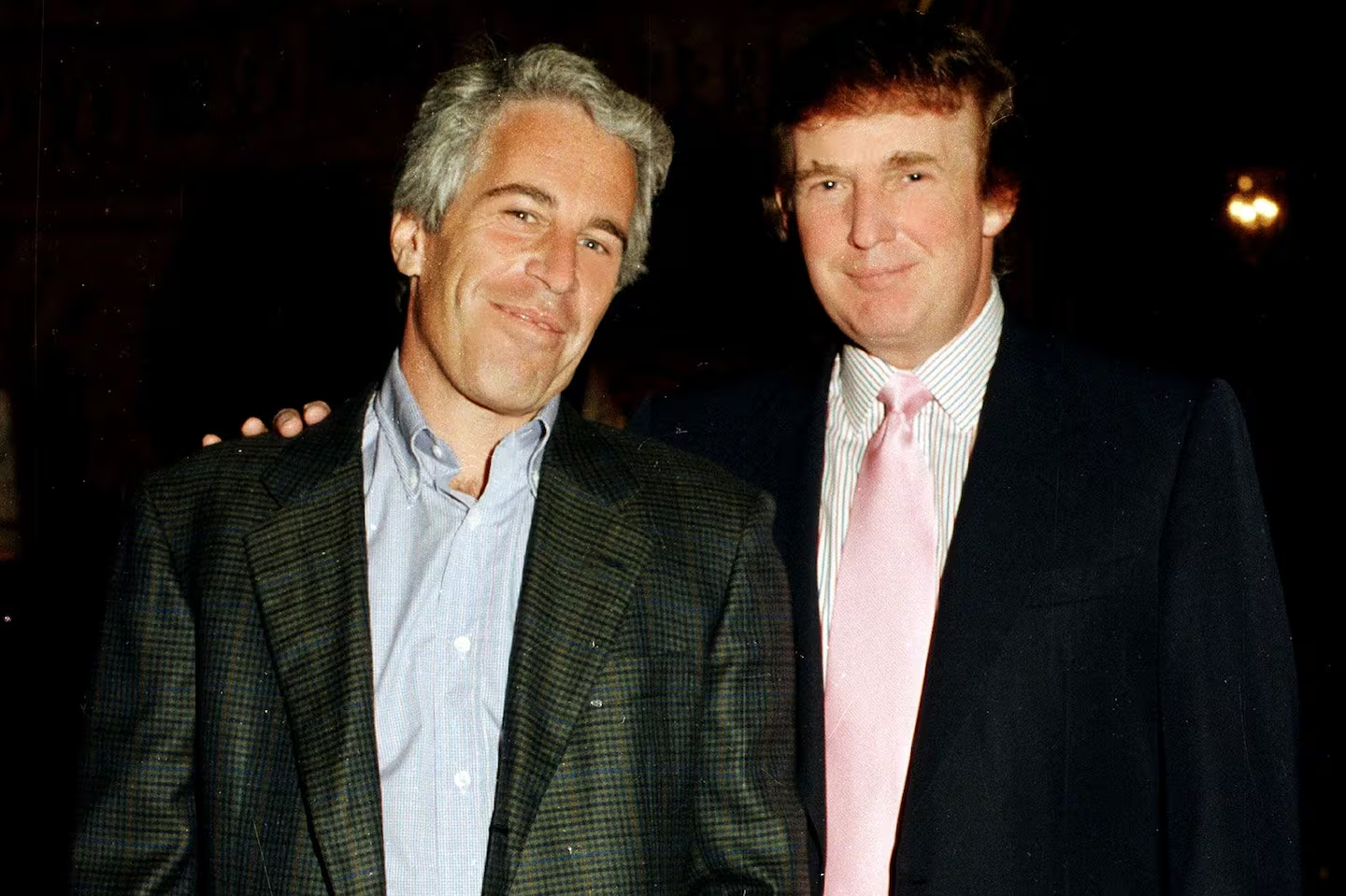
Jeffrey Epstein and Donald Trump are seen together at Mar-a-Lago in Palm Beach, Florida, in 1997. Getty Images
U.S. lawmakers took a major step Tuesday toward making the federal government release long-sealed files on Jeffrey Epstein. Both the House and Senate approved a bill that forces the U.S. Justice Department to reveal its records on the late financier, clearing the way for the legislation to reach President Donald Trump.
The move came after months of political tension. A bipartisan group of House members launched a rare petition last summer to bring the bill forward without the approval of House Speaker Mike Johnson. Trump urged Republicans to ignore the effort, calling it a “hoax.” Yet both Trump and Johnson eventually lost their grip on the issue as support grew.
The House passed the bill 427–1. Only Louisiana Republican Clay Higgins voted against it, saying he feared the release could expose information about innocent people mentioned in the files.
Pressure From Survivors and Lawmakers
The vote came after years of demands from survivors of Epstein’s abuse. They gathered outside the U.S. Capitol Tuesday morning, holding childhood photos and urging lawmakers to act. Epstein died in a federal jail in 2019 while awaiting trial on charges connected to the sexual abuse and trafficking of underage girls.
“These women have fought the most horrific fight,” said Rep. Marjorie Taylor Greene, standing alongside survivors. She said they pushed through resistance “from the most powerful people in the world, even the president of the United States.”
The bill orders the Justice Department to release records within 30 days. The government may redact details tied to victims or active investigations, but not information that could cause “embarrassment, reputational harm, or political sensitivity.”
Growing Fallout Beyond Washington
Separate House investigations have already released thousands of pages of emails and documents from Epstein’s estate. These files showed ties to global leaders, financial figures and political insiders. In the United Kingdom, the fallout led King Charles III to strip Prince Andrew of his remaining titles and remove him from his royal residence.
Trump long insisted he ended contact with Epstein years ago. But many Republican voters continued to push for the files’ release. Survivors pleaded with Trump to stop framing the issue as political. One survivor said, “We are exhausted from surviving the trauma and then surviving the politics that swirl around it.”
A Dramatic Turn Inside the House
The vote succeeded only after Rep. Adelita Grijalva was finally sworn in last week. Johnson had kept the House closed for weeks during the government shutdown, preventing her from taking office and signing the petition. Once she did, the petition reached majority support.
Johnson then shifted strategy and allowed a faster vote requiring a two-thirds majority. He still warned the bill could expose sensitive information, calling it “a raw and obvious political exercise,” but he ultimately voted for it.
House Democrats celebrated the result. Their leader, Hakeem Jeffries, called it “a complete and total surrender.”
Senate Ready to Move
Senate Majority Leader John Thune said the Senate would act quickly. He dismissed suggestions to amend the bill. “Amending it is going to be unlikely,” he said. Senate Democratic leader Chuck Schumer echoed that and pushed for immediate approval, saying, “The American people have waited long enough.”
The bill’s sponsors, Reps. Thomas Massie and Ro Khanna, urged senators not to delay. “Those raising problems with the bill are afraid people will be embarrassed,” Massie said. “That’s the whole point.”