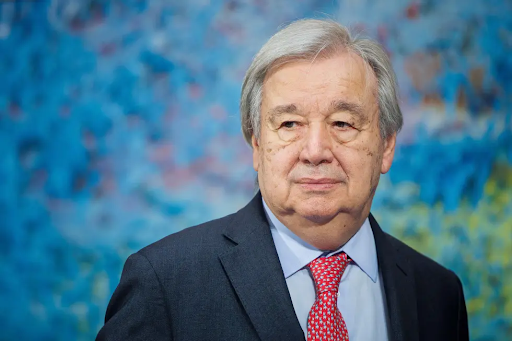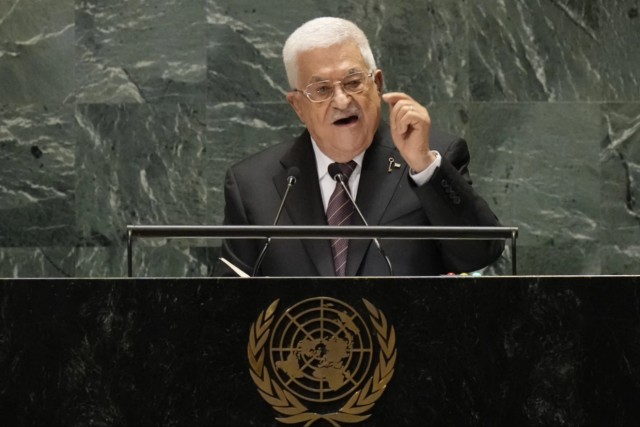
Palestinian president Mahmoud Abbas address the 79 th session of the United Nations General Assembly, Sept 26, 2024, at UN headquarters.
The United States has revoked visas for Palestinian President Mahmoud Abbas and 80 senior officials. The decision comes just weeks before the United Nations General Assembly, sparking outrage from the Palestinian Authority, which called the move a violation of international law.
Washington Tightens Visa Rules
A U.S. State Department official confirmed that Mahmoud Abbas and several Palestinian Authority leaders were affected. The official spoke anonymously, citing the confidentiality of visa matters. However, Palestinian representatives posted to the U.N. mission in New York received exemptions to continue their work.
The step marks another escalation in U.S. policy toward Palestinians. The Trump administration has repeatedly tightened visa restrictions while aligning more closely with Israel. Recently, the Israeli military declared Gaza’s largest city a combat zone, adding further strain to the region.
Halt to Medical Program Raises Concerns
The State Department has also suspended a humanitarian program that once allowed injured Palestinian children from Gaza to receive medical treatment in the U.S. The decision followed a social media campaign led by some conservative voices opposing the initiative.
In a separate statement, Secretary of State Marco Rubio ordered future visa applications from certain Palestinian officials, including those linked to the Palestine Liberation Organization (PLO), to be denied.
US Demands Accountability from Palestinians
The U.S. justified the move as part of national security interests. According to the State Department, the Palestinian Authority and the PLO have failed to uphold their commitments. Washington accused them of undermining peace efforts by not fully renouncing terrorism or stopping its promotion in education systems.
The statement emphasized that to be treated as partners in peace, Palestinian groups must end incitement to violence. It also referenced U.S. legal requirements and earlier promises made by the PLO.
Palestinian Authority Condemns Visa Revocations
In response, the Palestinian presidency expressed “deep regret and astonishment.” Officials said the decision contradicted international law and violated the U.S.’s role as host of the U.N. headquarters.
Palestinian leaders stressed that their nation holds observer status at the United Nations, which guarantees participation in international forums. The Authority urged Washington to immediately reverse its decision.
UN Seeks Clarification
United Nations spokesman Stephane Dujarric confirmed the organization was seeking explanations from Washington. He stressed the importance of ensuring representation for all member states and observers.
“We hope this issue is resolved quickly,” he said. “It is vital that every delegation has the ability to participate.”
While Palestinian representatives to the U.N. mission will receive waivers under the host country agreement, broader restrictions remain in place. These exemptions ensure that the New York-based Palestinian mission can continue its work, though Abbas himself will not be present.
Crackdown Highlights Changing US Policy
Observers note that the Trump administration has increasingly publicized once-confidential visa decisions. In some cases, officials have used social media to announce revocations, turning visa issues into political signals.
For example, the U.S. previously withdrew visas for the British punk-rap duo Bob Vylan after they led chants against the Israeli military during a performance.
Abbas Blocked from UN Address
Palestinian Ambassador to the U.N. Riyad Mansour confirmed that President Abbas had planned to personally lead the delegation. Abbas was scheduled to address the General Assembly and attend a high-level meeting on September 22.
That meeting, co-chaired by France and Saudi Arabia, was set to discuss a two-state solution — envisioning Israel and an independent Palestine living side by side.
With the revocation, Abbas will no longer attend, raising questions about Palestinian representation during critical talks.
Growing Diplomatic Rift
The visa cancellations highlight the growing diplomatic rift between Washington and the Palestinian Authority. The decision adds to years of strained relations over stalled peace talks, Gaza violence, and disputes about U.S. recognition of Jerusalem as Israel’s capital.
Palestinian officials warn that excluding their leaders from global forums undermines peace prospects. Meanwhile, the U.S. insists accountability and a rejection of violence must precede progress.
As the UN General Assembly approaches, the absence of Mahmoud Abbas signals yet another setback in already fragile peace negotiations.