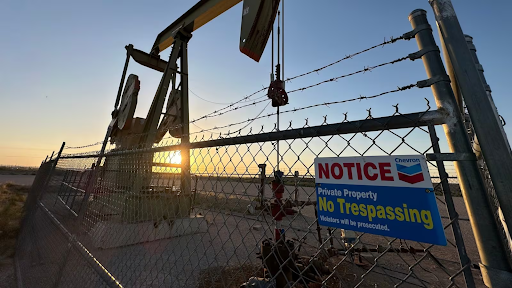
The sun sets behind an oil pump jack near Loving, N.M., on Tuesday, May 20, 2025.
U.S. energy producers showed renewed drilling activity at the end of the year.
The latest data signals cautious optimism across the oil and gas sector.
U.S. drillers added more rigs for a second consecutive week.
The update came from energy services firm Baker Hughes.
The U.S. oil and gas rig count, a key indicator of future production, edged higher.
The rise suggests producers are slowly adjusting to market conditions.
U.S. Oil and Gas Rig Count Moves Higher
Baker Hughes reported a net increase of one rig in the latest weekly count.
The total number of active oil and gas rigs reached 546.
This marked the highest level since mid-December.
The report covered the week ending December 30.
Baker Hughes released the data earlier than usual.
The early release was due to the New Year’s Day holiday.
Annual Comparison Shows Decline
Despite the recent increase, the broader trend remains softer.
The total U.S. oil and gas rig count is still lower year over year.
Baker Hughes said the count is down by 43 rigs from last year.
That represents a decline of about 7.3 percent.
The annual drop highlights continued caution among energy firms.
Many producers remain disciplined in their spending strategies.
Oil Rigs Rise While Gas Rigs Fall
The latest report showed mixed movement across energy segments.
Oil drilling activity increased, while gas drilling declined.
Oil rigs rose by three units during the week.
The total number of oil rigs now stands at 412.
This was the highest oil rig count since December 12.
It reflects selective expansion in oil-focused regions.
Gas rigs, however, moved in the opposite direction.
The gas rig count fell by two to 125.
This marked the lowest level for gas rigs since mid-November.
Lower natural gas prices continue to influence drilling decisions.
Price Pressures Shape Drilling Strategy
The U.S. oil and gas rig count has faced pressure for two years.
Lower commodity prices have reshaped producer priorities.
In 2024, the total rig count declined by roughly five percent.
The drop followed a steeper 20 percent decline in 2023.
Energy companies shifted focus during this period.
Many prioritized shareholder returns over production growth.
Debt reduction and dividend payouts became top goals.
Aggressive drilling expansion took a back seat.
Outlook Remains Strong Despite Price Forecasts
Analysts expect U.S. crude prices to remain under pressure.
Forecasts suggest prices may fall for a third straight year in 2025.
Even so, production outlooks remain positive.
Government data points to continued output growth.
The U.S. Energy Information Administration offered a bullish projection.
It expects crude oil production to rise further next year.
U.S. crude output averaged a record 13.2 million barrels per day in 2024.
The EIA forecasts production will climb to about 13.6 million bpd in 2025.
This suggests efficiency gains are offsetting reduced drilling.
Producers are extracting more oil from fewer rigs.
Natural Gas Output Set to Break Records
The gas sector also shows strong long-term momentum.
The EIA expects both output and demand to reach new highs.
Dry natural gas production is projected to rise steadily.
Output is expected to reach 107.7 billion cubic feet per day in 2025.
Production could climb further to 109.1 bcfd in 2026.
That would exceed the previous record set in 2023.
In 2024, dry gas output averaged 103.2 bcfd.
This remains slightly below the 2023 peak.
What the Rig Count Signals Ahead
The recent uptick in the U.S. oil and gas rig count offers cautious signals.
It reflects stability rather than aggressive expansion.
Energy firms remain selective and price-conscious.
Yet rising output projections show operational efficiency gains.
As 2025 approaches, drilling activity may remain measured.
Production growth is likely to continue, even with fewer rigs.
For now, the rig count suggests balance.
The U.S. energy sector is growing carefully, not rushing forward.