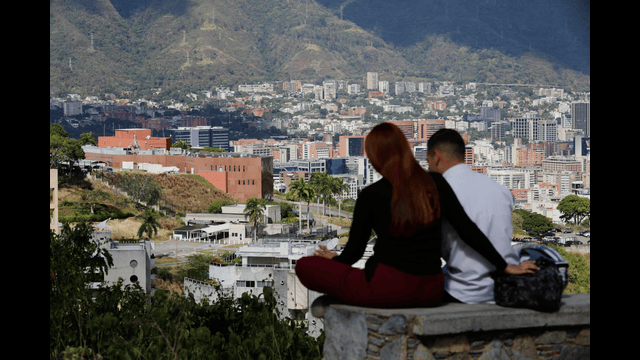
A couple sits on a beach at a viewpoint overlooking the US. embassy, centre left, in Caracas, Venezuela, Friday, Jan 9, 2026.
The United States and Venezuela have begun tentative moves to restore relations after the dramatic removal of Nicolás Maduro. Both sides confirmed they are exploring diplomatic engagement following a rare U.S. delegation visit to Caracas.
This outreach marks a sharp shift in US-Venezuela relations, long defined by hostility, sanctions, and broken ties.
Diplomatic Contact After a Stunning Intervention
The renewed contact follows a high-risk U.S. military operation last weekend. American forces captured former Venezuelan President Nicolás Maduro from his Caracas compound. He was flown to New York to face federal drug-trafficking charges.
The intervention shocked the region. It also forced a political reset inside Venezuela. Washington moved quickly to test diplomatic possibilities.
A small group of U.S. diplomats, supported by a security team, arrived in Venezuela days later. Their mission was limited but symbolic. They assessed conditions for reopening the U.S. Embassy in Caracas.
The State Department confirmed the visit in a brief statement. Officials described it as a preliminary review, not a full restoration of relations.
Venezuela Signals Willingness to Engage
Venezuela’s interim leadership responded cautiously but openly. The government said it plans to send its own delegation to the United States. No date was announced.
Any Venezuelan officials traveling to Washington would require sanctions relief. Such waivers would need approval from the U.S. Treasury Department.
Acting President Delcy Rodríguez confirmed the shift in tone. She said her government had decided to begin an “exploratory diplomatic process” with Washington.
The goal, she explained, is the re-establishment of diplomatic missions in both countries. That would mark a historic reversal in US-Venezuela relations.
Pressure From Washington and the Military
Rodríguez now faces intense political pressure. She must navigate U.S. demands while containing anger within Venezuela’s military leadership.
Hard-line officers remain furious over Maduro’s capture. Many view the operation as a violation of national sovereignty.
Her public remarks revealed that tension clearly.
During calls with leaders from Brazil, Colombia, and Spain, Rodríguez condemned the U.S. action. She described it as “criminal, illegal, and illegitimate aggression.”
A Softer Tone on Diplomacy
Hours later, her message changed. Speaking at the opening of a women’s health clinic in Caracas, Rodríguez stressed diplomacy.
She argued that dialogue with President Donald Trump was Venezuela’s best defense. She even suggested talks could help secure Maduro’s return.
“We will meet face-to-face in diplomacy,” Rodríguez said. She spoke of defending peace, stability, and sovereignty.
Notably, she did not mention reopening the U.S. Embassy during that speech. The omission reflected the fragile state of talks.
Trump’s Oil Strategy Looms Large
President Trump has made his intentions clear. He wants leverage over Venezuela’s oil sector.
Venezuela holds the world’s largest proven crude oil reserves. Control over exports remains central to Washington’s strategy.
U.S. officials hope diplomatic pressure will reshape Venezuela’s leadership. The aim is to secure favorable access to energy markets.
This economic reality underpins every discussion on US-Venezuela relations.
A History of Broken Ties
Diplomatic relations collapsed during Trump’s first term in 2019. Washington recognized opposition leader Juan Guaidó as Venezuela’s legitimate president.
Maduro rejected that move outright. He tightened his grip on power and expelled U.S. diplomats.
That same year, the U.S. closed its Caracas embassy. American staff relocated to Bogotá, Colombia.
Since then, official contact has been rare and tightly controlled.
Rare Visits, Cautious Hope
U.S. officials have traveled to Caracas only a few times since the rupture. One notable visit came last February.
Trump’s special envoy, Richard Grenell, met Maduro during that trip. The meeting led to the release of six detained Americans.
Now, with Maduro removed, both sides see an opening. Whether it leads to lasting change in US-Venezuela relations remains uncertain.
For now, diplomacy has returned to the table. The next steps will shape the region’s political future.