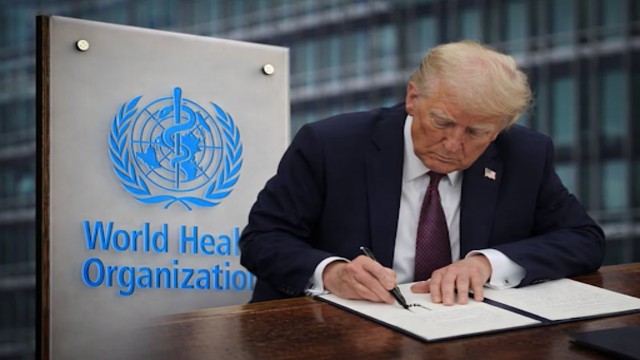
Trump withdraws US from World Health OrganizationPresident Donald Trump signed the executive order in the Oval Office on Monday evening. (Urbana News Creatives)
The United States has officially exists from the World Health Organization (WHO), ending decades of membership in the UN health agency and removing one of its largest sources of funding. The move follows an executive order signed by President Donald Trump last year and marks a major shift in Washington’s global health strategy.
The US Department of Health and Human Services said the withdrawal was driven by concerns over the WHO’s pandemic response, governance, and political influence from member states. The WHO strongly rejected those claims, warning the decision could weaken global and domestic health security.
Washington Cites Pandemic Failures and Reform Issues
US officials accused the WHO of mishandling the COVID-19 pandemic and failing to implement needed reforms. They also criticized the agency’s political structure and influence from certain member countries.
The US government confirmed it has terminated all funding to the WHO, recalled personnel from Geneva and other offices, and suspended hundreds of collaborations. Washington also said it would limit future engagement strictly to managing the withdrawal and protecting US public health interests.
A joint statement from US Health Secretary Robert F. Kennedy Jr. and Secretary of State Marco Rubio accused the WHO of acting against US interests and abandoning its core mission. They also cited symbolic grievances, including the handling of the American flag at WHO headquarters.
WHO Warns of Global and Domestic Consequences
WHO Director-General Tedros Adhanom Ghebreyesus said the US withdrawal was a loss for both the world and Americans. He highlighted the organization’s work in fighting polio, HIV, maternal mortality, and tobacco-related diseases, as well as coordinating global outbreak responses.
Public health experts echoed those concerns, warning that stepping away from the WHO could weaken the US ability to detect and respond to global health threats.
Ronald Nahass, president of the Infectious Diseases Society of America, called the move “shortsighted and misguided,” stressing that infectious diseases do not respect borders. He warned that the decision could hinder surveillance of emerging threats such as Ebola and complicate the annual flu vaccine strain selection process.
Pandemic Treaty and Funding Fallout
The withdrawal comes after WHO member states finalized a global pandemic treaty aimed at improving preparedness, vaccine sharing, and crisis coordination. The US did not join the agreement, raising questions about its future role in global health governance.
Washington has also withheld WHO membership dues for 2024 and 2025, contributing to financial strain and job losses within the agency. WHO officials say the US still owes an estimated $260 million in arrears, though the US government has said it sees no obligation to pay.
The US was historically one of the WHO’s largest donors, supporting programs ranging from disease eradication to health system strengthening in developing nations.
Future US Health Strategy Remains Unclear
US officials said Washington will pursue bilateral partnerships with other countries and work with non-governmental and faith-based organizations to continue disease surveillance and global health initiatives. However, they have not provided details on specific partnerships or how global data-sharing will function without WHO coordination.
Officials also could not confirm whether the US would participate in global influenza surveillance and vaccine development programs, which have long relied on WHO networks.
Critics Warn of Isolation Risks
Health experts argue that global cooperation is essential for pandemic prevention and response. They say leaving the WHO could isolate the US from critical data, research networks, and coordinated response systems.
The WHO previously urged the US to reconsider, stating that decades of cooperation had saved countless lives and protected global health security.
A Major Shift in Global Health Leadership
The US withdrawal marks a significant turning point in international health diplomacy and raises concerns about future global pandemic preparedness. Observers warn the decision could reshape global health governance, reduce coordinated responses, and create gaps in disease surveillance.
As the world faces ongoing and emerging health threats, the long-term impact of the US exit remains uncertain, both for global health systems and for Americans at home.